August 2026: South Asian Heritage Month
South Asian Heritage Month will celebrate culture, representation, and health through an inspiring speaker event with Dr. Rupa Juthani, educational health videos, Mindful Desi Drinks, a disparities research proposal contest, and a merch design competition.
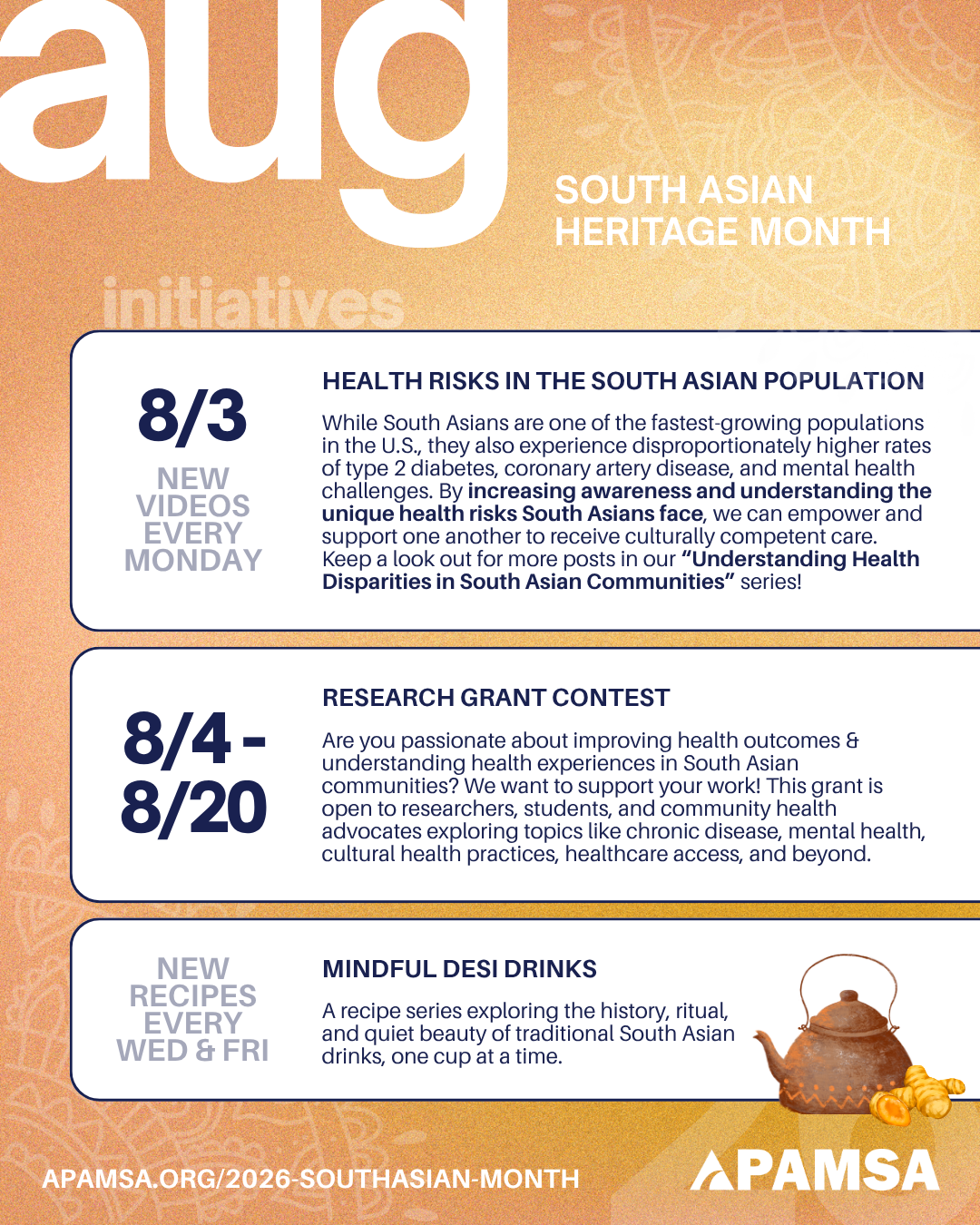
August 1, 2026
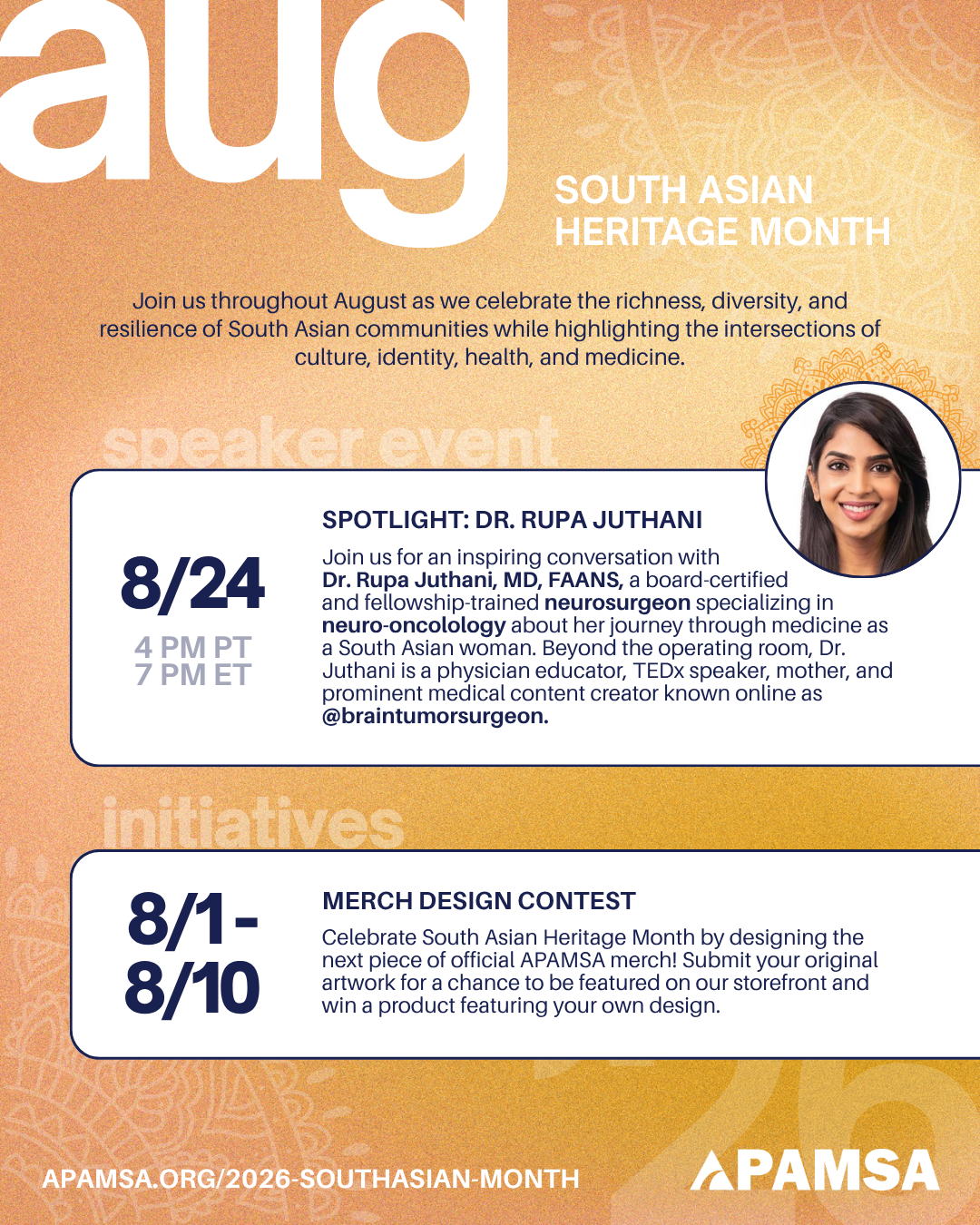
Celebrate South Asian Heritage Month by designing the next piece of official APAMSA merch! Submit your original artwork for a chance to be featured on our storefront and win a product featuring your own design! Browse our current collection for inspiration.
Submissions Closed
August 4, 2026
South Asian Heritage Health Research Grant — Apply Today!
Are you passionate about improving health outcomes & understanding health experiences in South Asian communities? We want to support your work!
This grant is open to researchers, students, and community health advocates exploring topics like chronic disease, mental health, cultural health practices, healthcare access, and beyond. One winner will receive $100 to help bring their project to life!
Fill out our short application and take the next step in advancing health equity and well-being for South Asian communities.
Applications Closed
August 24, 2026
Join us for an inspiring conversation with Dr. Rupa Juthani, MD, FAANS, a board-certified and fellowship-trained neurosurgeon specializing in neurooncolology about her journey through medicine as a south asian woman. Beyond the operating room, Dr. Juthani is a physician educator, TEDx speaker, mother, and prominent medical content creator known online as @braintumorsurgeon.

Disparities in South Asian Health Video Series
South Asian Mindful Drink Recipes
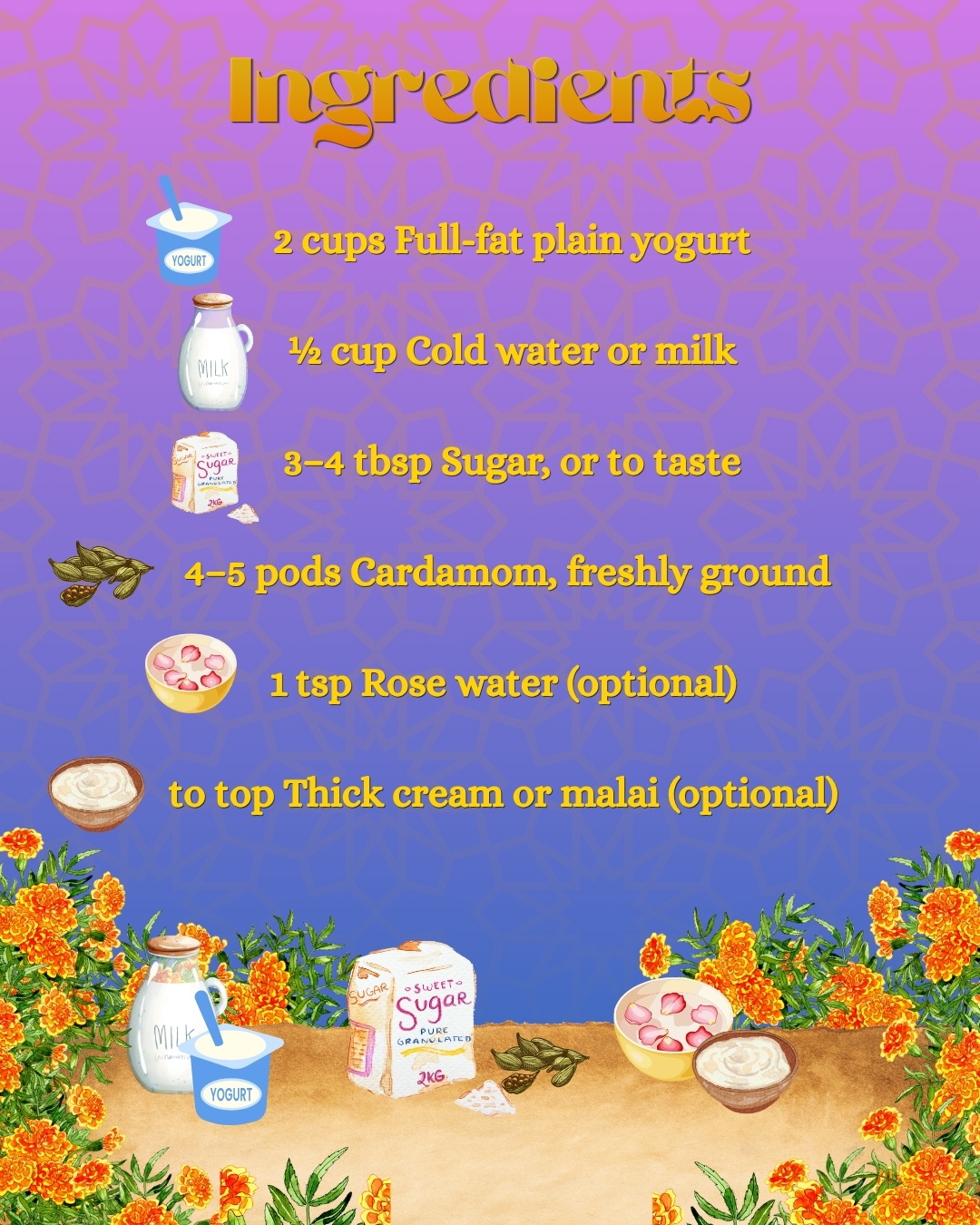
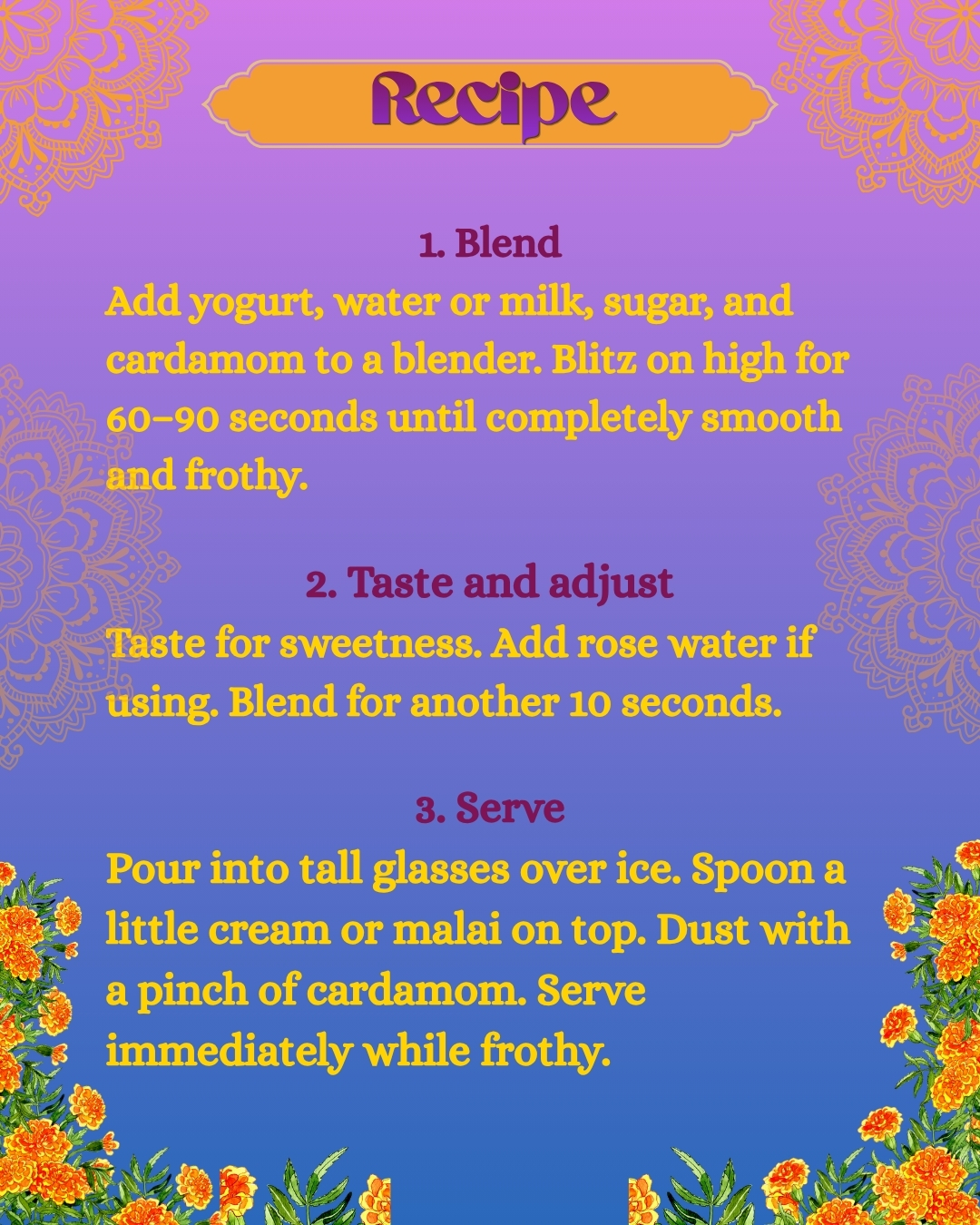
Lassi’s been around for about 5,000 years. It didn’t need a rebrand, a trend cycle, or a big marketing push — it just kept existing, through Mughal rule, Afghan rule, British colonialism, all of it. No one ever tried to commercialize it because there was nothing to profit from. It just stayed what it was: a drink people made at home, for each other.
Sweet with cardamom and rose water, or salty with cumin and black salt. Both are correct. Fight me.
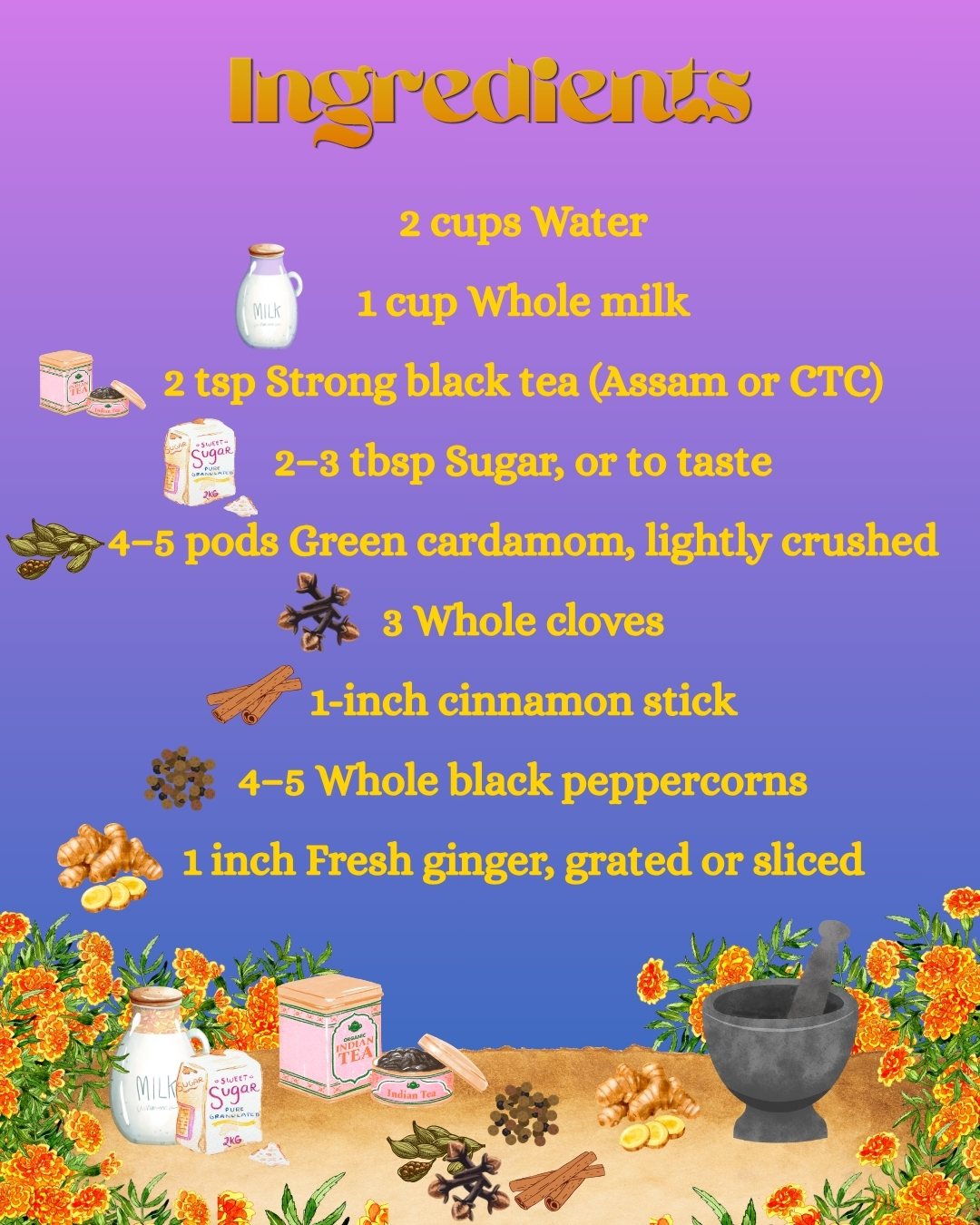
Chai has a rougher history than people realize. The British cleared land and built plantations across Assam and Darjeeling to supply tea back home, using indentured and displaced labor to do it. Indians weren’t even the intended market. Chai only became “chai” once street vendors took the low-grade leaf they were handed and added milk, sugar, and their own spices to it.
So when you drink chai, you’re kind of drinking an act of resistance, disguised as a comfort drink.
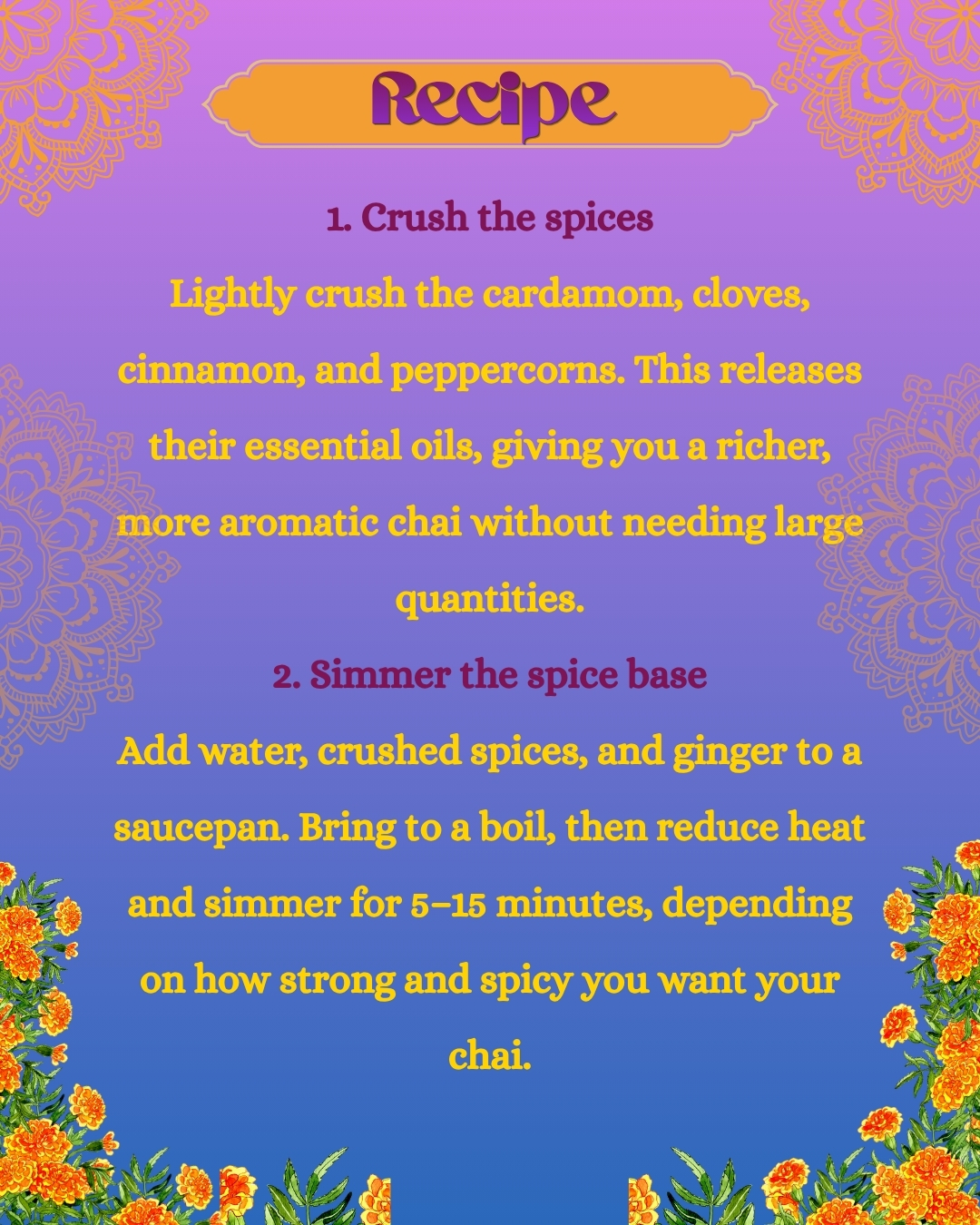
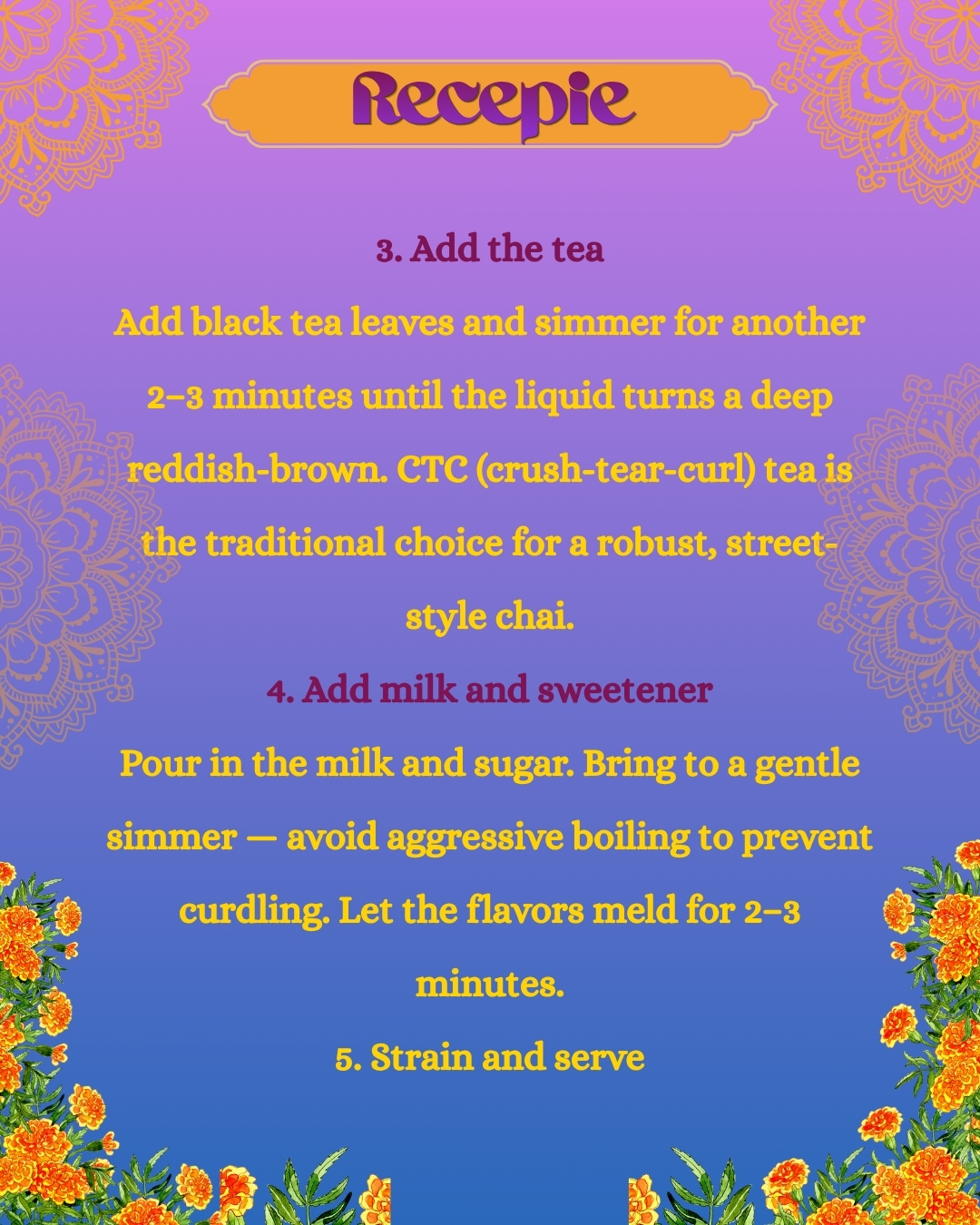
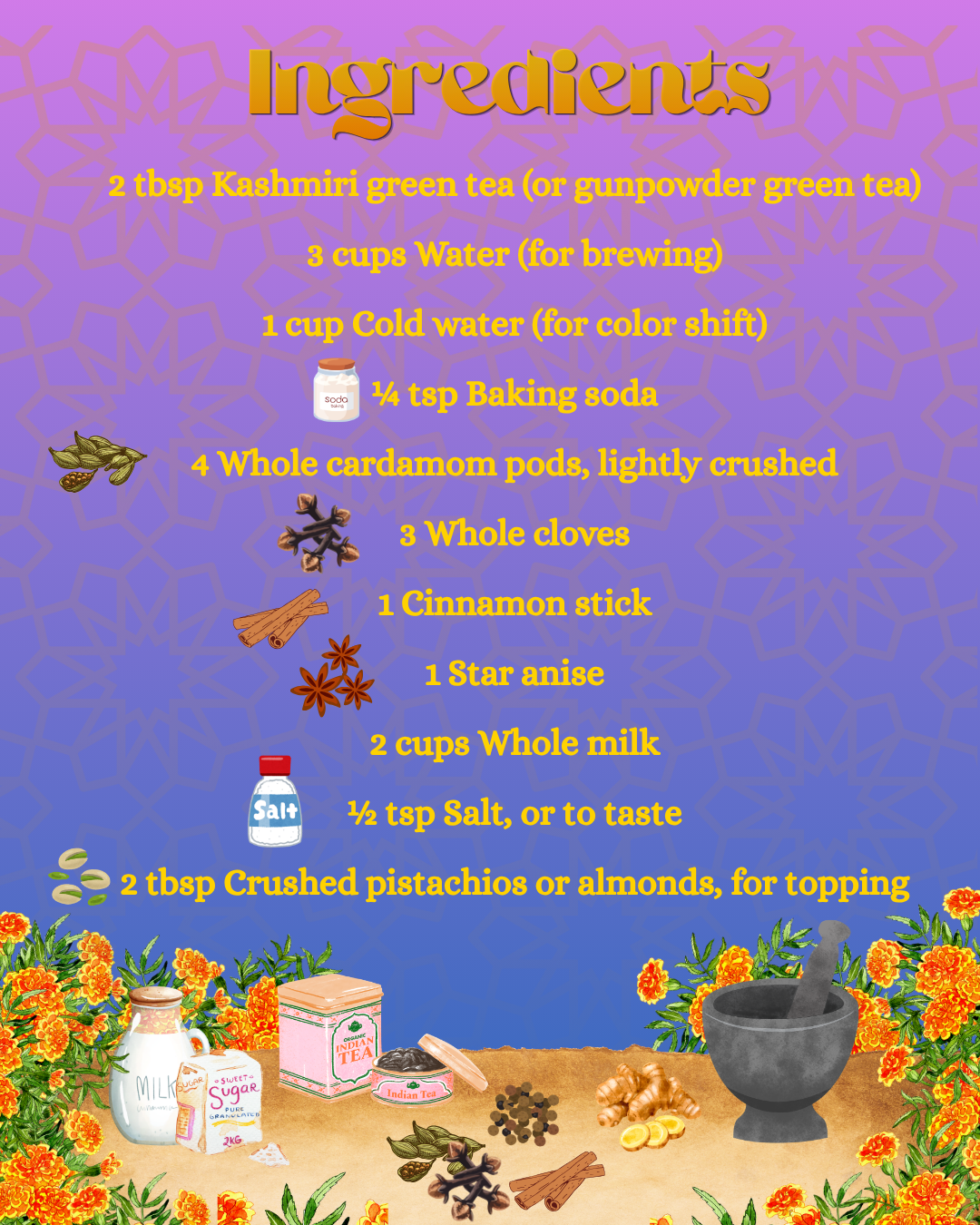
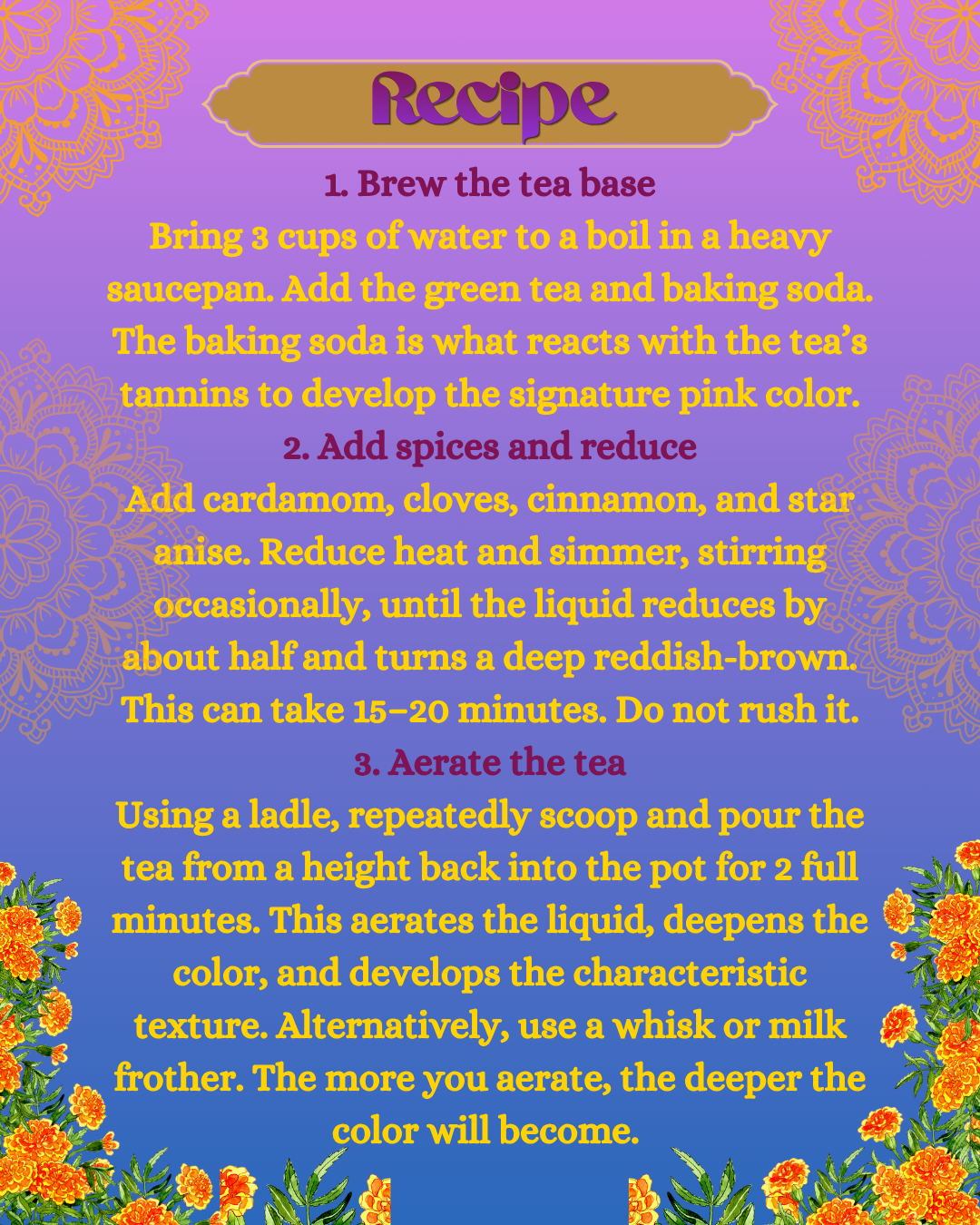
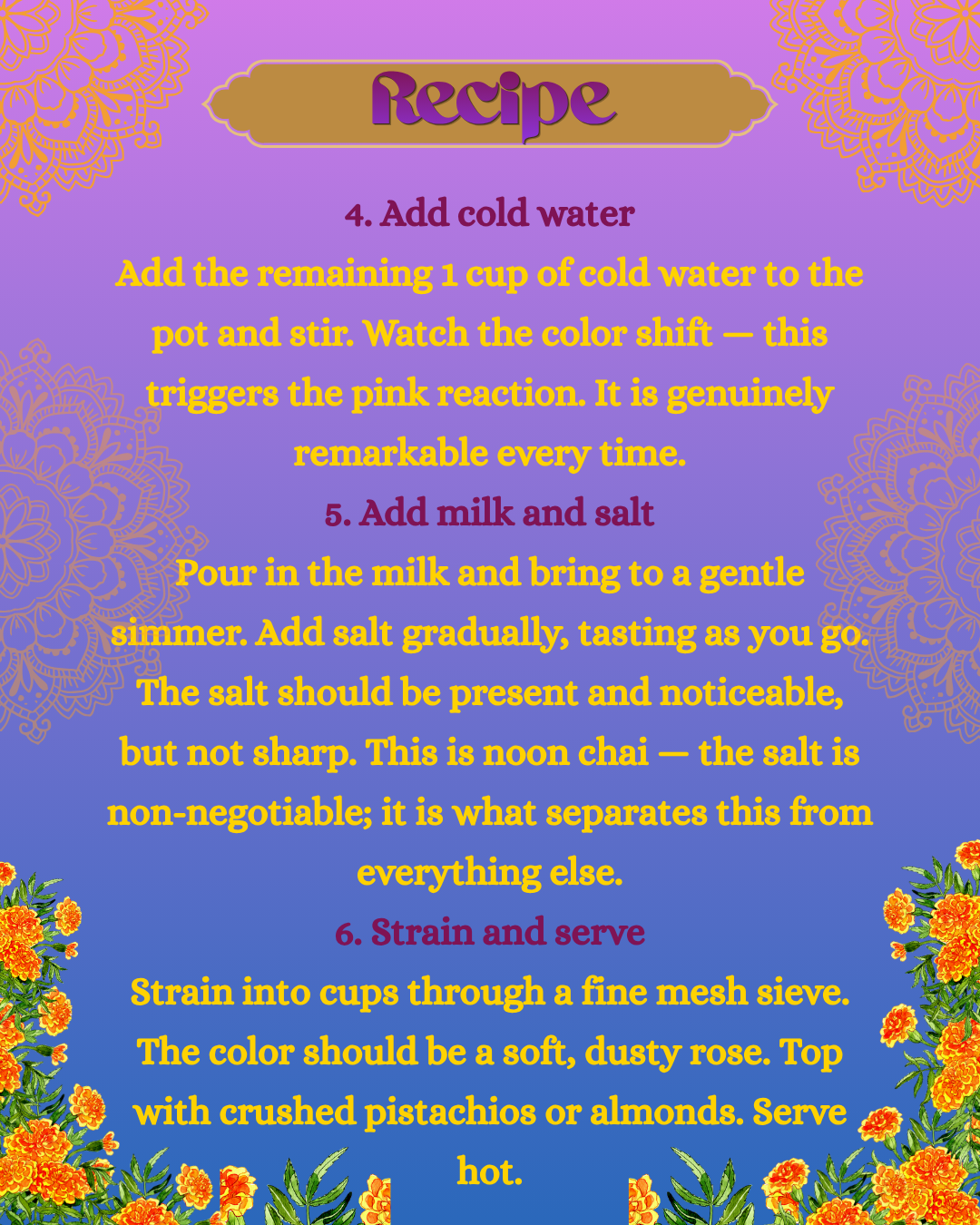
This one’s not like the others. It’s pink, it’s salty, and it comes from Central Asian trade routes rather than the usual chai lineage, it’s genuinely closer to Tibetan butter tea than to masala chai.
In Kashmir, it shows up at weddings, funerals, and as the first thing you offer a guest. It’s outlasted the Mughals, the Sikh empire, the Dogras, and the British, mostly because no outside power ever cared enough to try to change it.
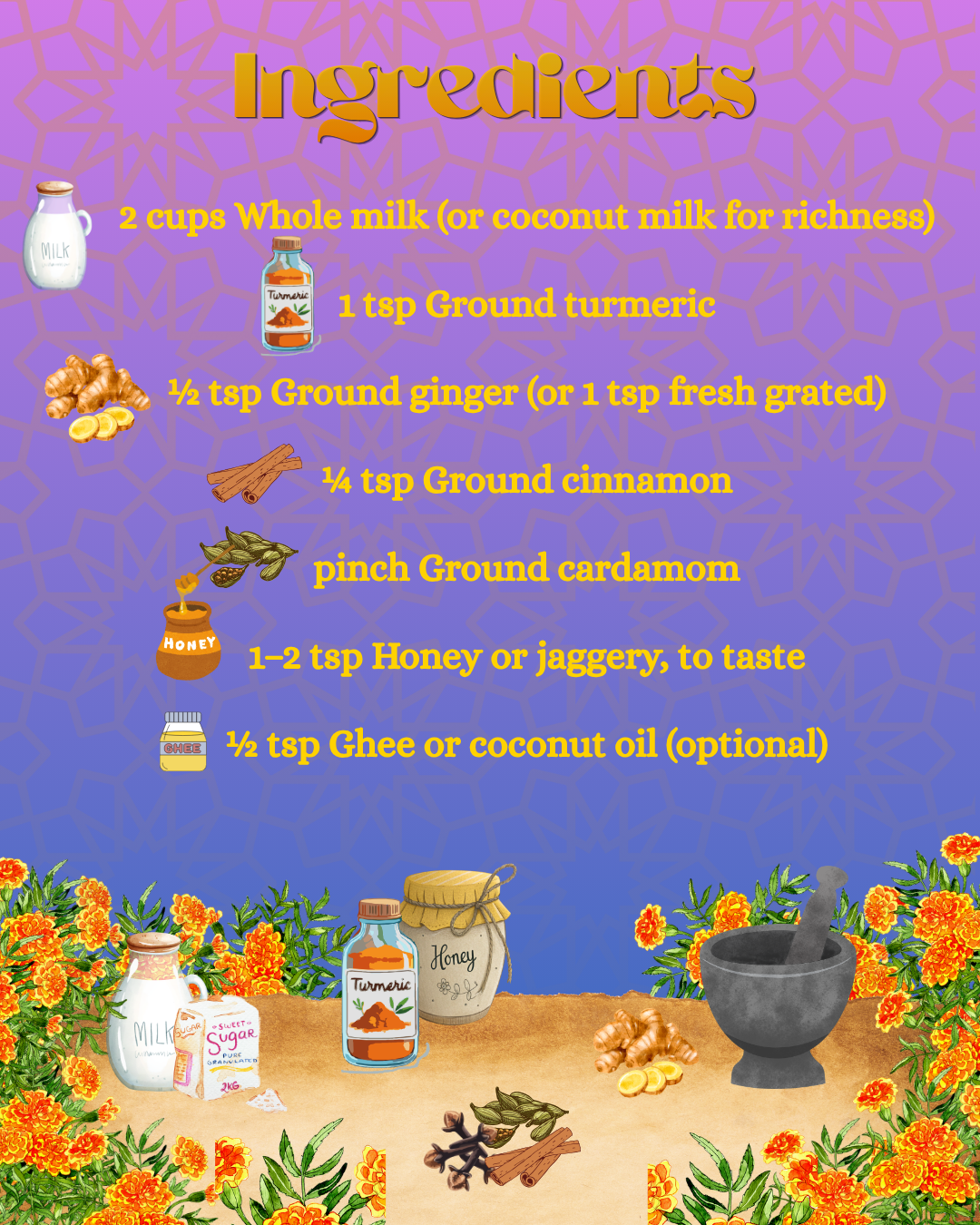
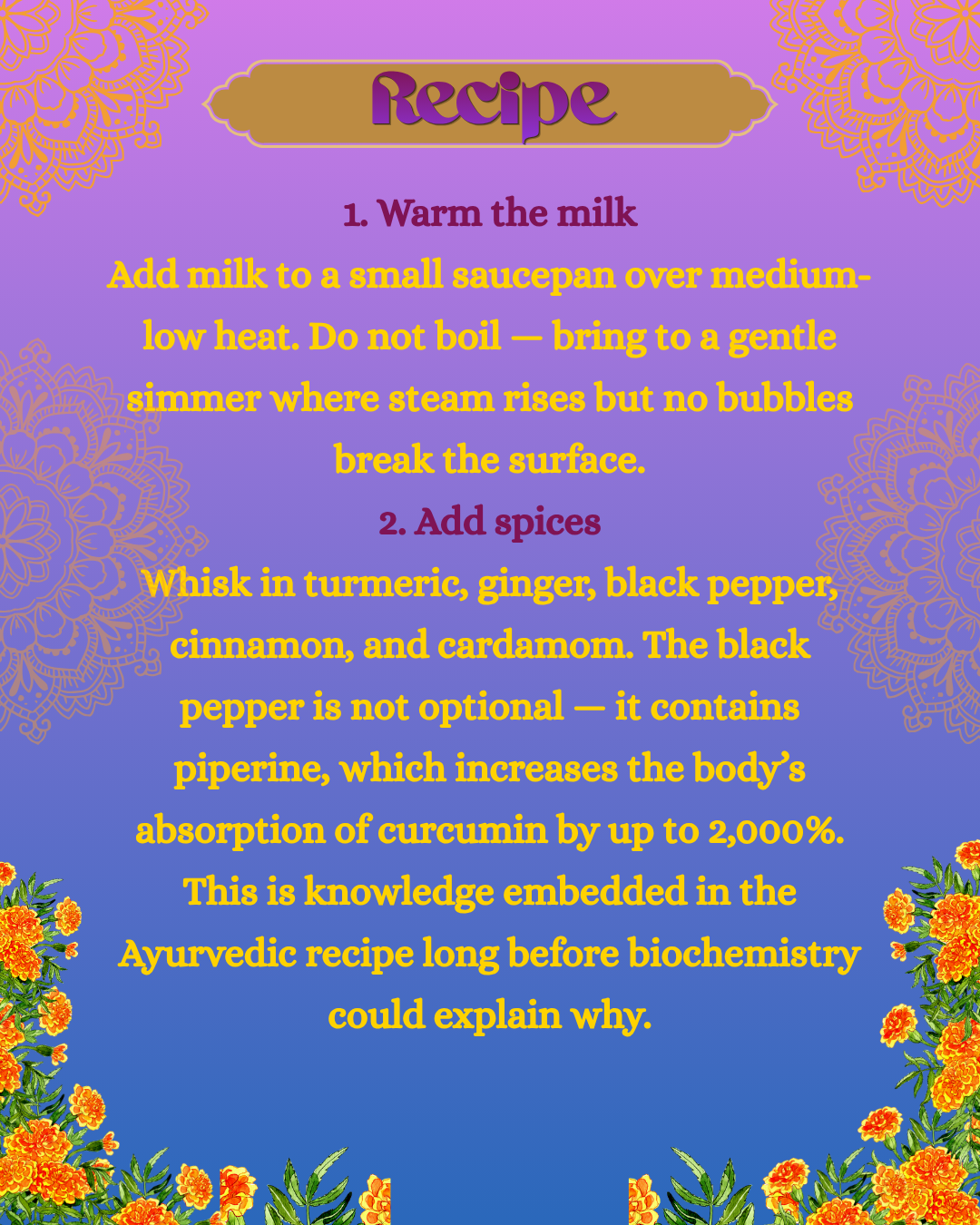
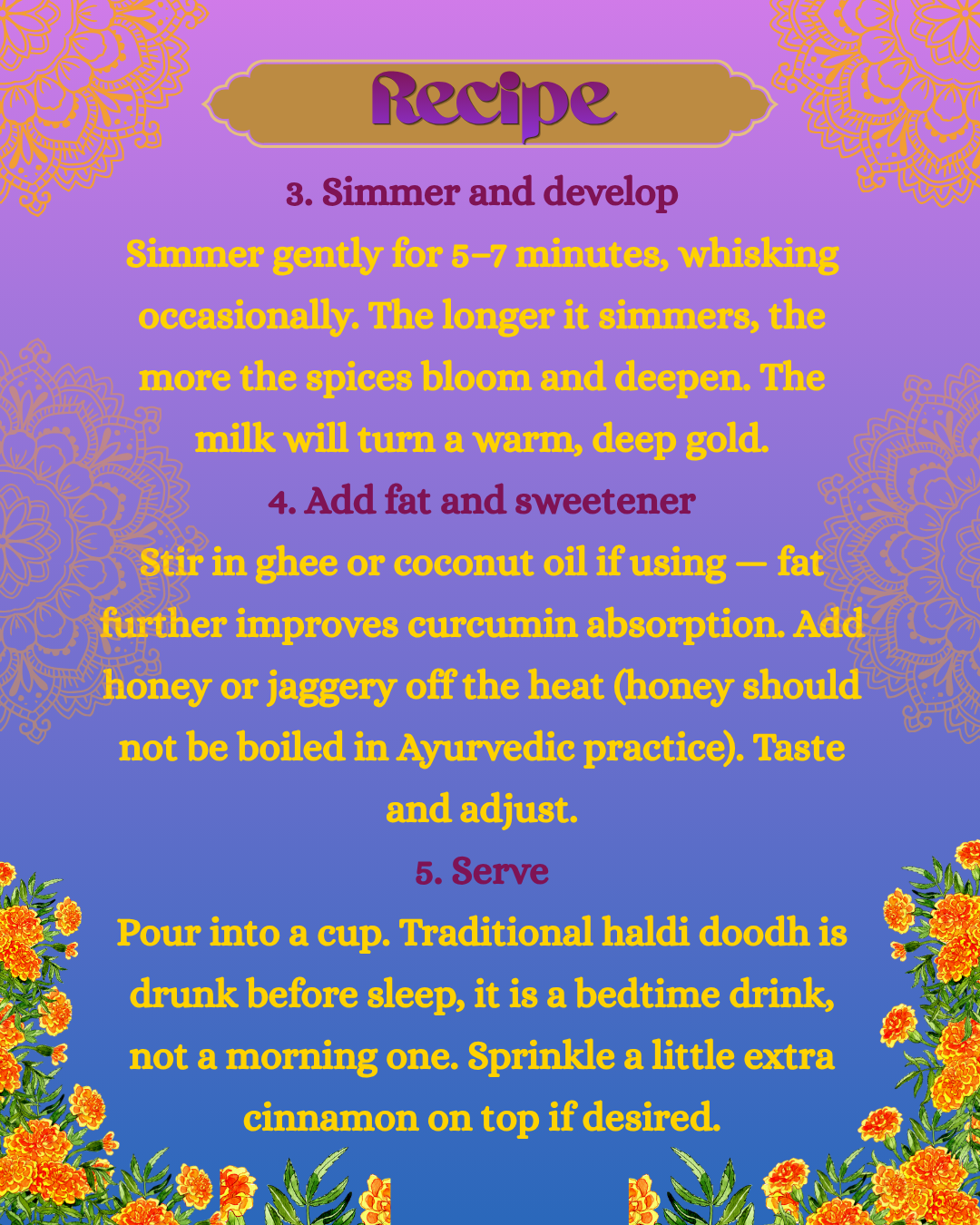
Turmeric milk carries about 3,000 years of Ayurvedic tradition, used for everything from inflammation to wound care long before Western medicine took any interest in it. During the colonial period it was often dismissed outright, only to resurface decades later in the West as a wellness trend.
So next time you see “”golden milk”” on a café menu, know the tradition goes back a lot further than the trend.