Justin Nguyen, DO, MPH
admin
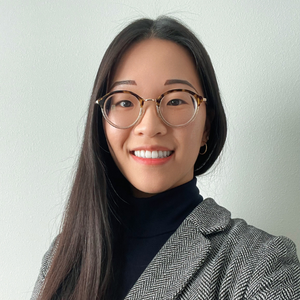
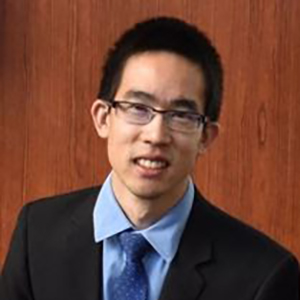
Dr. Justin Nguyen is currently a psychiatry resident at Community Memorial Health System in Ventura County, California. He served as APAMSA’s first Resolutions Director in 2017-2018 and then served as Advocacy Vice President from 2018-2020.
Justin received his bachelor’s degree in psychobiology at UCLA. As an undergraduate student, he engaged in student activism as part of the Vietnamese Student Union and also oversaw programs that promoted recruitment of students of color into higher education as a member of the Student-Initiated Outreach Committee. He then completed both his medical degree and master’s in public health at Touro University California, where in addition to being part of APAMSA, he was also deeply involved with the California Physicians Alliance (CaPA). After graduating from medical school, Justin completed a transitional year residency in Ocala, Florida before returning to California. He enjoys reading about history, politics, psychology, and personality theory, and in his free time also watches anime, plays video games, listens to music, and visits breweries/wineries.

Nancy Dong, MD
admin
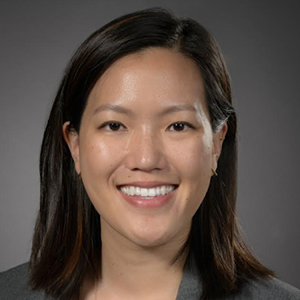
Nancy Dong is a proud alumni of the APAMSA organization. In her first year of medical school, she met the APAMSA family at the Las Vegas national conference and was hooked. From there, she picked up leadership positions as Northeast Regional Director (2014-2016), Local Chapter President (2015-2016), and Membership Co-Director (2017-2018). She is passionate about advocating for Asian and Asian-American communities, with a particular interest in teaching, professional development, and mental health. Nancy is currently a psychiatry resident at Northwell Zucker Hillside Hospital. She is curious about racial/ethnic disparities, schizophrenia, consult liaison psychiatry, medical education, and innovative QI.
Lindy Zhang, MD
admin
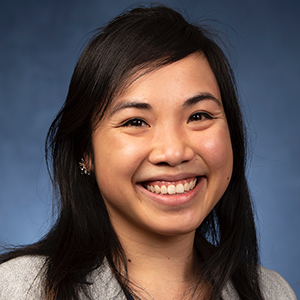
Dr. Lindy Zhang is currently a clinical and research fellow in the Johns Hopkins/NIH Pediatric Hematology/Oncology program. She completed her bachelor’s of science in biochemistry at the University of Michigan and her medical degree at the Albert Einstein College of Medicine. She is a child of immigrants and the first in her family to pursue a post-bachelor’s degree. She is passionate about diversity and inclusion, having done research and published on Asian American representation in academic medicine. She was a former conference co-chair for the 2013 APAMSA National Conference, a regional director, and a chapter president in APAMSA. Beyond her professional aspirations, Lindy has an insatiable appetite for brunch which is supported by her love to do pilates and yoga and loves reading coming-of-age novels in quiet cafes.
Stephen Chao, MD
admin
Stephen Chao, MD is a family physician at Legacy Community Health Services, a federally qualified health center in Houston, Texas. He is currently also a clinical assistant professor of family medicine at the University of Texas Health Science Center at Houston, and was previously on the faculty at Baylor College of Medicine as well. Born and raised in Houston, Texas, he attended Rice University, graduating with degrees in Biochemistry and Health Policy. He received his medical degree from the University of Texas Health Science Center at San Antonio, is a past president of the Chinese American Doctors Association of Houston, is the current vice-president of Health Care For All Texas, and also presently serves on the board of Physicians for a National Health Program.
Dr. Chao completed his family medicine residency training at UT Health San Antonio and is committed to caring for the underserved residents of Houston and Harris County. His interests include care for immigrant and refugee populations, community health, and public policy. He believes in providing health care for all.
He also serves or has served on the boards of Refugee Services of Texas-Houston, OCAGreater Houston, Light and Salt Association, Eastside Promotoras de la Buena Salud, and the San Antonio Healthcare-NOW Coalition.
Sean Wu, MD, PhD
admin
Dr. Wu completed his undergraduate degrees in mechanical engineering and biology at Stanford University and his MD and PhD degrees in the MSTP program at Duke University School of Medicine. After internal medicine residency at the Duke Hospital, he completed his training in general cardiology at Massachusetts General Hospital/Harvard Medical School and a research fellowship at Boston Children’s Hospital prior to becoming an Assistant Professor of Medicine at Harvard Medical School. He move to Stanford University School of Medicine in 2012 where he is now the Endowed Faculty Scholar of the Lucile Packard Foundation for Children, an Associate Professor of Medicine and, by courtesy, Pediatrics, and the Associate Director at the Stanford Cardiovascular Institute. He was previous the National President of APAMSA in 1995-1996.
Ruey Hu, MD, MPH
admin
Ruey Hu, MD, MPH, who hails from Toronto, Canada, served as national president of APAMSA from 2016 to 2018. Ruey studied molecular biology at Princeton with certificates in computer science, neuroscience, and Chinese language and culture. He completed an MPH in epidemiology and biostatistics at the Johns Hopkins School of Public Health. He graduated from Vanderbilt University School of Medicine and completed residency in internal medicine at Vanderbilt University Medical Center. He is currently a cardiology fellow at Yale. He is very passionate about clinical research and is a member of the Delta Omega Public Health Honor Society. Ruey finds joy in motivating others to do what they are passionate about. While on national board, Ruey’s favorite part of the job was getting to meet the spirited and hardworking members of APAMSA across our chapters. He enjoys continuing to advise medical students today.
Nolan Kagetsu, MD
admin
Nolan Kagetsu is faculty co-adviser for the APAMSA chapter at the Icahn School of Medicine at Mount Sinai. Nolan studied chemical engineering at the Massachusetts Institute of Technology. After graduating from Albany Medical College, he completed a residency in diagnostic radiology at Mount Sinai West and a fellowship in Diagnostic and Interventional Neuroradiology at NYU. He currently is a diagnostic neuroradiologist for the Mount Sinai West Department of Radiology. He lives in Manhattan with his partner.
He serves on the American College of Radiology Committee for Diversity and Inclusion and has written about unconscious bias, microaggression, and being an upstander. He is an Associate Clinical Professor in the Department of Diagnostic, Molecular and Interventional Radiology at the Icahn School of Medicine at Mount Sinai. He was a diagnostic program director for 15 years and has spoken about interview preparation at the National APAMSA meeting.
While Nolan was born in Canada, he self identifies as sansei, since his grandparents immigrated from Japan to Canada.
You can follow him on Twitter @nkagetsu and Instagram @NYCneurorad
Jhemon Lee, MD
admin
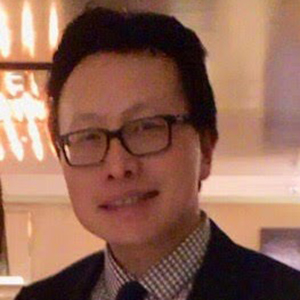
Dr. Lee is a private practice radiologist in Los Alamitos, CA. He has been Chair of the Advisory Board for APAMSA for years, and was one of the original student organizers that helped lead to the formation of APAMSA in 1995. He is a board member of the National Council of Asian Pacific Islander Physicians (NCAPIP). He has been involved with the National Association of Asian American Professionals (NAAAP) since 1994, serving in many roles including National President, President of its Chicago chapter, and co-chair of the 2008 National Convention. He is also a past president of the Orange County chapter of OCA – Asian Pacific American Advocates, and is the Medical Advisor for the Diagnostic Medical Sonography programs at Platt College.
Dr. Lee received his bachelor’s degree in Engineering Sciences at Harvard University and obtained his medical degree from the University of Maryland. He completed his residency in diagnostic radiology at the University of Chicago, where he was chief resident, and a fellowship in abdominal imaging at Brigham and Women’s Hospital/Harvard Medical School in Boston.
On the side, he and his wife, Misa have been doing improv comedy for years with group such as Cold Tofu, Los Angeles’ longest running APA improv troupe. Jhemon has also been writing and performing sketch comedy with a new APA comedy group, “No MSG Added.”
Sample Hepatitis Screening Protocol
Checklist
At least 4 months before: Identify physician mentors! Note that this is absolutely imperative for the success of your program. Lab tests have to be ordered by a physician, and reports given to screened subjects must be signed by a physician. Don’t need to limit yourself to physicians only at your school. Much hepatitis is treated by community physicians as well, so consider reaching out to community physicians in your area.
At least 3-4 months before: Research follow-up care options, screening locale, laboratory testing logistics, obtain funding, gather educational materials, and necessary forms.
1 month before: Advertise your screening in local Asian newspapers, grocery stores, churches, and other areas in your community. Recruit and train volunteers.
2 weeks before: Determine volunteer schedule. Go over protocol with them.
Day of screening: Volunteers hand out educational materials, volunteers register clients (consent forms, health info, self addressed envelopes), phlebotomists draw blood, samples processed (with appropriate labeling), and taken to lab.
1-2 weeks later: Lab results are sent to the physician who signed the order. Physician review lab results.
2-3 weeks later: Contact everyone who participated in the screening via letters, phone calls, or educational sessions.
Screening Hep B Protocol
For a PDF view of the below, please see this link: https://tinyurl.com/SampleScreening
At least 4 months before: Identify physician mentors! Note that this is absolutely imperative for the success of your program. Lab tests have to be ordered by a physician, and reports given to screened subjects must be signed by a physician. Don’t need to limit yourself to physicians only at your institution, and consider reaching out to community physicians in your area.
At least 3-4 months before: Research follow-up care options, screening locale, laboratory testing logistics, obtain funding, gather educational materials, and necessary forms.
1 month before: Advertise your screening in local Asian newspapers, grocery stores, churches, and other areas in your community. Recruit and train volunteers.
2 weeks before: Determine volunteer schedule. Go over protocol with them.
Day of screening: Volunteers hand out educational materials, volunteers register clients (consent forms, health info, self addressed envelopes), phlebotomists draw blood, volunteers process samples (with appropriate labeling) and ensure they are taken to labs.
1-2 weeks later: Lab results are sent to the physician who signed the order. Physicians review lab results.
2-3 weeks later: Contact everyone who participated in the screening via letters, phone calls, or educational sessions.
Please contact hepatitis@apamsa.org in advance if you will be organizing a screening program and would like to participate in the national APAMSA effort to collect hepatitis B data.
Resources to find information about your local areas:
-
Hepatitis B Foundation physician directory: https://www.hepb.org/treatment-and-management/physician-directory/
-
US Department of Health & Humans Services – Find a Health Center: https://findahealthcenter.hrsa.gov/
-
American Liver Foundation resource center directory: https://liverfoundation.org/resource-center/
Steps:
-
Identify a local hepatologist or other physician who will serve as your mentor and oversee the screening. Important point: It is absolutely imperative you work with a physician for your program. Lab tests have to be ordered by a physician, and reports given to screened subjects must be signed by a physician.
-
We also recommend you contact your local American Liver Foundation contacts, who will likely be able to provide you with more information and direct you to physicians who would be willing to help you.
-
-
Determine the hepatitis B outreach and language needs in your area.
-
Identify resources needed for the screening (i.e. labs, phlebotomist, etc…).
-
Discuss with your mentor the need for obtaining IRB approval/waivers as needed. IRB approval will be needed if there are plans to analyze and report the data.
-
Secure funding.
-
Research the following questions. Send completed research to National APAMSA for databasing.
Where can insured hepatitis B positive people obtain care?-
Provide referral information for physicians who see hepatitis B clients.
-
-
Where can uninsured hepatitis B positive people obtain care?
-
Provide information regarding clinics for the uninsured
-
You may need to seek peer educators or community health advocates to function as a patient navigator, since many indigent clinics do not have resources for interpreters for many Asian languages.)
-
-
Where can hepatitis B antibody negative people obtain the vaccine?
-
Provide information about where they can go to get the hepatitis B vaccine, either through their primary care physician or through a free/discounted vaccination program.
-
-
Where can other family members be screened?
-
Provide information regarding places to be screened for hepatitis B.
-
-
-
Develop a client follow-up plan
-
How are you going to notify clients of their results?
-
E.g. phone calls, letters, both, educational session, or something else.
-
-
How will you ensure that clients who need further follow-up are able to contact any referrals made?
-
E.g. additional phone calls to make sure the clients have contacted a primary care provider or have made an appointment to get vaccinated.
-
-
-
Identify an appropriate screening location.
-
This can be at a clinic that sees Asian patients, a church, community center, a hepatitis B screening in the Asian community, a hepatitis B screening that’s part of a more comprehensive health screening for the community, or many other options.
-
-
Secure a phlebotomist + appropriate supplies to draw blood.
-
Find a laboratory that will process your samples. When signing the contract, find out how long it takes for results to be processed and sent back to the ordering physician. You can also request the results to be sent to you in a spreadsheet.
-
Ask your physician mentors for suggestions.
-
Most commercial labs will provide phlebotomist, and blood drawing kits and also dispose of sharps and biohazard materials. Quest Diagnostics gives a good rate but will not provide phlebotomists on Sundays.
-
Some cities such as Chicago provide free hepatitis B screening through their health departments as well.
-
-
Obtain educational materials in English and Asian languages regarding hepatitis B to distribute to the clients who come to your screening. Use existing materials from the CDC, American Liver Foundation, Hep B Foundation, or Asian Liver Center. Please see the resources page for more information.
-
Create a waiver/consent form for clients to sign. This should also include a description about what will happen to their samples. This needs to be in English and Asian Languages.
-
Recruit and train student volunteers.
-
Have student volunteers ready at different stations.
-
Education station: provide educational materials to clients about hepatitis B. Encourage people to get screened.
-
TIP: Having clients sit through an educational presentation as a ticket into the free screening is an effective educational method.
-
-
Screening registration station: have clients fill out health info form and consent form. Assign a unique ID number to each person for your records. This ID number will be used to label their samples and also for subsequent data analysis. Keep these records that link client names with ID numbers in a secure location. Review with your clients what will happen to their samples and when they will be contacted.
-
: Have each person write their own address on an envelope or address label during registration. This significantly improves your chances of sending the letters to the right place.
-
-
Blood drawing station: managed by a licensed phlebotomist, ideally with a physician present.
-
-
All this seems like a daunting task for medical students, but there is help for you! The best and most effective way to conduct a screening is to connect yourself with local groups that already have many of these resources already developed.
Lab results will be returned generally 2-3 weeks following the screening.
Overview of Screening Responsibilities:
-
Hepatitis B Surface Antigen Positive
-
Recommendation: further testing, referral to a primary care physician, or follow-up at a clinic that accepts uninsured clients.
-
For insured clients:
-
Identify a physician/physicians who specialize in hepatitis B. Refer clients to these physicians or their own primary provider.
-
-
For uninsured clients:
-
Ideally, identify and refer clients to a community health center dedicated to the Asian population.
-
If unavailable, refer to a community health center, a clinic for the uninsured that provides Asian language services, an established navigator system, or a student run free clinic affiliated with your institution. Be aware of what referral systems and services are offered at your student run clinic.
-
-
-
-
Hepatitis B Surface Antigen Negative, Hepatitis B Surface Antibody Negative
-
Recommendation: get immunized with the hepatitis B vaccine.
-
Refer clients to the appropriate places to get the vaccine such as their primary provider, and also provide recommendations for where clients might go to get free vaccinations if they are uninsured, such as free/discounted vaccination programs.
-
-
-
Hepatitis B Surface Antigen Negative, Hepatitis B Surface Antibody Positive
-
Client has antibodies to hepatitis B and is immune. Encourage them to have their family members screened.
-
Client Follow-up Protocol:
-
Simply sending clients a letter notifying them that they are hepatitis B positive is not effective. This is one of the best areas for students to get involved because you can help develop tracking programs and follow-up with both your hepatitis B surface antigen positive and negative clients.
-
It is ideal to follow up with everyone who participates in your screening to educate them about hepatitis B and direct them to appropriate avenues for treatment.
-
Hepatitis B surface antigen positive persons need to see a physician even if they have no symptoms.
-
Hepatitis B negative persons, who also are hepatitis B surface antibody negative, need to get the hepatitis B vaccine.
-
Important point: simply telling clients to go see their doctor or handing them a voucher to get a vaccine is not as effective as calling and writing to them directly.
-
With direct communication, we can ensure that1) understand what they need to do, and 2) they understand the reasons for doing so.
-
Examples of Client Follow-up Systems:
-
Letters
-
If you send out letters to your clients, make sure they are in English and appropriate Asian languages.
-
Make sure your letters are customized with information regarding clinics, referrals, vaccines, and other hepatitis B services.
-
TIP: When you register people for the hepatitis B screening, have them self-address an envelope to themselves that you will use to send them their results. This will minimize mistakes in mailing addresses.
-
-
Letters and Phone calls
-
Sending letters and following up with phone calls is a better way of making sure the people understand the test results.
-
Make sure that if you make phone calls you have people who can speak the language of the person you’re calling, either through recruiting volunteers who speak other languages or using phone interpreter services.
-
If you mail a letter, try to follow up with a phone call 2 weeks later to make sure they understand the letter and encourage follow-up. Then, make a follow-up call 3 months later to see if action was taken. The downside to making phone calls is that you can’t give medical information to anyone except for the person you screened, so you may have to call back several times.
-
-
Educational Session, Letters, and Phone Calls
-
Inform all clients to return a week or two later to receive their results and participate in an educational session. Call and leave messages reminding them of this educational session, and avoid giving out medical information over the phone. During the educational session, explain the various possibilities of their screening results. Before or after the educational session, provide each client a letter with their results. Consider also providing food. Make sure your speaker is able to communicate in the language of the community.
-
This is the most time consuming method of notifying the screening participants, but has proven effective for some screening programs, and allows for face-to-face communication. However, this method may not be amenable to all client schedules and may result in a gap in the follow-up care if you do not also ensure to write and call clients.
-
It is recommended before you proceed with anything to talk to your schools regarding the best way to handle this.
While there is very little risk involved with drawing blood, every institution has different policies which you must check before proceeding with anything. This is another reason why one of the first steps is to secure a faculty/community physician advisor.