

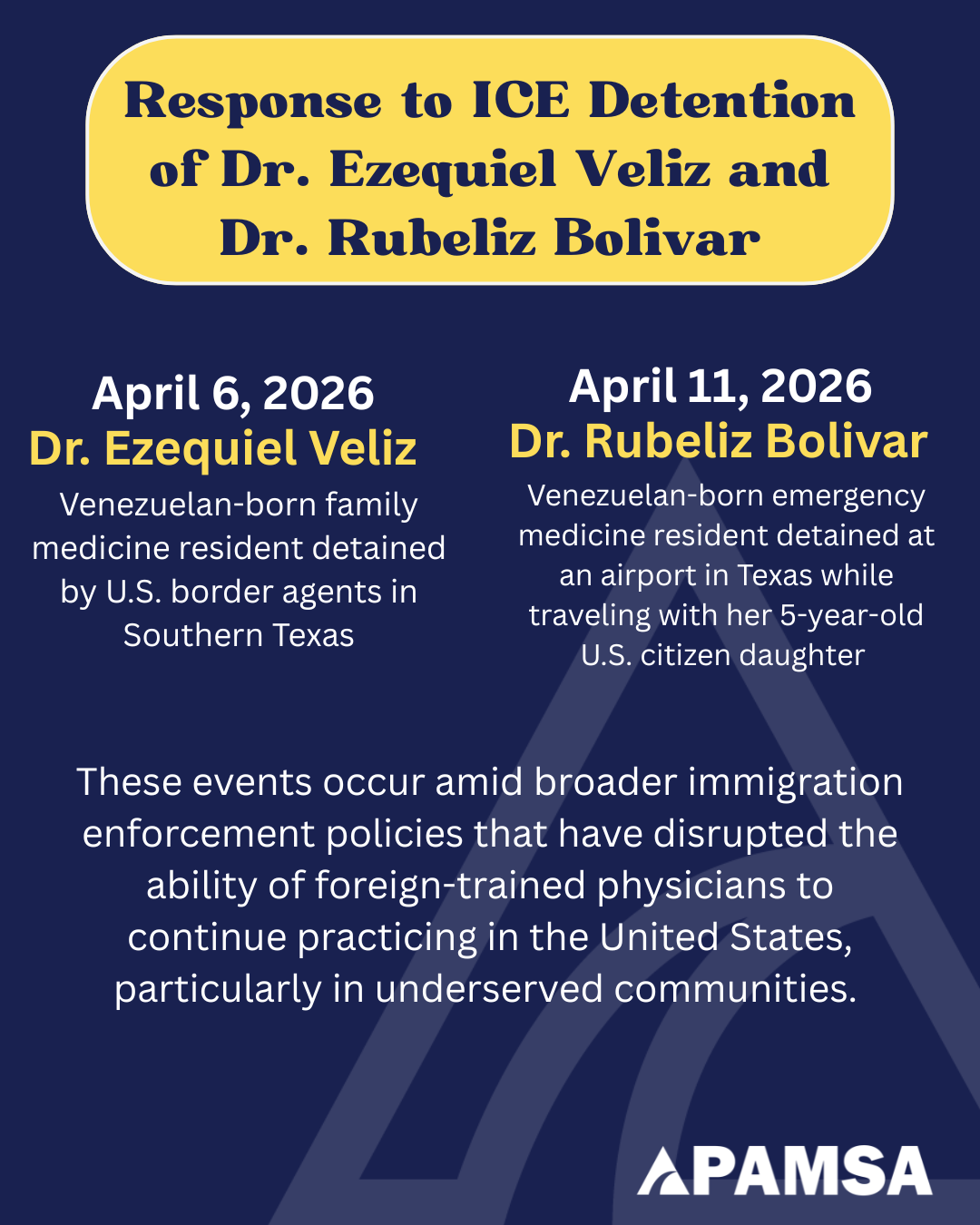
On April 6, 2026, Dr. Ezequiel Veliz, a family medicine physician serving in the Rio Grande Valley, was detained by U.S. Border Patrol agents at a checkpoint in South Texas. Days later, on April 11, 2026, Dr. Rubeliz Bolivar, an emergency medicine resident in a federally designated medically underserved area, was detained at an airport in McAllen, Texas while traveling with her 5-year-old U.S.-citizen daughter to attend a scheduled asylum interview. These events occur amid broader immigration enforcement policies that have disrupted the ability of foreign-trained physicians to continue practicing in the United States, particularly in underserved communities.
Immigration enforcement actions have increasingly targeted immigrants and pose a significant threat to healthcare access at both local and national levels. International medical graduates represent one in four physicians in the U.S. medical workforce and disproportionately serve medically underserved communities. In medically underserved regions, the removal of even a single physician can disrupt care delivery and strain already-limited resources. More broadly, such actions risk creating a chilling effect across the medical workforce by discouraging physicians from training or practicing in high-need areas. Recent increases in H-1B visa filing fees and stricter immigration policies have already contributed to this effect, with some residency programs no longer accepting H-1B applicants due to new fees that increase sponsorship costs for foreign-trained physicians by up to 4900%. Despite recent exemptions for some applications submitted by immigrant physicians, ongoing enforcement practices continue to contribute to fear and instability among immigrant healthcare workers. These barriers threaten the ability of immigrant physicians to continue filling critical shortages seen in underserved communities.
Immigration enforcement actions also contribute to a growing climate of fear among immigrant communities, discouraging individuals from seeking medical attention even in urgent situations. A recent survey found that nearly half of likely undocumented immigrant adults and 14% of immigrant adults overall reported avoiding medical care due to immigration-related concerns. When patients fear detention, healthcare settings cease to function as safe spaces, creating significant barriers to essential care.
National APAMSA strongly condemns the detention of Dr. Rubeliz Bolivar and Dr. Ezequiel Veliz in addition to broad, indiscriminate immigration enforcement practices that have resulted in the detention of law-abiding individuals. These actions directly conflict with established APAMSA policies, which oppose the presence of immigration enforcement in healthcare settings and recognize fear of detention as a major barrier to care. APAMSA further supports expanding healthcare access regardless of immigration status and advocates for the health and safety of migrant populations. We express deep concern over enforcement practices that disrupt patient care and threaten public health, and call for increased transparency, accountability, and policy reform to protect both patients and healthcare professionals.
For questions regarding this statement, please contact the Rapid Response Director, Pehr Williamson at rapidresponse@apamsa.org