

GHHS and AOA AANHPI Representation
By Jessie Chen and Preston Dang
Medical students are trained to chase excellence: high board scores, strong clinical evaluations, and prestigious honors. These metrics are presented as objective markers of merit and gateways to competitive residency programs and leadership pathways. However, for Asian American, Native American, Pacific Islander (AANHPI) medical students, they often reveal a notable disparity: a discordant system where excellence is recorded, but leadership is withheld.
Two of the most influential distinctions in residency applications, Gold Humanism Honor Society (GHHS) induction and Alpha Omega Alpha (AOA) membership, are strongly associated with career advancement. However, recognition through these honors is not distributed equitably. Although AANHPI students comprise approximately 22–24% of U.S. medical students, while representing only 7% of the U.S. population, prior research has shown that AANHPI students are less likely to be selected for honor societies.1 The label of being “overrepresented” obscures these disparities, narrowing a diverse group into a single narrative and masking inequities in recognition and advancement.
One recently published journal article found that, compared with White students, graduates self-identifying as AANHPI were less likely to be AOA members, and Chinese, Korean, and Taiwanese graduates were less likely to be GHHS members.1 Furthermore, there was relatively low representation of Cambodian, Indonesian, Laotian, Native Hawaiian or Pacific Islander, and American Indian or Alaskan Native students in the study, highlighting their significant underrepresentation in medicine.1 When the system denies us these honors, the subtext is loud: “We value your labor, but we do not see your leadership.”
This bias is reflected in the language of clinical evaluations. AANHPI students are less likely to be described with standout terms such as “brilliant” or “natural leader,” and more often characterized as “diligent” or “dependable.” These descriptors are not inherently neutral; they shape how residency programs interpret an applicant’s potential. These are the traits of a good employee, not a department chair. As a first-generation Taiwanese American and an eldest daughter, I have spent my life being “a pleasure to have in class.” As a first-generation Chinese American and only child, remarks along the lines of “he’s quiet but is a great student” are the apparent ideal. In medical school, I realized that this praise is a double-edged sword. It rewards the “quiet consistency” that brings prestige to medical schools and keeps hospitals running, but simultaneously builds a professional ceiling that rewards self-advocacy and visibility, emphasized in Western cultural norms.
The consequences extend far beyond medical school. Clerkship evaluations influence honor society selection, honor societies shape residency opportunities, and residency training sets the trajectory for leadership roles. In this way, the “bamboo ceiling” in healthcare is not simply a mid-career phenomenon; it is constructed early, reinforced through implicitly biased evaluations, and solidified through inequitable recognition. Although AANHPI students make up nearly a quarter of medical students, their representation diminishes sharply in positions of authority. Only 9% of female and 11% of male department chairs at U.S. medical schools are AANHPI. While AANHPI individuals are present in administrative roles in these departments, they remain underrepresented in dean’s office leadership.
True diversity is not just about a total percentage; it is about reflecting the full mosaic of the American population at every level of authority. We cannot achieve health equity for AANHPI patients until we recognize and support students of their respective communities and empower them to lead. Medical schools must move beyond coarse amalgamations of diversity metrics; instead, we must strive to disaggregate AANHPI data, audit honor society selection processes, and address the implicit bias that prevents a “diligent” student from being seen as a “brilliant” leader by reinvigorating medical educator training.
References
- Yang DH, Nguyen M, Zhang L, et al. Disparities for Asian American Medical Students in Alpha Omega Alpha and Gold Humanism Honor Societies. JAMA Netw Open. 2026;9(4):e265168. doi:10.1001/jamanetworkopen.2026.5168
- Asian Americans, Native Hawaiians, and Pacific Islander populations’ contributions to healthcare: Learn about the career journey of Stanford medicine AANHPI leaders. Asian Americans, Native Hawaiians, and Pacific Islander Populations’ Contributions to Healthcare: Learn about the Career Journey of Stanford Medicine AANHPI Leaders – Stanford Environmental Health & Safety. Accessed May 26, 2026. https://ehs.stanford.edu/event/asian-americans-native-hawaiians-and-pacific-islander-populations-contributions-to-healthcare-learn-about-the-career-journey-of-stanford-medicine-aanhpi-leaders.
Author Bios
Jessie Chen is a dual-degree MD/MPH student at the University of Miami Miller School of Medicine. She serves nationally as the National Director of Organized Medicine for the Asian Pacific American Medical Students Association (APAMSA) and locally as the Chapter Mentorship Chair. Passionate about healthcare policy and community empowerment, Jessie works to amplify AANHPI voices in organized medicine while fostering the next generation of culturally competent physicians.
Preston Dang is a third-year osteopathic medical student at Western University-College of Osteopathic Medicine of the Pacific in Pomona, California. He is originally from Orange County, California, completed his B.S. in Microbiology, Immunology, and Molecular Genetics at UCLA, and M.P.H. at Tufts University School of Medicine in Boston, Massachusetts. He is currently serving his second term on APAMSA National Advocacy Committee, and is an active member within the American Medical Association and California Medical Association.
Interested in submitting an Op-Ed? See the FAQ section on our main Op-Eds page for more information.

We Ask About Alcohol. Why Not Gambling?
By Hayoung Ahn
During a routine visit, clinicians ask about alcohol, drugs, depression, and personal safety. A question about gambling rarely follows, even as wagering moves into the sports and financial apps people carry in their pockets.
Until recently, I assumed World Cup pools and fantasy football in my own social circles were friendly competitions with a few dollars at stake. Then I learned that some people had hundreds or thousands riding on a game. I originally thought that behaviors like frequently checking apps, tracking injuries, or recalculating matchups reflected my friends’ enthusiasm, but I was surprised to learn that they hinged on real financial stakes. Although placing bets is not evidence of a gambling disorder, I began to sense that gambling had become embedded in familiar social activities so seamlessly that I had barely recognized it as gambling at all.
Medicine already understands this distinction with alcohol. We do not diagnose alcohol use disorder from a drink; we ask about the amount, frequency, and effects. A similarly open question about gambling gives patients room to say whether betting remained entertainment or began to affect sleep, finances, or relationships. We already ask about many of gambling’s consequences. We rarely ask about gambling itself.
The DSM-5 places gambling disorder among addictive disorders [1]. A meta-analysis of 107 studies found that people with gambling problems had 2.17 times the odds of lifetime suicidal ideation and 2.81 times the odds of a suicide attempt [2]. Another analysis estimated that only about one in five people with problem gambling had sought help [3]. A patient who comes in for depression or insomnia may say nothing about betting unless someone asks.
For Asian American, Native Hawaiian, and Pacific Islander (AANHPI) communities, the research remains sparse. In a study of 813 college students, Asian American and White students reported similar rates of gambling initiation. Among those who had gambled, 28.9% of Asian American students and 16.8% of White students met the study’s threshold for problem-gambling symptoms [4]. Conducted at one university before today’s mobile betting market, the study raises concern but cannot establish current prevalence in AANHPI communities.
The national figure often used to fill that gap hides the differences we need to understand. A 2001-2002 survey reported disordered gambling in 2.3% of a combined Native American and Asian American group, compared with 1.2% of White adults [5]. A 2025 American Psychiatric Association resource presents 2.3% as an AAPI gambling-disorder rate [6]. The matching study used a broader measure and pooled those two populations. It provides no separate rate for Asian Americans and no data on Native Hawaiian or Pacific Islander people. With numbers this blunt, how can we tell whom prevention reaches?
Researchers in Greater Boston interviewed 40 Khmer, Chinese, Korean, and Vietnamese immigrants in their preferred languages. Participants described poverty, stressful work, isolation after immigration, limited culturally accessible recreation, and casino marketing [7]. Their accounts show why ‘Asian gambling culture’ is a poor substitute for understanding how circumstances and neighborhoods shape risk.
Care must also be reachable. Among 431 Asian American adults, self-stigma about seeking help was associated with less willingness to pursue mental-health care [8]. A gambling-treatment program run by the NICOS Chinese Health Coalition received 140 inquiries; 19 people expressed interest in language-concordant telephone counseling and eight enrolled [9]. These findings leave clinics with a practical question: how easily can someone who asks for help actually receive it?
Meanwhile, access to betting keeps expanding. State-regulated sportsbooks handled $166.94 billion in wagers in 2025, according to the industry’s trade group [10]. Kalshi offers sports-event contracts using the language of trading. Dr. Timothy Fong, co-director of UCLA’s Gambling Studies Program, told the Associated Press that clinicians are seeing prediction-market use among patients more often [11]. The clinical literature is still thin, but a patient can lose money on a game through an app that never uses the word ‘bet.’
Clinicians can begin by asking about gambling when warning signs appear: depression, sleep loss, unexplained debt, family conflict, or suicidal thoughts. The three-question NODS-CLiP asks about loss of control, lying, and preoccupation [12]. A systematic review found screening feasible in several health settings, while acknowledging limited evidence on outcomes [13]. Screening must also lead to a plan. One pilot identified the referral pathway as a major barrier [14]. A positive answer should prompt attention to immediate safety and a connection to care the patient can use.
APAMSA’s policy compendium already recognizes online gambling as a public-health concern and calls for research on AANHPI health [15]. Medical schools should teach trainees when and how to ask about betting. Health systems should map gambling-specific referrals in the languages their patients speak before adding a screen. Researchers should publish subgroup-specific findings so communities can help design and evaluate outreach. A translated brochure alone will not help a patient who cannot get through intake.
Medicine does not wait for alcohol use to become liver failure before asking about drinking. We should not wait for a betting app to surface as debt, depression, or a suicide attempt before we ask about gambling.
References
- Jeremiah Weinstock and Carla J. Rash, ‘Clinical and Research Implications of Gambling Disorder in DSM-5,’ Current Addiction Reports 1, no. 3 (2014): 159-165. DOI: 10.1007/s40429-014-0026-7
- Joakim H. Kristensen et al., ‘Suicidality among individuals with gambling problems: A meta-analytic literature review,’ Psychological Bulletin 150, no. 1 (2024): 82-106. DOI: 10.1037/bul0000411
- Rimke Bijker et al., ‘Global prevalence of help-seeking for problem gambling: A systematic review and meta-analysis,’ Addiction 117, no. 12 (2022): 2972-2985. DOI: 10.1111/add.15952
- Alan Ka Ki Chan et al., ‘Personal Gambling Expectancies among Asian American and White American College Students,’ Journal of Gambling Studies 31, no. 1 (2015): 33-57. DOI: 10.1007/s10899-013-9397-2
- Analucía A. Alegría et al., ‘Disordered gambling among racial and ethnic groups in the US: Results from the National Epidemiologic Survey on Alcohol and Related Conditions,’ CNS Spectrums 14, no. 3 (2009): 132-142. DOI: 10.1017/S1092852900020113
- American Psychiatric Association, Healthcare Professional’s Resource Guide: Addressing Gambling Disorder in Asian American and Pacific Islander (AAPI) Communities, June 2025. Read source
- Mia Han Colby et al., ‘Unpacking the root causes of gambling in the Asian community: Contesting the myth of the Asian gambling culture,’ Frontiers in Public Health 10 (2022): 956956. DOI: 10.3389/fpubh.2022.956956
- Qian Li and James P. Whelan, ‘Behavioral Addiction from the Asian Americans Perspective: Exploration of Public and Help-Seeking Stigma,’ Journal of Gambling Studies 40, no. 1 (2024): 367-385. DOI: 10.1007/s10899-023-10210-5
- Iman Parhami et al., ‘The Implementation of a Telephone-Delivered Intervention for Asian American Disordered Gamblers: A Pilot Study,’ Asian American Journal of Psychology 3, no. 3 (2012). DOI: 10.1037/a0029799
- American Gaming Association, ‘Commercial Gaming Revenue Hits $78.7 Billion in 2025,’ February 26, 2026. Read source
- Associated Press, ‘Prediction markets say they’re different from sportsbooks. Gambling addicts say it’s all the same,’ April 2026. Read source
- Marianna Toce-Gerstein, Dean R. Gerstein, and Rachel A. Volberg, ‘The NODS-CLiP: A Rapid Screen for Adult Pathological and Problem Gambling,’ Journal of Gambling Studies 25, no. 4 (2009): 541-555. DOI: 10.1007/s10899-009-9135-y
- Lindsay Blank et al., ‘Should screening for risk of gambling-related harm be undertaken in health, care and support settings? A systematic review of the international evidence,’ Addiction Science & Clinical Practice 16 (2021): 35. DOI: 10.1186/s13722-021-00243-9
- Andrew Reid et al., ‘Exploring the feasibility of a gambling harm screening model in general practice and community service settings in Fairfield: a pilot study,’ Australian Journal of Primary Health 30 (2024): PY23208. DOI: 10.1071/PY23208
- Asian Pacific American Medical Student Association, ‘40.014 Recognizing Harmful Impacts of Gambling and Supporting Investigation of Gambling Impacts on AANHPI Health,’ APAMSA Policy Compendium, updated March 2026. Read source
Author Bio
Hayoung Ahn is a medical student at the David Geffen School of Medicine at UCLA and serves as the APAMSA Neurology Student Representative. She earned her A.B. in Neuroscience from Harvard College and an M.A. in Education from UCLA. She is interested in neurology, medical education, and AANHPI health equity. She is passionate about storytelling at the intersection of medicine and media and enjoys creative writing, photography, hiking, and exploring new cities.
Interested in submitting an Op-Ed? See the FAQ section on our main Op-Eds page for more information.
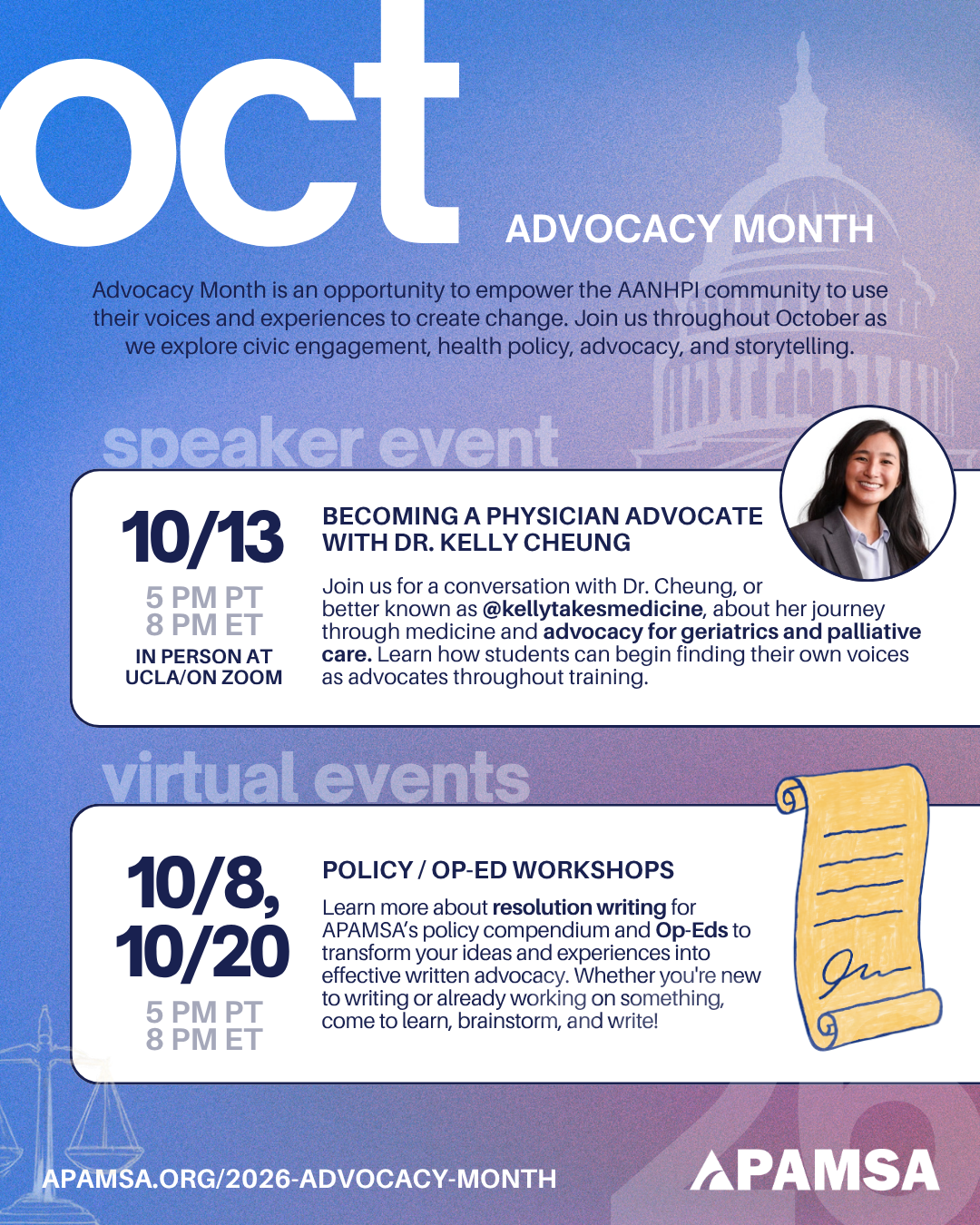
October 2026: Advocacy Month
October 2026: Advocacy Month
Advocacy Month empowers APAMSA members to turn their experiences and ideas into action. Throughout October, join us for workshops, educational events, civic engagement initiatives, and opportunities to elevate AANHPI voices and advocate for healthier, more equitable communities.
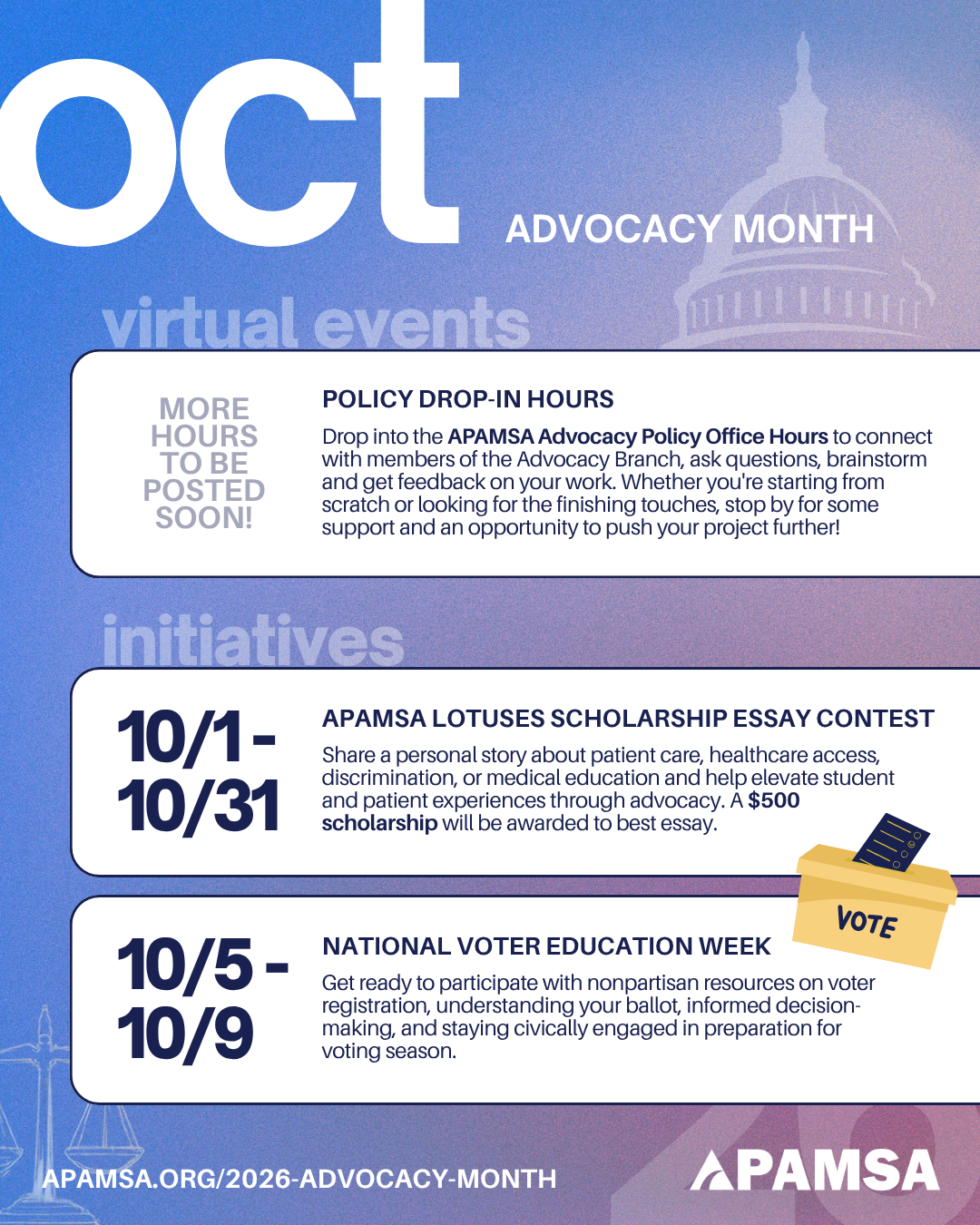
October 1-31, 2026
APAMSA is excited to launch LOTUSES: Linking Our Tales, Uniting Student Experiences and Stories, an Advocacy Month essay contest highlighting the experiences of medical students with patient care, healthcare access, and medical education.
Share a personal story or reflection about patient care, barriers to healthcare access, discrimination in medical education, or another experience that has shaped your perspective as a medical student and future physician. Through LOTUSES, we hope to elevate student and patient experiences and demonstrate how storytelling can help inform advocacy for better healthcare and medical education.
🏆 Top essay: $500 scholarship
🎟️ Receive a free HEAL Summit ticket with your submission!
🗓️ Deadline: October 31
October 5-9, 2026
National Voter Education Week is here! Start the week by making sure that you’re ready to participate. Check your voter registration status, review important deadlines in your state, and make sure your information is up to date.
Civic engagement starts with being prepared. Take a few minutes today to check your registration and encourage your friends, classmates, and community to do the same.
October 8, 2026
Have an issue you care about but aren’t sure how to put it in writing? Join APAMSA’s Advocacy Branch for a Policy & Op-Ed Workshop focused on transforming ideas and experiences into effective written advocacy! Learn to identify an advocacy goal, support your argument, and begin developing policy-focused writing or an Op-Ed.
Whether you’re new to writing or already working on something, come to learn, brainstorm, and write!
Date: October 8, 2026
Time: 5PM PT | 8PM ET
October 13, 2026
What does it mean to become a physician advocate? Join APAMSA for a conversation with Kelly Cheung, MD (@kellytakesmedicine), UCLA Geriatrics and Palliative Medicine Fellow, as she shares her path to medicine and what inspired her advocacy for geriatrics and palliative care. Hear how advocacy has shaped her journey through medical school, residency, and fellowship, and learn how pre-health and medical students can begin finding their own voices as advocates
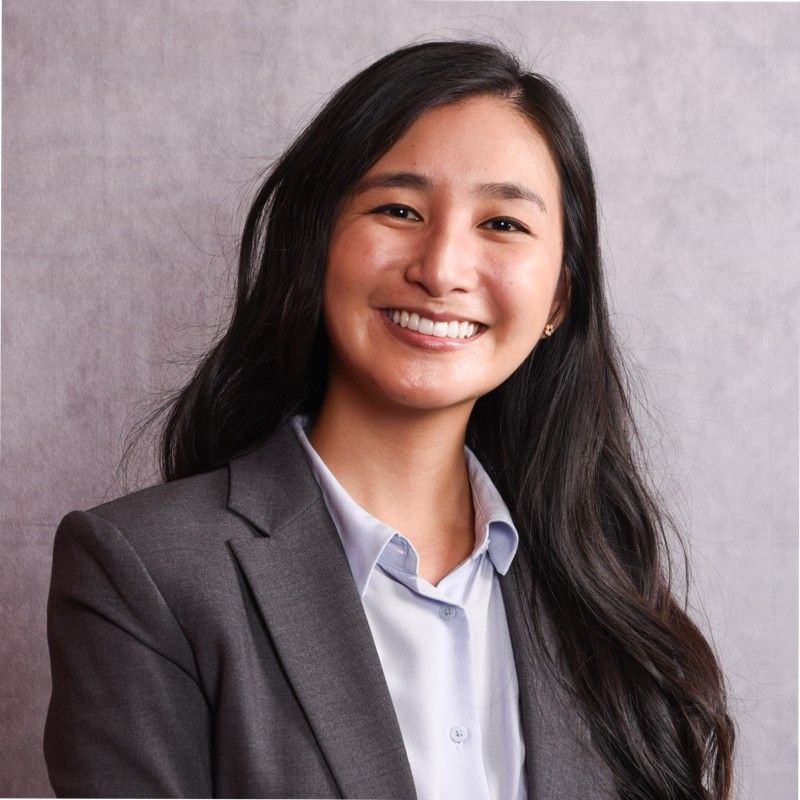
Kelly Cheung, MD
UCLA Geriatrics and Palliative Medicine Fellow
Date: October 13, 2026
Time: 5PM PT | 8PM ET
October 20, 2026
Interested in turning the issues you care about into effective advocacy? Join APAMSA’s Advocacy Branch for our second Policy & Op-Ed Workshop of Advocacy Month. Learn how to develop and strengthen policy-focused writing, build evidence-based arguments, and communicate issues affecting our patients and communities.
Date: October 20, 2026
Time: 5PM PT | 8PM ET
October 29, 2026
Have a resolution you’ve been stuck on? Drop into the APAMSA Advocacy Policy Office Hours to connect with members of the Advocacy Branch, ask questions, brainstorm and get feedback on your work!
Whether you’re starting from scratch or looking for the finishing touches, stop by for some support and an opportunity to push your project further!
Date: October 29, 2026
Time: 5PM PT | 8PM ET
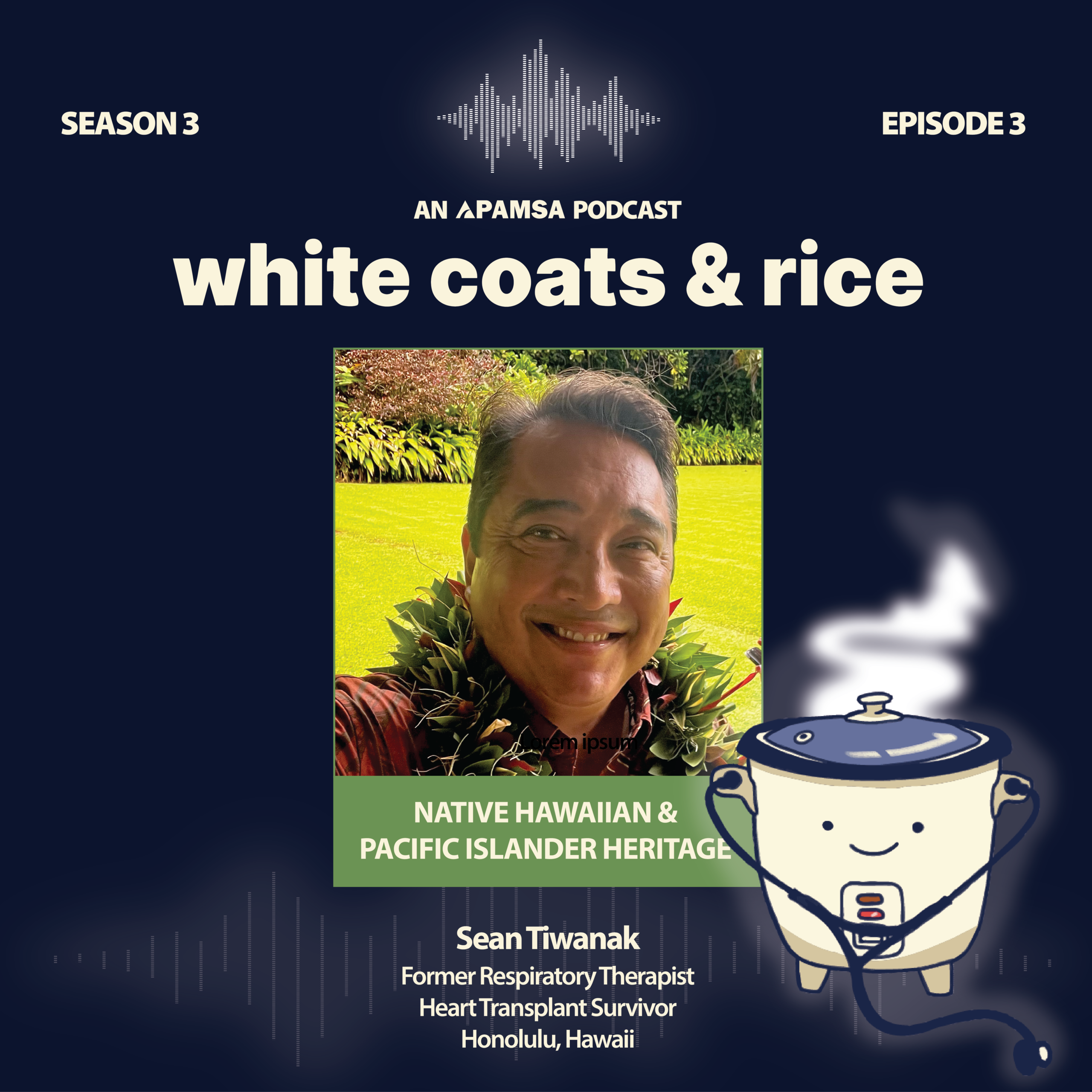
Sean Tiwanak on Medicine, Music, and Bringing Aloha to Patient Care
This episode of White Coats and Rice features Sean Tiwanak, a former respiratory therapist and heart transplant survivor from Honolulu, Hawaii. In celebration of Native Hawaiian and Pacific Islander Heritage Month, Sean reflects on his unique journey from treating patients to fighting his own battle against severe heart failure. He shares his unexpected path into healthcare and the essential knowledge that helped him identify his condition. Mr. Tiwanak also discusses the healthcare disparities the NHPI community faces and the importance of treating patients as humans before anything else. The episode highlights how important empathy, connection, and humanity are for the next generation of healthcare workers as they navigate their careers.
Listen here:
Spotify
Apple Podcasts
YouTube
This episode was produced by Grace Kim, hosted by Herbie Villaflores, and graphic by Romi Sheng.
00:10 — Introduction to the Episode and Guest
02:06 — Career as Respiratory Therapist
09:07 — Heart Transplant Story
23:40 — Connection with Patients
36:19 — NHPI Healthcare Barriers
41:07 — Career as Musician
47:54 — Advice for Future Generation
52:13 — Closing Remarks
00:10 — Introduction to the Episode and Guest
Herbert Villaflores: Welcome everyone to a new episode of the Asian Pacific American Medical Student Association podcast. From roundtable discussions of current health topics to recaps of our panels with distinguished leaders in the healthcare field to even meeting current student leaders within the organization, this is White Coats and Rice. My name is Herbie Villaflores, and I’m an MS1 at UMKC and a current National Podcast Committee member here at APAMSA. I’ll be your host for today. Today, we are joined by Mr. Sean Tiwanak.
And we’re so grateful to have him here for the native Hawaiian and Pacific Islander podcast. So let’s hear a little bit about who we are here with today.
Sean Tiwanak: Aloha everybody. My name is Sean Tiwanak. I’m currently living in Hawaii and Honolulu and I was born and raised here, part Hawaiian, part Filipino, and my mom was, we would say Haole which is Caucasian, so a mix, which is typical here in Hawaii. I have a background in the medical field, pharmaceuticals, and also currently doing real estate appraisal work, which is valuing properties. So I’ve moved out of that and my family has a lot of roots in the medical field.
And I had my own experiences as a patient, you know, during the last twenty years, which was very fortuitous in a way that I had the background that I have and I’m sure all of you in the medical field. You know, hopefully, you know, your experiences will not only help you professionally, but also in your personal lives and with the people around you as well.
02:06 — Career as Respiratory Therapist
Herbert Villaflores: So you are a man of many talents, it seems like. I know you work as a respiratory therapist in Hawaii. How did you get to work there?
Sean Tiwanak: Well, that’s actually a really roundabout story. You know, I find people who become doctors tend to plan their path and commit to it from early on when you start college. I was a little bit different. I was really into music. I was supposed to go to Air Force Academy. I declined that. I wanted to go to Los Angeles and I went to school at Loyola Marymount for a while. And I truly wanted to be in music and things like that. But life is a series of progressions and you don’t always end up where you plan, what what you plan, right? You just end up doing things. I never thought I was gonna be a respiratory therapist. It wasn’t on my radar. I didn’t even know what it was, right? And for people who don’t know what it is, it essentially in your line of work in the future, you’ll probably be dealing with respiratory therapists either in an intensive care unit running the ventilators and other type of life support or in ICU and then just general respiratory care, which has to do with administration of medication and therapeutic devices that help patients with emphysema and whatever, right? And in very, very extreme things like adult respiratory distress syndrome and so forth, really critical.
So I was actually bounced around a lot after my first few years of college. I didn’t know what I was gonna do. And just one thing led to another. I was in a construction field and ended up there and I got a really bad injury to my wrist, and they put me through vocational rehab, and they said the only thing that we can find for you, they don’t want me lifting anything over a certain pound, like 25 to 30 pounds, is a respiratory therapist. And I said, What’s that? So I just transitioned into the respiratory therapist field, which is great for me because I was always very good in science. And my mom’s nickname for me is Doc, you know. And I think some people, especially if you’re going to be in the healthcare field, you are kind of naturally a caregiver, and you have a part of you that’s altruistic and you want to help people, right?
So that’s where I found a real connection in what I did as a therapist. Not only helping people live, but just a connection that you make with people. So I went to respiratory school here in Honolulu and I did that for a number of years. And then I transitioned into- I got a business degree while I was working. And I was gonna move up in the hospital. My dad said, well, what do you wanna do? Are you trying to make money or do you wanna like, you know, serve humanity, so to speak? I said, I want to make money.
So he said, get a business degree. So I work around the hospital. And my dad was a major administrator for St. Francis healthcare system and he helped build the hospitals and what you call the hospice centers and the dialysis. He’s done a lot of work like that over the years. So I ended up working for Merck and AstraZeneca in Washington, and I went back to Oregon, and then I moved to the East Coast and I worked for AstraZeneca in the corporate offices doing kind of like this. We’re doing- back in the day, this type of video conferencing was a new thing and I was involved in this type of marketing that had to do with like Zoom. But back in the day it was you know, fledgling, I guess.
But I will just say this much. I had a period of time where I got and this is a message to all the young students and people out there. I got into the routine of working these night shifts and just doing my job and it got really tedious. It got really, you know, I hated it after a while. I just had all these patients I had to see in the morning, and what changed for me was taking the time to just connect with the person that I was seeing, even if it was like four or five o’clock in the morning, end of my night shift, and connecting with the human being that was there, not just a patient, not room 482 or 357, like you tend to do, but you know, Mr. Takahashi or Janice, you know, and connecting with that person really is what made it fulfilling for me to be doing medical work.
And of course sometimes you just save lives, you know, and that’s exciting too. You know, doing things and you know you made a decision and people are alive because of you. And there are people alive because of things I did. And I got to meet later and been in a coma for months and things and those are very rewarding, but it’s the day in and day out and connecting with the individual person that often gets lost in healthcare. I think it’s really, really a payoff that you can have every moment.
I had a heart transplant in 2020. So I was in Cedar Sinai and it was during COVID and nobody could touch me. And everybody came in with gowns and masks and shields. And it was very isolating during that period of time. And I had one doctor, and she came and she grabbed me by the hand and just that alone was so comforting as a patient, that real simple, just with a glove on, you know, I could but just that connection. And I had my ukulele, because I’m a musician and I was there in the bed. One of the doctors who’s now a transplant doctor at Cedar Sinai, she was a fellow at the time. And then one of the nurses said, “Hey, you should find someone to sing” and the doctor came in and we sang.
And then that went viral. It went all over the world. We sang a song together. And I was laying in my bed on a balloon pump, I was laying flat, you know, because I couldn’t get up. And it was before my transplant. But it’s the real human interaction that you can really touch lives. And that’s good medicine, you know, not just the pharmacology and the technology, but you, your humanity and your spirit and just the simple little things can bring so much healing to people. And in my case it was very simple things. And then the music was also part of that. I know that’s a mouthful, but I feel that’s really the takeaway from my experiences.
Herbert Villaflores: Yeah, that’s a great answer. Thank you. It was good, I like that.
09:07 — Heart Transplant Story
Herbert Villaflores: Let’s talk more about your heart transplant and how that was. I know that was a few years ago when you mentioned how you went to Los Angeles during COVID. What was that like as a respiratory therapist and seeing the other side of it?
Sean Tiwanak: Taking a step back. So I was a specialist in cardiopulmonary, everything about hemodynamics. I knew all the medications because I sold them all from AstraZeneca and Merck and, you know, your beta blockers and angiotensin receptors. Two blockers and ARBs and what you call the ACE inhibitors, and mechanism of action inside and out. I know how it works and what it does to the body’s hemodynamics and in these different disease states, right?
So I had a bad flu. I was in Reno. I had gotten a business degree. I left pharmaceuticals and always wanted to be an entrepreneur. And I had a background with doing tile. So I got my contractor’s license. I had a contracting company doing tile and granite in Reno and a tile store. I got really sick one winter. It was a bad flu. And most of my workers, you know, Mexican transplants, they can handle, but us Polynesians, especially Hawaiians, we’re not used to diseases and things, right? Our bodies are not- when they say when you go to Mexico, don’t drink the water, right? Like we certainly shouldn’t do that. That’s okay for them.
So everybody got really sick. I had a viral infection and it hurt so bad. My chest hurt so bad. I didn’t know what was going on. I never felt that kind of pain. You know, it was a gastro- they say coxsackie B2 virus to be more specific, potentially, because it started as gastric and then it became a very, very bad upper respiratory infection flu, right? I thought maybe I had pneumonia. I heard crackles in my bases and stuff, I still had my stethoscope, and it was difficult walking, maybe like fifty feet, twenty-five feet, and a lot of pain under the rib cage, right? Upper abdominal pain. And I thought, okay, I got- I probably have pneumonia.
And so I went to an urgent care and the lady said I had asthma and she was a PA and I go, no, you can’t tell me I have asthma. I know the definition. That’s reduced by 50%, your FEVs are twenty-five to seventy-five. I know all that stuff. So no, I don’t have asthma. Sorry. Sure enough, I start Cheyne-Stokes breathing the night before I was supposed to have a doctor’s appointment. And this had been going on for about a month. And so I was literally like sleeping and I’d wake up just after sleeping and be going like [rapid breathing], right? So I know that’s when you call code. 500 cold blue already. Your resp- that’s my training. That’s an imminent sign of respiratory failure and cardiac failure, risk for cardiac arrest, right? Cheyne-Stokes breathing. I knew what that was. If I didn’t, I wouldn’t be here. And I think a lot of people die. You see stars and people, they die because they don’t know that’s imminent death, right?
Or imminent or- so I knew one of these times I’m not going to- I went to the couch and sat and it was happening. And I said, I’m not gonna wake up from one of these. So I went in the room. I told my wife, hey, I gotta go to the emergency room. She was really upset. I said, I’ll go drive myself. She took me reluctantly and I went in. Everybody in the ER at two in the morning thought I just needed a note for work. And I said no, I own the company, I don’t need a note. I’m really sick. I just look like this. I looked okay to them.
And that’s another lesson. It’s because somebody looks fine, doesn’t mean they are. So I asked for a chest. They thought- they were reluctant to do anything. But I said, Can you do a chest x-ray? I got crackles in my bases. And they said no, you don’t. I’ll listen to you, right? Ex respiratory therapist, I got a $300 stethoscope at home, says different, right? They didn’t listen to me, to the patient.
They did a chest x-ray, came back into the room and said, Mr. Tiwanak, have you had a heart attack? I said no. Nobody is working harder than me, the whole company, right? I’m the owner. They said, “You have severe heart enlargement”. And it just washed over me. All the stats that I knew. 50% survival rate within the first year when you’re diagnosed with enlarged heart like that.
I said, what I got going for me? You know. And then, so then I come back to this, they took me in to do an echo, a 15% ejection fraction. And if you don’t already know what that means, it should be 55 to 60. So my heart was- so forget what percentage decreased it was, but it was 15%. I thought, my gosh, then they took me in to do a nuclear thing, nuclear study. With the thallium, it was twelve percent. And I said, You know what? As a respiratory therapist, I never saw one person walk out of an ICU with an ejection fraction less than 12, 15. They never left. None of them. But what was the difference? I told myself, well, the difference is you’re 37, you’re otherwise healthy, you’re not morbidly obese, and you have no co-morbid conditions, no diabetes. That’s what was wrong with all these other people. They had all those other things going on. So I said, I have a chance.
So they did what they could and I knew right away. This is, you know, how you get hurt and you say this is gonna leave a mark or scar? This is permanent. End stage. I knew already. There’s no coming back from this. I’m not gonna escape this one. Yeah, my luck ran out. So I just took it six months at a time, thinking, you know, if I can last six months, because the thing that’s gonna get you is an arrhythmia, right?
And then just day by day, six months. So many times I wonder should I call the emergency room? An ambulance. Since I was a musician, I remember being at home and I could walk to the couch from my bed. That’s an- out of breath. So I said, about a month into it, I said, I wonder if I can still sing a song. So I picked up my guitar, I started playing a song by Don Hanley called End of the Innocence. And it was literally like this. I go “Remember when the days were long” [breaths] “Roll beneath the deep blue sky”. And I had to take a breath after every phrase and I thought my music is over. I’ve recorded albums and stuff. I was like a serious musician. I thought that’s done for me. So I finally made a goal of myself to like, you know, over time sing a song all the way through. That was a six month goal, and I did do that.
Then another six months, I told you, I want to stand up and sing a song. So I finally made that happen. Ultimately, I had the defibrillator. But what was the key point here? Since I had a background in pharmacology and hemodynamics and respiratory therapy and advanced respiratory techniques, I was able to save my life and live with this for 15 years. And when I was sick, I tell you, I thought I was gonna die so many nights, but I would do things that I learned in Respiratory. Like you will learn about inverse IE pressure controlled ventilation. And that is when you increase the area under the curve by keeping the breath in longer, increasing the time for gas exchange between oxygen and carbon dioxide, and then exhaling quicker and in- it’s sort of the instead of the inspiration IE ratio of like one to two, it’s like three seconds to one or something like that. And so I would do these things to help save myself. And ultimately had the defibrillator and things in it.
And I got to where I was performing music and things like that regularly, many times feeling like passing out, but ultimately it caught up to me in 2019. I think I got COVID and then I was on. Oxygen 24 hours a day. I got to the point where I was playing some tennis too, which was also amazing to me. People would say well, you’re so sweaty. What’s wrong with you? And I think, yeah, you know what? You don’t know. To me, I’m a miracle already. I’m here playing.
Then got to the point my pulmonologist told me, Sean, there’s nothing else we can do for you. You need to get a transplant. And I didn’t want one. I never wanted a transplant. I thought I wanted my own heart and I was hoping technology would catch up with stem cells and organ things. That’s why it took fifteen years before I finally did it. And it was out of sheer necessity. Things happened in the government, especially in the early 2000s, I guess. Maybe we know where they kiboshed all the stem cell research and I was- it crushed me because that’s what I was counting on. And I went to get shots of stem cells in my heart in Dominican Republic, and it helped a little bit, but my heart was too far gone.
So ultimately, I was planning my funeral in 2020. I had a song list, everything, because I’m not gonna make it. That’s done already. I know I’m at the end. I had an episode where it had like thirteen times- my heart, my defibrillator shocked me. I’d just pass out and it was really bad. And I was lucky I made it through that, you know, just it in a period of like an hour at home, right? In the ambulance. And that had to do with electrolyte balance, you know, with potassium and sodium. If those things are off, then you’re gonna have big problems with your, you know, your heart beating. And so I was in VTach mostly, yeah.
So anyway, flash forward. Got into a program at Cedar Sinai. They immediately took me in. It was during COVID, so I couldn’t get the pulmonary function tests and everything else that you needed to do before. You gotta basically be healthy to get a transplant. I’ll throw this in. They didn’t care about how I was doing medically. The first thing they did was a sociologist and a psychology- psychiatric evaluation. That’s the first two things they want. They want to make sure you’re a good patient and they also want to make sure that you’re going to be compliant and that you have a good social support system, family, and that you don’t have behaviors that are not worth it. Cause I think that year it cost about 1.8 million dollars on paper, you know, with all the hospitalization.
And I think that Cedar Sinai was probably a million two or something when I looked at all the bills later. I didn’t pay all of that. Thankfully I had insurance, right? And I don’t know how things are now, but for me, it- you know, that’s a humongous expense. So they’re very careful about who they choose for this kind of stuff. And I’m very compliant. Daily medication, right? And at that time I was on oxygen and I got a heart transplant.
I needed to be stabilized for two weeks. Cause you just can’t go in, be sick and get a transplant. Everything has to be just right. Your pulmonary pressures have to be within a range, like less than 25. And mine was like 40. So they had to optimize things before I could even get it. Then they put me on the list five days later. I got- and I think partially because of my blood type A positive. I got an offer. First one that the heart was good enough, they said there’s something wrong with it when they took it out. And then the next morning they had another one. So after six days on the list, I got it. I’m still in touch with the family. That sometimes happens. You are able to contact them.
But my donor was a 26-year-old guy they called Superman. And he had a seizure. He got hit in the head doing dare devil stuff. Maybe one too many times started having seizures, and- that’s his name is Zach, and I know a lot about him and his family. I’m in touch, I was just in touch with them this week, in fact. And visit them in California still. But how am I now? Not on oxygen. I play league tennis, you know, my men’s team. I don’t want to say I’m 59 now. But my men’s team came in first in the region and qualified for nationals.
And a complete change of life. And a lot of that has to do with knowledge that you all are gaining out there. Without the knowledge, you can’t be a good caregiver, a practitioner, and you certainly can’t be a good patient. And those are all important and will help you in your life as you move forward in every way. As you move forward and the people around you, you know.
I’ve been able to be with people and ICU, just that you know because they had bad diabetes. I had a really, really close friend of mine who’s actually very famous here and he told me, Tiwanak, I’d rather die with the sugar than live without it. And he died eating the sugar with his diabetes. And that has to do with your education and your ability to just have the willpower to do the right things. But then you all can still be there for those people and their time, their hour. Yeah. Then that’s I think the gift of medicine.
23:40 — Connection with Patients
Herbert Villaflores: Yeah, that’s a really inspiring story. Let’s talk a little bit more about when you sang with the surgeon in the video. What do you think the importance of connection with your patients like that is? You touched on it before, but as like medical students, how can we incorporate that into our future interactions with patients?
Sean Tiwanak: You know, when I was a respiratory therapist, I often saw medical students go into the hospital. And they were- I remember I really was upset one time because I’m dealing with this patient and they learned about sternal rub or testing the sensorium of the patient who was out, and they were rubbing her chest really hard and she would go “Ugh” and they kind of laughed like, “Wow, it worked” and like did it again, like kind of laughing at them. So I’m like, dude, it’s not a toy, but it’s somebody’s mom right there.
And I know when you’re under, you know, you sense these things, and maybe you’re- I had a patient on one of these beds and whereas you know, and when she came out of her coma, she said she had dreams she was on a boat. Of course, she thought she was on a boat. She’s like this. So I go back to connecting with the person, yeah, and not forgetting that human being that’s there. And I think, you know, I have been rounded on so many times, like they come in.
Here’s Mr. Tiwanak, blah, blah, blah, blah, blah, blah. Sometimes they’re talking over you like you’re not there, right? And as a patient experience, it’s dehumanizing, and it’s a little aggravating, I guess. And maybe even a little bit embarrassing because they’re talking about you, not with you.
And I’ve also been rounded on where they are like- I see them every day, they’re like friends already. And they treat you with humanity and that- I think really helps the patient to be more in a position to accept the advice that they need to hear and also emotionally, you know, have the hope that they need, right? That connection and positive outlook, positive attitude, and feelings are a very important part of healing. You know, if you’re depressed, it’s easy to get depressed if you’re sick. You’re not gonna get out of bed, you’re not gonna do the things you want to do. And I think it alters your body’s chemistry too. I think it’s proven stress, what that does, you know. And when that doctor sang with me, it was a lot of joy in the room, right? I didn’t know I was gonna survive.
I made the goodbye video, you know, before. But at that moment, it not only touched my life, but because it went viral, it actually inspired a lot of other people, you know. So you never really know what your actions are going to do. And in this case, it really made a big impact on a lot of people. And people had seen this video all around the world. And it’s just something that happened in the room, but with today’s technology, anything’s possible.
And people will go on and live their lives, and it can have a far-reaching impact. But in the immediate, I just say just connect with the people. They’re all interesting. They all have a story. They all feel and they all have pain and they all, you know, need a little bit of comfort. Sometimes a pat on the shoulder is so much. A hand on the shoulder, you know, that human connection is huge. And of course we have to be concerned, right, about boundaries and contamination even, things like that. But as much as possible, you know, those little acts go a long way. And acknowledging people, right? You know, how are you today? So and so, right? It’s just- really be there present.
And I found that the staff that I dealt with was- had a great attitude. And in fact, the doctors that you mentioned are still in touch with to this day. So it can have a real impact, what you do well beyond administering the right, you know, order, you know, or doing that procedure, that A line or whatever it is, right? Central line, whatever you’re doing, right? Far beyond your technical skill. There’s something about comforting people that goes a very, very long way. And I think I was very fortunate when I went out to Cedar Sinai, I was just you know, for the most part, just fantastic, the people that I dealt with, you know. And I was in the bed with the ukulele. I needed something to- even though I had a central line, a Swan-Ganz catheter, you know, high frequency oxygen, a balloon pump, you know, and foley catheter a whole bit, right? I still was in my bed with this ukulele, you know, and then sitting in bed, you know, when the doctor and I were singing.
[Singing] “Won’t you stand by me? Who’ll stand by me? Wo stand now, stand by me, stand by me.”
So all those things, I think they’re very healing, you know. Part of the whole human experience. It’s not just, you know, like it’s like psych and food, like you go eat. It’s not just about eating and what you’re nourishing yourself with. It’s about the experience. It’s about the atmosphere, the presentation. You know, when you go to a restaurant, it’s about the community and the communal aspect of sharing with people. It’s way- and it’s same thing in healthcare. There’s a- I guess a holistic picture and it’s easy to get pigeonholed in the little thing that you’re doing.
Like I remember my day when I was coming into Respiratory, I remember this very vividly, it was 1990s, 1992, let’s say, ‘93. So AIDS was still out there, like you’d see these AIDS patients, not HIV positive, I mean AIDS patients. They had the melanoma things all over their arm and they were in right. And you go in with a mask and you’re so scared. Just to touch them with your stethoscope. And I remember the first time I had to put a nasal cannula on an AIDS patient, it just freaked me out. I was so scared, you know. But you know, your knowledge will get you over that.
But I only mentioned that because all I could focus on was that thing that I needed to do, and it took all of my energy, not to have my hand shaking. Can I do it? You know, is he gonna know this is my first time? Right. This is gonna be you. First time you’re gonna be sticking something in somebody, something sharp or cutting something. Then you don’t want them to know, hey, this is my first time, right? So, once you get over that, then you really can find a connection and I think a joy in your work. ‘Cause otherwise you can’t- it can become tedious because you’re just doing repetitive acts all the time, right? And you’re tired, you know.
Everybody’s gonna get tired. Medical school is like, doctors have to have the hardest, they have to go through all night, you know. 24 hours, I think coverage is typical, right? So I hand it to you. And you know, like I said, you guys plan for this and it’s rewarding, but not- I can’t think of a lot of- most people float through life like me and it’s one thing to the next to the next to the next. And you just sort of grow- build on each one. But you know, it’s so much commitment, and I really applaud you for that. And I will be honest about one thing. When I was a respiratory therapist, I thought about going to medical school because my teachers had said we expect that you’re gonna become doctor, Tiwanac. Okay. So after a few years of Respiratory, I asked the doctors around me, and healthcare was changing at the time.
And I guess I talked to the wrong guy at two o’clock in the morning and meeting a patient and he said- he goes, “There’s a lot easier ways to make six figures”. And I was like, Okay. It talked me out of it. But just- but I’m encouraging you. It’s a reward, and your impact on human beings is profound. Life changing for so many people. And look at me. Change life. I wouldn’t be here if it wasn’t for people like you, you know, doing their jobs and caring, right? And skillfully, you know, doing what they do.
And still to this day I’m taking medication every day, and I get follow up with the transplant clinic every three months. So, it’s not permanent. You know. I’ve met someone this year who had 36 years of transplant, but it used to only last ten years because the body ultimately rejects it and you get this- vasculopathy is what they call it. The difference is sort of like getting plaque in your coronary arteries, except the plaques usually just happen in one spot. This is like globally, it’s black, it’s like you know, it’s like and then you’re done. You need another transplant.
I’ll tell you something to watch out for as medical people in training. So I worked in a training hospital, right? Then I worked in a community hospital. The community hospital was more like when we did our like morning kind of rounds, right? Or they would say, you know, this is Tanaka, you know, Fred’s in again, you know, like that. In the training hospital, that’s where you have to be careful and cognizant because it’s usually this in 329 and it’s about the numbers of the rooms and stuff, and you get disconnected from people so easily in those environments. You almost have to remind yourself. And I found that to be true because of the setting. You know, large, you know, for here large, the large hospital here versus the community hospital, which would be the more medium sized hospital.
So like I said you will find joy in taking that moment to like, just connect with that person. If they’re tired, let them sleep and all that stuff, right? It will make your life- it will make the hours more pleasant. Let me put it to you that way. You know, way more enjoyable. Way more enjoyable. And I found a joy in my work again by doing that. You know, and then because I’m in Hawaii, one thing that’s my motto and it’s helped me over the years is like I don’t always feel like I’m good enough. Healthy enough, strong enough, awake enough, skillful enough.
All you can do is bring your aloha. Bring your aloha. And somehow things work out. And I’ve seen it time and time and time and again. I tell myself that, like, like you’re doing this thing. And bro, just bring your aloha. And that’s the Hawaiian style. Yeah. So if you can do that and you figure out what that is inside you, and you just bring that good energy, that good vibe, the love, bring the love. Things are gonna be very good for you. You know, it’s people- it’s like karma, I guess. Yeah, some people look at it that way. You create it. You get what you give. And that’s what I do. I just try to bring the aloha and somehow things work out.
36:19 — NHPI Healthcare Barriers
Herbie Villaflores: So I’m gonna ask you a little bit more about, I guess, your work in Hawaii as a respiratory therapist. What are some of the biggest barriers to care or like adversity that these communities face? That you’ve seen.
Sean Tiwanak: Ooh, you know what? That’s a really big question. I’ve been in there and the unit they bring the patient up, they’re admitting them and the first thing the doctor asks, “What kind of insurance does this person have?” And their treatment will be determined by that answer. You know? Because it is a money making and venture for the most part.
Not everywhere, but you know, depends on the type of hospital it is. But really, I mean, in Hawaii, you really have a lot of people here that don’t have access because it’s not always valued to live the life that most people see. This is the way you should live your life. You have a corporate job or whatever and you got insurance and all of this. Some people work their whole life just so you can live on the beach, right?
Well, guess what? People do that in Hawaii without a job or anything. And they love it. They just- people have different values and they don’t have anything. And they’re very skeptical of, maybe because of what they hear and social media doesn’t help either. Believe in medicine and believe in science, and they always think it’s a big conspiracy that the Pharmaceutical companies have, they don’t want to heal you. And that’s not true. Okay. They do have a profit motive, right? They need to make things that are gonna make money, right? But I’ve always felt that here, you know, people are concerned about a lot of things that I think are not important, but maybe what they should be is providing more access to health care.
So somewhere along the line of this argument between, you know, government healthcare and private, you know, I think there is a way we can develop something so that more people, their problem is they don’t go in until it’s too late, you know.
And I mean, I’ll give you a good example. I’m planning a trip and I’m going to Japan shortly. While I’m there, I’m getting my body scanned and all this stuff. MRI and stuff is cheap. A lot of people do that. You know, it’s not as accessible here, you know, to do things like that. And just to have the peace of mind to know that, you know, my mother had a glioblastoma, which is a very serious brain cancer and she passed relatively quickly from it if you know about that at all. So you do wanna make sure you’re okay, right?
I don’t know what the answer is, but I do think that there needs to be some kind of hybridization of the care systems or bifurcation. Like in England, like they have public medicine and private medicine. It should be able to treat everybody. Everybody should be able to get checked up and not wait till it’s too late because that’s a common problem. I just had a friend talk to me about that. All of the people that he knows. You know, in his community, which is a Filipino community, they wait too long. Then they wait till they’re too sick. They can’t do anything about it. Early intervention, right, we know, is critical. Especially with, you know, certain disorders more than others, right? even simple stuff like blood pressure and diabetes and, I don’t even want to say the other word that we all know is our, you know, C word. You know, stay away from that, right?
But I know insurance has been changing too and you will probably know a little bit more even in your current understanding, you know, how things are in that regard. I think it will take a private – and some very creative – you know, ’cause we really can’t rely on the state governments and things like that to do that. But you know, we do need that. We do need to take care of people. I’m very fortunate. Not everybody’s as fortunate as me.
41:07 — Career as Musician
Herbie Villaflores: So I know you have to leave soon. So I’m gonna ask you a few questions. I know you’re a musician. I want to ask about that. What kind of music do you play? And how did you get started with that?
Sean Tiwanak: Well, I’m old already, right? Comparatively speaking, right? Although I don’t feel it, right? So to me it’s just a number. I started playing ukulele when I was like five years old. And about that age, I got my first Beatles record for my birthday.
And it was like a toy, like a record player, was a toy to us because it’s not like you know on your phone, you pick any song, right? You got this record and you put it on a thing, and sometimes it makes mistakes and jumps and so it was fun, you know, to put a record on and sometimes scratch doesn’t work right, you know, broken or whatever. Play with the needle, make sounds, you know, it was a good, it was a cool thing, and I’ve always been into it and started playing guitar when I was about ten.
I think I was almost thirteen years old when I started playing, you know, in the church choir, guitar player and by high school, I was the Eddie Van Halen of my school, literally playing Eruption. But not like now. You can watch videos. Back in my day you had to like back up the tape, listen to a little bit, back it up and figure it out. So I think that- learning how to do it that way. I think kinda just- I play a bunch of instruments now. I play the ukulele. This one is like a custom, it’s built like a guitar, like an electric guitar, so you can hear it in the notes and stuff. And I moved to ukulele because as a heart failure guy, it was easier to lie in bed with an ukulele than a full on guitar. And so I do play piano and violin, a bunch of stuff.
But I will say I could tell you a short story. Brother IZ you know, from Over the Rainbow, was one of my patients. He was so big, they put the two beds together and a bar, and we had a stethoscope in his room that was like five feet long. And so we put on this thing, and you couldn’t use your stethoscope because it couldn’t reach his heart. You know to reach his lungs, you know. So big. So we talked about personal breathing and things that you would tell people you know, what to do to help their heart failure and all this stuff. And he wasn’t able to do it, you know. And you know, of course you can’t expect everybody to be able to make those kind of changes, right? And when I had heart failure, I told myself, the thought kept coming into my mind. You guys tried to tell Brother IZ what to do. Now can you do it? Can you do it- be the proof in the pudding? You do it now. You know, can I? Can I follow my own advice, in other words?
So I really took that to heart. And when I came back to Honolulu, I was playing at Princess Kaiulani Hotel and sitting in with my friend playing ukulele. First song was Over the Rainbow. And bang, I hit my ukulele and it broke completely in two. The body separated from the neck. And I’m standing there on this stage with my two pieces in one in my hand, both sides. I was just horrified. And the microphone shocked my lip because it was wet, because it was raining. And I thought, brother IZ must be mad. Sorry brother IZ. But since then I have played that song, I can guarantee you way, way more than he ever did. And I got two thousand times, you know, like [singing] “Oh somewhere, over the rainbow, way up high. There’s a land that I heard of once in a lullaby. Where happy little bluebirds fly, be on the rainbow why, oh why can’t I?”
Anyway, thank you, thank you, thank you, thank you. I’ve done lots of lots and lots and lots and lots of beach weddings and performed that song so many times. So when I came back to Hawaii with the heart failure, it was really just my goal to just enjoy my life. I didn’t think I had a long time to live. I didn’t think I was gonna make it to 40, you know, 45 was- so the fact that I lasted 15 years, I just wanted to play music and be an artist. I got involved with things and so I played a lot and lots of beach weddings and used to play five nights a week actually in Waikiki and stuff. Which brought me a lot of happiness and you know sharing music and it’s own reward. Cause you certainly don’t get paid a lot of money doing music. It has to be something else that gives you a payoff. And again relating it back to what we’ve been talking about in the same way. It’s not about the money, and it’s not about your job that you’re doing, but it’s the impact that you make.
And I was a weird respiratory therapist. When I went to work, I thought, people need me. I was Recipe Man. And I run up the stairs and stuff. And I guess getting to work, and I said, “People need me”. I remember back in my day, you had to collect a paycheck. And somebody came up to me about a week after the paychecks came out and they’re from human resources say, “Sean. Your paycheck’s been sitting in the office for like a week or two weeks”. And I’m like, I forgot why I was working. I thought I was just here to save lives, you know. So if you can adopt a little bit of that in you and pick up your paycheck then I think you’re gonna be just fine.
47:54 — Advice for Future Generation
Herbert Villaflores: For my last question, do you have any advice for the future generation of healthcare workers and medical students?
Sean Tiwanak: Advice, huh? Oh man. I would say utilize all the technology that you can. Things are changing fast. I for one, in what I do now, rely on AI. We don’t want that to replace us, but we definitely need to leverage what we do. And if you can leverage it in such a way that it helps you to be fresher mentally and physically- burnout and all this stuff is not good. And things are going to change. But adopt and embrace what you can as things move forward and hopefully the life saving things that we have will continue to progress to give you more tools to do what you need to do with pharmacology and with other- I mean, I watch shows, I love to watch this Japanese TV network and they show Japanese inventions and medical things. It’s amazing to me.
It’s what- how things are progressing. That’s generally where I see these medical advances on the show that I like to watch. Embrace it, get good at it, but then again remember, yeah, it’s all about your humanity. And that’s what makes you so special, right? More special than a robot, more special than any artificial intelligence or mechanical device is you. It’s you. It’s a joy that you can bring people and comfort.
And I’m gonna go back to that. One experience of that hand, gripping my hand across the rail during that time of COVID was an oasis in a desert for me. And it really helped me because it was hard emotionally and mentally to be isolated like that. And I think that the problem with technology is that it could cause people to be more isolated. And we see that, right? People don’t necessarily relate the same way because of the technology that we have.
But I say stay motivated, believe in what you do, because you make a huge difference. And you won’t always know it. You won’t always know it. People aren’t always going to tell you, but they’ll talk about you later. And you know, you can know that. And that’s the thing that you can take with you. I had a patient that room A and room B, right next to each other, right? 327, 329, right next to each other. Guy- multimillionaire, dying. Poor Hawaiian man- next door, dying. Rich guy, miserable. Not one thing in dollars could buy him any happiness. No friends, nobody visiting. The old Hawaiian man- happy, happy, happy. Lots of family. I had to finally be the guy to discontinue his life support one day. And his family’s all there. But you know what? I never seen a more happy guy going, you know. And so it’s not just about the money. Just remember that.
At the end of your life, you’re gonna go look back at what you feel, like you remember the things that mean a lot to you. And it’s gonna be those things that aren’t gonna be about money, you know. And maybe some accomplishments will be things. But definitely your inner relationships with people are gonna be things that you value and/or regret that you didn’t do. You didn’t connect with people, you know. So make those connections, rely on each other. Yeah. And when you get to be an old person one day you’ll look back and you’ll be really happy with the life that you led. Right. And just share, bring the aloha. Uncle Sean says bring the aloha.
52:13 — Closing Remarks
Herbie Villaflores: Okay. Well thank you so much for joining me. This has been really great.
Sean Tiwanak: Yeah, man, it’s been a pleasure. Seriously talking to you. Yeah, thank you. And good luck to everybody out there. Yeah. You can always contact me anytime. You can find me. Got questions, Uncle Sean will be here for you.
Herbie Villaflores: Cool. Well thank you so much and we will see you in the next episode.
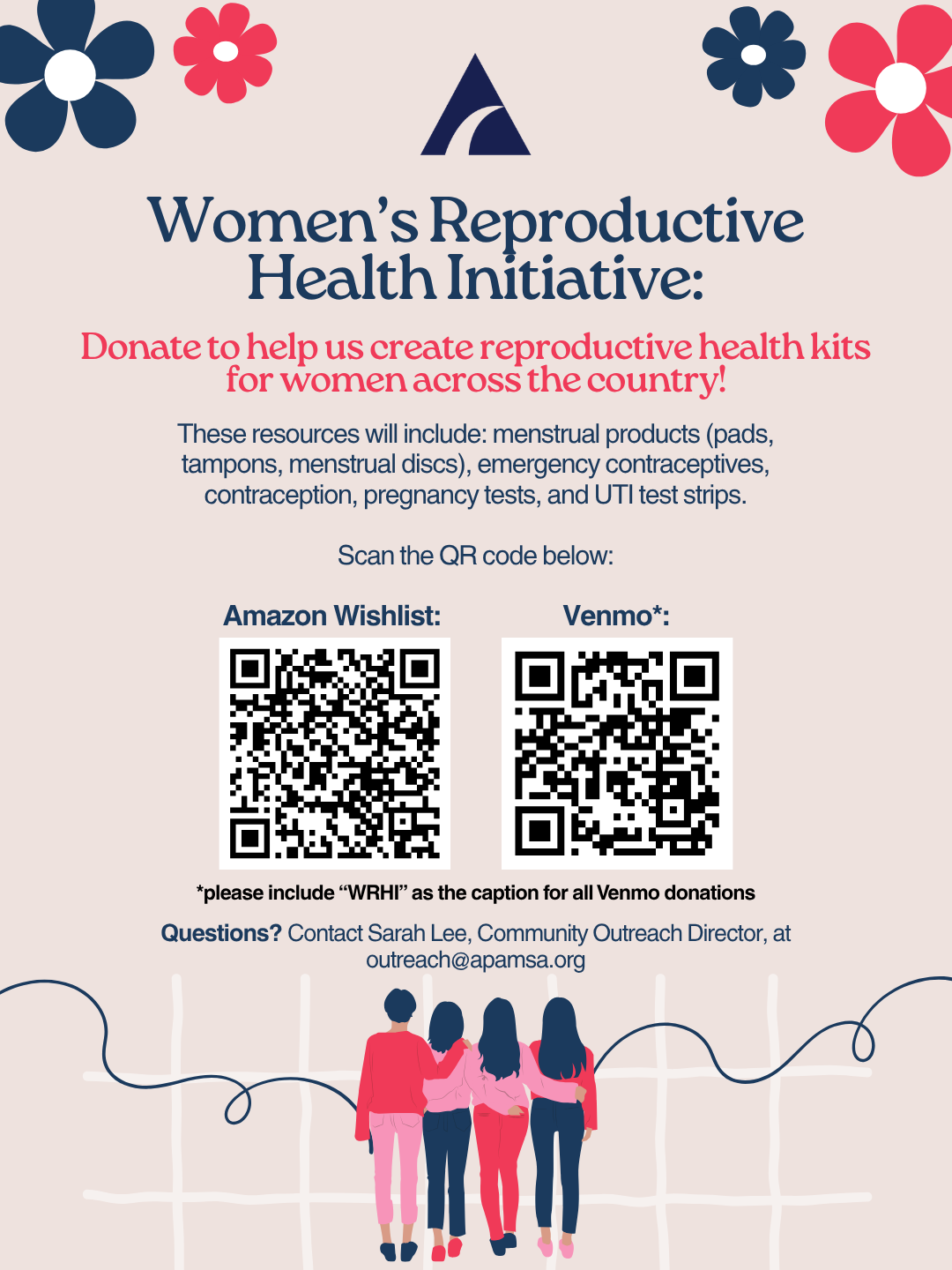
Women's Reproductive Health Initiative Fundraiser
Are you passionate about women’s health? Please consider donating to our new women’s reproductive health initiative using the QR codes! All donations will be assembled into health kits to be distributed to the community via APAMSA chapter leaders during Community Impact Week 2027. Thank you!
For questions, please contact Sarah Lee, Community Health Director, at outreach@apamsa.org.
Breast Cancer Screening Toolkit

SUMMARY CHECKLIST
At least 6 months before
- Identify a community partner. This can include any institution, community cancer center, community health center, or municipal center that is willing to collaborate with you on your event.
- Identify physician mentors. Note that this is absolutely imperative for the success of your program. You must have a licensed physician participating at the event to sign off on screening results.
- Feel free to reach out to physicians outside of your institution. Working with community partners is strongly encouraged.
- Determine the scope of your event. Decide whether your event will provide breast cancer education and risk-factor awareness, assistance identifying whether participants are due for screening, or on-site clinical breast examinations.
At least 5-6 months before
- Research follow-up care options and referrals to the necessary practitioners as needed.
- Secure event location, obtain funding, gather educational materials, and print necessary health forms.
- Secure an event location and determine whether a mobile mammography unit can access the site, if applicable.
At least 2 months before
- Promote your screening in local newspapers, grocery stores, churches, and other areas in your community.
- Have online sign-up forms prepared and advertised so that clients can schedule an appointment.
- Confirm participating clinicians, mammography partners, interpreters, and community organizations.
At least 2 weeks before
- Recruit and train volunteers – roles may include navigators, room turnovers, and desk clerks at check-in/check-out stations.
- Determine volunteer schedule. Go over protocol with them.
Day of screening
- Volunteers hand out educational materials, register clients, and collect the proper forms (release forms, health info, self addressed envelopes).
2-3 weeks later
- Contact everyone who participated in the screening via letters or phone calls regarding their screening results.
- Follow up with community partners and debrief on the event.
- Complete and submit Event Feedback Report to the APAMSA Cancer Initiatives Director.
DETAILED CHECKLIST
Preparation Before Screening
- Please contact cancer@apamsa.org in advance if you will be organizing a screening program and would like to participate in the national APAMSA effort to increase community access to cancer screening and education.
- A full list of links to healthcare access resources along with multi-language materials to utilize at your event can be found here.
Step-by-Step Protocol
1. Identify your population or community of focus. We highly recommend reaching out to local community organizations to discuss partnership.
2. Identify a local physician (primary care, dermatologist, oncologist) who will serve as your mentor and oversee the screening.
-
-
- Important point: It is absolutely imperative you work with a physician for your program. Reports given to screened subjects must be signed by a physician.
- The American Cancer Society offers a list of databases to help allocate physicians in your area.
-
3. Determine the cancer outreach and language needs in your area. Refer to this collection of multi-language cancer awareness pamphlets for examples of resources.
-
-
- Note: It is important to implement resources and an action plan that are inclusive of diverse skin tones and colors.
-
4. Identify materials needed for the screening: Feel free to refer to this Materials List as a guide. Quantity and costs are subject to change.
-
-
- Secure funding to cover the cost of materials. APAMSA is setting up a Cancer Screening Grant application, so stay tuned for opportunities to gain funding.
-
5. Research the following questions.
-
-
-
- Where can insured screening-positive clients obtain care?
- Provide referral information for physicians who see clients with suspicious skin lesions. The client’s own PCP is also sufficient.
- Where can uninsured screening-positive people obtain care?
- Provide information regarding clinics for the uninsured – find community health locations using this link.
- Are interpreters needed for your event?
- You may need to seek peer educators or AANHPI advocacy groups to recruit multi-lingual volunteers to serve as patient navigators, since many community health clinics do not have resources for interpreters for many Asian languages.
- Refer to the Additional Resources document for interpreter resources if needed.
- Where can insured screening-positive clients obtain care?
-
-
6. Develop a client follow-up plan.
-
-
- How will you ensure that clients who need further follow-up are able to contact any referrals made? E.g. additional phone calls to make sure the clients have contacted a primary care provider or have made an appointment.
-
7. Identify an appropriate screening location.
-
-
- This can be at a clinic that sees Asian patients, a cancer institute, a church, community center, or your local campus. For your screening event to go smoothly and efficiently, it is recommended that your venue has a waiting area, an area for check-in, at least two or more private rooms with seating, an area for check-out, and plenty of hallway space for multiple people to walk through.
-
8. Obtain educational materials in English and Asian languages regarding skin cancer to distribute to the clients who come to your screening. Use existing materials from the CDC, American Cancer Society, The Breast Cancer Foundation, etc.
-
-
- Refer to this collection of multilanguage cancer awareness pamphlets for examples of resources.
-
9. Print and organize all necessary forms: Our cancer screening toolkit contains examples of release forms and patient health info forms that you may utilize.
-
-
- If applicable, consider the need for translated versions of these forms based on the population you serve.
-
10. Recruit and train volunteers; these may be students or members of community partner organizations. For a screening event that lasts multiple hours, you may assign hourly shifts to volunteers.
-
-
- These volunteers will be responsible for turning over rooms, serving as navigators, working at check-in and check-out stations, and some may participate in performing skin exams with a physician’s oversight. Assign a lead volunteer to be in charge of rooming and collecting forms.
-
11. Advertise your event to members of the local community.
-
-
- Create registration forms that request contact information of clients who are scheduling an appointment. You may also request contact information of the client’s primary care provider (if applicable) to send results directly to them after your screening event.
- Distribute fliers to communal areas like grocery stores, churches, or recreational centers. See examples of fliers provided in our toolkit.
-
12. Send out a reminder to all registered participants a week to a couple days in advance of their appointment time and event location.
Have student volunteers ready at different stations.
Check-in: Have clients fill out a health info form and a release form – see examples in our toolkit. Inform the client to take these two forms with them to the exam room. Keep an organized log of every client, their appointment times, and contact information to keep track of all clients who present to the screening. Have seating, clipboards, and pens available for those who are filling forms or are waiting to be seen.
Screening Station: Each room should be turned over and prepped for every new client to be seen. A complete room should have all necessary PPE (gloves, masks, hand sanitizers), measuring tape for recording suspicious lesions, a clipboard and pen for the examiner, and a fresh gown for the client. Make sure each client is given plenty of time to change before being seen by an examiner.
- Use colored indicators on doors to track the status of each room: (1)vacant and ready for a new client, (2)occupied with a client who has yet to be seen, (3)occupied with both client and examiner, (4)vacant but needs to be turned over. You can use a binder ring with four different colored construction papers placed on a hook or doorknob.
- You should assign a volunteer as a lead who is in charge of rooming. This person assigns clients to vacant rooms and allocates an examiner to each client who needs to be seen. After each visit is complete, the lead should collect all Release forms from the client, and direct the client to a navigator to be escorted to check-out. The client should have only their Patient Info Form with them at check out.
- You should assign additional volunteers as navigator or room turnovers. Navigators are to escort clients from check-in to their screening station and back to check-out. Navigators should also double check that all client forms are handed to the lead. Room turnovers are to keep all rooms stocked with supplies and prepare a new gown for each client.
Check-out: It should be recorded when each client has finished their screening and left the facility. Make sure to scan a photocopy of each client’s Health Info Form; they can take the physical copy with them for their own records or if they choose to present it to their provider at a follow up visit. At this point, volunteers can double check with the client that their logged contact information is correct in case you would like to follow up with them. Also confirm with the client that their PCP information is correct, or if they require referrals based on their insured status. Inform the client that their screening results will be sent to their established provider if they have one.
Overview of Screening Responsibilities:
Positive for a suspicious lesion: recommend further testing, referral to a primary care physician, or follow-up at a clinic that accepts uninsured clients.
-
- For insured clients:
- Identify a physician/physicians in your area who specialize in breast cancer. Refer clients to these physicians, or encourage them to make follow-up appointments with their own primary provider.
- For uninsured clients:
- Ideally, identify and refer clients to a community health center dedicated to the Asian population.
- If unavailable, refer to a community health center, a clinic for the uninsured that provides Asian language services, an established navigator system, or a student run free clinic affiliated with your institution. Be aware of what referral systems and services are offered at your student run clinic.
- For insured clients:
Negative for suspicious lesions: recommend education and promote awareness.
-
-
- Educate clients that a negative screening result does not eliminate the possibility of breast cancer. Inform them of risk factors and prevention methods. They should also be encouraged to perform self-examinations at home to identify any new or changing breast findings which they can bring up to their primary care physician.
-
Client Follow-up Protocol:
- All clients with an established primary care physician should have their Health Info Form sent over to their provider’s office.
- It is ideal to follow up with everyone who participates in your screening to educate them about skin cancer and direct them to appropriate avenues for treatment.
- Important point: simply telling clients at your screening event to go see their primary care physician is not as effective as calling and writing to them directly. With direct communication, we can ensure that 1) clients understand what they need to do, and 2) they understand the reasons for doing so.
Examples of Client Follow-up Systems:
1. Letters
-
-
- If you send out letters to your clients, make sure they are in English and appropriate Asian languages.
- Ensure that the language you use is readable and accessible to people with all levels of literacy. Avoid unnecessary jargon.
- Make sure your letters are customized with information regarding clinics, referrals, and skin cancer info.
- TIP: When you register people for the cancer screening, have them self-address an envelope to themselves that you will use to send them their results. This will minimize mistakes in mailing addresses.
-
2. Letters and Phone calls
-
-
- Sending letters and following up with phone calls is a better way of making sure the people understand their screening results.
- Make sure that if you make phone calls you have people who can speak the language of the person you’re calling, either through recruiting volunteers who speak other languages or using phone interpreter services.
- If you mail a letter, try to follow up with a phone call 2 weeks later to make sure they understand the letter and encourage follow-up. Then, make a follow-up call 3 months later to see if action was taken. The downside to making phone calls is that you can’t give medical information to anyone except for the person you screened, so you may have to call back several times.
-
Handling Patient Info:
- You should keep all physical copies of signed Release Forms on file for proof of HIPAA compliance. Any client is allowed to request a copy of their Release Form.
- All clients should leave the event with the physical copy of their Health Info Form after you scan a photocopy and store it digitally in a private location. Ensure that only your institution, club executive board, and/or partnered organization’s administrative members have access to these documents. You may send copies of Health Info Forms to your clients’ primary care physicians with each client’s permission.
- Make sure to discard all physical copies of sensitive documents appropriately if they are no longer needed (i.e. by paper shredding).
ADDITIONAL INFORMATION
It is recommended before you proceed with anything to talk to your schools and partnered organizations regarding the best way to handle this.
While there is very little risk involved with breast cancer screening, every institution and health organization has different policies which you must understand before proceeding with any service that informs patient care. This is another reason why the first and most important step is to secure a licensed faculty/ physician advisor to oversee your screening.
We’d love to hear about your experience using this toolkit! If you have any thoughts you’d like to share regarding what we’ve done well and where we can improve, please fill out this feedback form.
Why does periodontal disease hit South Asians harder?
By Varsha Mantravadi
“Flossing widens the gaps between my teeth. Besides, these teeth aren’t even my own.”
Absolutely no one can convince my grandmother that flossing is important. Notorious in our family because all of her teeth are now implant crowns, she feels an increased disconnect with these “fake” teeth and doesn’t feel the need to take care of them. Many of her relatives in India confirm her beliefs by misguidedly advising against visiting the dentist and flossing regularly. For them, why should she waste time and money now that her teeth aren’t even “hers” anymore?
What is periodontal disease?
Periodontal disease, or gum disease, is a chronic infection of the tissues supporting the teeth, including periodontal ligaments and bone surrounding the teeth. A range of studies show that adults with South Asian origin have disproportionately high rates of diabetes and prediabetes, which are both powerful accelerators of periodontal disease. A similar relationship exists with periodontal disease and cardiovascular disease – bacteria from infected gums can enter the bloodstream, causing inflammation that promotes plaque buildup in blood vessels and increasing stroke and heart attack risk. With the right oral health practices and clinical monitoring, gum disease can be detected and maintained in its early stages. However, among South Asian immigrant populations, periodontal disease often goes undetected until it becomes severe.
This isn’t a coincidence. Beliefs like my grandmother’s are far from unique among South Asian immigrants; many arrive in the United States with deep cultural traditions but limited exposure to preventative dental practices. It can be hard to understand that your gums can suffer even if your teeth are fake, and that flossing may cause bleeding initially but is ultimately a prevention strategy. A psychology study performed at La Trobe University found that South Asians tend to underutilize dental services, choosing only to seek care when symptoms become severe, despite alarming statistics indicating that South Asians represent 64% of global periodontal disease cases.
As a dental assistant in Seattle, I see patients of South Asian descent almost every day who rarely report flossing at all, let alone regularly. I’ve also noticed that many South Asian patients react to diagnoses of periodontal disease with a reluctance to pursue treatment, often facing multiple barriers to care. One patient I worked with left the clinic without treatment despite a detailed explanation of his x-rays and periodontal disease diagnosis from the dentist. His concerns centered around the cost of the scaling and root planing treatment, questioning whether it was necessary if he was not experiencing pain. Since periodontal disease lacks obvious daily symptoms, it is easy for many patients to dismiss it as “fake” and forgo treatment.
Cultural understandings of oral hygiene in South Asia clash with Western preventative practices, leading to hesitation and confusion surrounding routine care. Language barriers also exacerbate the oral health literacy gap within this community. Despite being one of the fastest-growing immigrant groups in the US, South Asians routinely lack access to linguistically appropriate services. Although 92% of healthcare facilities include Hindi/Urdu as a language option on Video Remote Interpretation, as much as 45-50% of South Asians in the US speak a language other than Hindi/Urdu and would need specialized interpretation services. Understanding periodontal disease is already a confusing concept for many patients; compounded with limited English, it becomes particularly challenging to understand the disease’s implications and how to prevent it from getting worse.
How can we help?
Data from community-based oral health interventions have demonstrated significant improvements in periodontal health when education and screening programs are culturally tailored and linguistically accessible. In 2017, the National Institutes of Health conducted the Sikh American Families Oral Health Promotion Program in gurdwaras (Sikh places of worship) across New York and New Jersey. Sikh educators explained the risk factors associated with oral health problems such as periodontal disease, higher cavity risk, and other factors like diabetes and predisposition to heart disease. They spoke in Punjabi, a language that many Sikh families speak at home, and used examples that related directly to what the families were experiencing – unfamiliarity with their new home, nostalgia for their childhood and where they grew up, and how to navigate something unknown.
Preventative dental programs like Sikh American Families Program offer a successful template for future interventions for immigrant communities. Meeting communities where they are could include expanding public health programs that offer free or low-cost periodontal screenings in cultural centers or places of worship. Since diabetes, cardiovascular health, and periodontal disease are intricately linked, medical departments focusing on diabetes and cardiovascular care should also refer at-risk patients to dental clinics for periodontal screenings. Expanding insurance coverage for preventative dental care, especially in states with large South Asian immigrant populations like New Jersey and California, would bring these communities much closer to accessing the fundamental healthcare they need.
What can you do?
Systemic change requires community action. Talking to relatives, neighbors, and friends about oral health can get them thinking about their own oral hygiene habits, and how cavities are not the only oral issue you can have. Proposing dental education events to local clinics and cultural organizations and supporting policies can help expand preventative dental coverage. By challenging the misconception that dental care is optional, we can educate about the connection between teeth, natural or implanted, and overall health. The ultimate goal is to bridge the gap in oral health literacy and attack the root of the periodontal disease problem in South Asians and other immigrant populations, especially given the US’ current political climate. Expanded programs and frequent conversations will make it harder for people like my grandmother to avoid their dentists and chip away at the cultural beliefs that keep too many South Asians from seeking proper care. With time and better outreach, families like mine won’t need to debate whether flossing widens gaps – they’ll simply see it as a part of being healthy. But for now, I’ll keep nagging my grandmother.
Co-posted on KevinMD
Author Bio
Varsha Mantravadi is an undergraduate Public Health Honors student at the University of Washington who plans to pursue a career in dentistry. She is also an avid writer with a strong interest in oral health research. Her research focuses on the public health implications of periodontal disease and its connections to systemic health, with additional interests in health equity, education, and the integration of oral health into broader public health policy.
Interested in submitting an Op-Ed? See the FAQ section on our main Op-Eds page for more information.
Katie Chan, South Regional Conference Committee Member
Network Director
Katie Chan is a sophomore at Rice University in Houston, Texas. Born in Ho Chi Minh City, Vietnam, and raised in Honolulu, Hawaii, Katie grew an interest in epigenetic research since high school. She is currently exploring ways to apply this research to her broader interest in cancer care. Beyond the lab, Katie is deeply passionate about advocating for Asian American populations and improving their healthcare experiences. Following medical school, she hopes to return to her hometown to serve her community as an oncologist or intensivist.
Nhu Bui, Midwest Regional Conference Committee Member
Network Director
Nhu is currently a second year medical student at the University of Kansas School of Medicine. She was born in Cam Ranh, Vietnam and immigrated to the US when she was 5 years old. She completed her undergraduate degree in Molecular Cellular Developmental Biology at the University of Kansas.
Her specialty of interest right now is OB/GYN. She joined APAMSA to remain connected to her cultural heritage and contribute to a community that supports and empowers AANHPI medical students and future physicians. Her passions include spending time with my loved ones, gaming, baking and pickleball.
Richita Roy, Midwest Regional Conference Committee Member
Network Director
Richita is a second-year medical student at the University of Kansas School of Medicine. Born and raised in Tsukuba and later Tokyo, Japan, she moved to the U.S. during her grade school years, first living in Michigan before eventually settling in Kansas. Growing up at the intersection of Japanese, Bengali, Indian, and American cultures has shaped her cultural identity and given her an appreciation for the different ways people stay connected to their heritage while finding a sense of belonging within new communities. She later returned to Michigan to earn her B.S. in Biopsychology, Cognition, and Neuroscience from the University of Michigan.
Her current specialty interests include neurology and psychiatry. Her experiences across different cultures are also what drew her to APAMSA, where she hopes to help create a community that celebrates the many identities and experiences represented within AANHPI medicine. When she’s not busy with school, Richita enjoys Kathak dance, traveling, trying new café spots, and spending time with friends and family.