


Statement on the Rollback of Universal Hepatitis B Vaccinations
On December 5, 2025, the Center for Disease Control and Prevention’s Advisory Committee on Immunization Practices (ACIP) voted to overturn guidelines for universal hepatitis B virus (HBV) vaccinations at birth despite decades of evidence-based recommendations. Hepatitis B vaccinations are highly successful at reducing the incidence of acute hepatitis B infection by 99% in the United States and preventing progression to chronic HBV infection.
Current guidelines recommend that all infants receive a series of 3 doses of the HBV vaccine, starting immediately after birth and followed by two additional shots at 1 to 2 months and 6 months of age. The newly voted rules will only recommend HBV vaccinations at birth for infants born to mothers with positive or unknown hepatitis B status. Infants born to mothers with negative hepatitis B status will no longer receive a HBV dose at birth. Instead, mothers will need to discuss with their physicians to decide to vaccinate at birth or delay until at least 2 months old. By delaying vaccination by 2 months, this policy creates a window of infection that puts undue risk upon infants of mothers with negative hepatitis B status.
What is Hep B?
Hepatitis B virus is a bloodborne pathogen that can be passed down from mother to child. Acute infection can manifest as jaundice and nonspecific symptoms like fever, fatigue, nausea, and vomiting an average of 90 days after exposure. Infected children and adults can also be completely asymptomatic. Two in three individuals living with hepatitis B infection do not know they are infected.
Unvaccinated children can acquire the virus and develop chronic hepatitis B, which has no cure. Children are especially at risk to develop chronic hepatitis B infection:
- 90% of infants when infected at birth
- 50% of children between age 1 to 5
In the United States, Asian American, Native Hawaiian, and Pacific Islander (AANHPI) individuals represent half of all chronic hepatitis B infections in the United States despite making up 7.5% of the U.S. population.
Why is this a concern?
HBV causes permanent damage to the liver over time, causing cirrhosis and liver cancer. In fact, chronic hepatitis B is responsible for more than half of all hepatocellular carcinomas in the world. The risk of developing hepatocellular carcinoma increases with every year of chronic HBV infection.
Call to Action
National APAMSA strongly condemns the ACIP decision to roll back universal hepatitis B vaccination at birth. Institutionalized vaccine hesitancy is a disservice to our communities, especially to Asian American, Native Hawaiian and Pacific Islander communities who face a disproportionate burden of chronic hepatitis B infections. These rules will undoubtedly reverse the decades-long progress in reducing hepatitis B in the United States and hurt all communities that we, as future physicians, swear to serve. As mentioned in our policy compendium and Hepatitis Initiative, APAMSA is committed to advocating for universal hepatitis B vaccinations and increased funding and awareness for hepatitis screening. We urge that ACIP and policymakers reconsider their decision to pivot from evidence-based recommendations that can potentially harm the next generation of Americans.
Our Current Work
- National Hepatitis B Pledge: Inspired by Stanford’s Asian Liver Center and San Francisco’s Hep B Free, we hope to encourage all medical students to develop habits of screening and advocacy for hepatitis that will follow them in their careers as physicians.
- 2025 Advocacy Day and Hepatitis, Equity, Advocacy, and Leadership (HEAL) Summit – APAMSA hosted the inaugural Advocacy Day on Capitol Hill and the HEAL Summit (formerly known as Hepatitis Conference) in Washington, D.C. During this two-day event, students sat down with Congressional members to advocate for increased awareness and funding for Hepatitis B and heard from the nation’s leading experts on hepatitis and advocacy.
- Grants for Hepatitis Screening: – Apply today to receive up to $1500 for hepatitis screening and education events – applications accepted on a rolling basis.
- Curated list of resources for hepatitis education and screening tools
For questions about this statement, please reach out to Brian Leung at rapidresponse@apamsa.org. For local support, please contact your regional director.

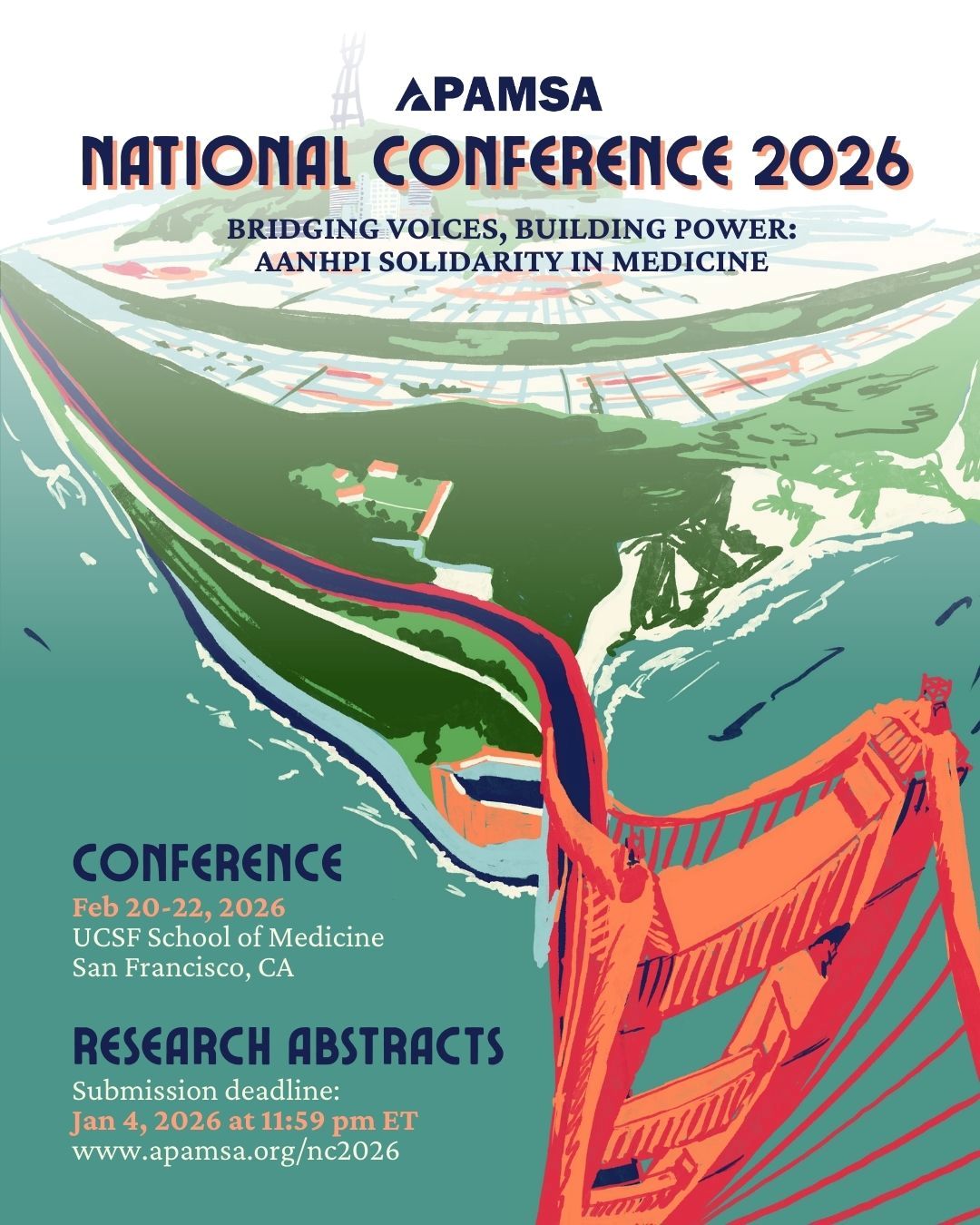
2026 APAMSA National Conference
On behalf of the University of California, San Francisco (UCSF) School of Medicine, we are happy to welcome you to UCSF and San Francisco for ✨ National APAMSA’s 32nd Annual National Conference ✨ from February 20-22, 2026! 🌉
Our conference theme this year is “Bridging Voices, Building Power: AANHPI Solidarity in Medicine.” This year’s conference will bridge academic and community boundaries to identify work being done on the front lines to serve marginalized communities, preparing future AANHPI physicians to serve their home communities through careers in medicine that address health both in the clinic and beyond.
Register for the 2026 APAMSA National Conference here.
We are also currently accepting abstract submissions for the Research Poster Session. The deadline for abstract submissions is January 4, 2026 at 11:59 pm ET.
Questions? Please reach out to conference@apamsa.org.

October Ask Me Anything (AMA) with Dr. Paul Tran
Dr. Tran is a medical educator and content creator with over 170K followers who empowers and encourages med students and physicians through humor, storytelling, and evidence-based insights. Join us to hear about his journey in medicine, his path to medical education, and how he’s transforming the way we learn and teach online.
📅 Wednesday, October 29 @ 4PM PDT / 7PM EDT
📍 Zoom ID: 980 0247 8998 🔒 Password: 542409
Questions? Please reach out to our Professional Development Director, Annie Nguyen, at professionaldev@apamsa.org.
Multilanguage Health Educational Material
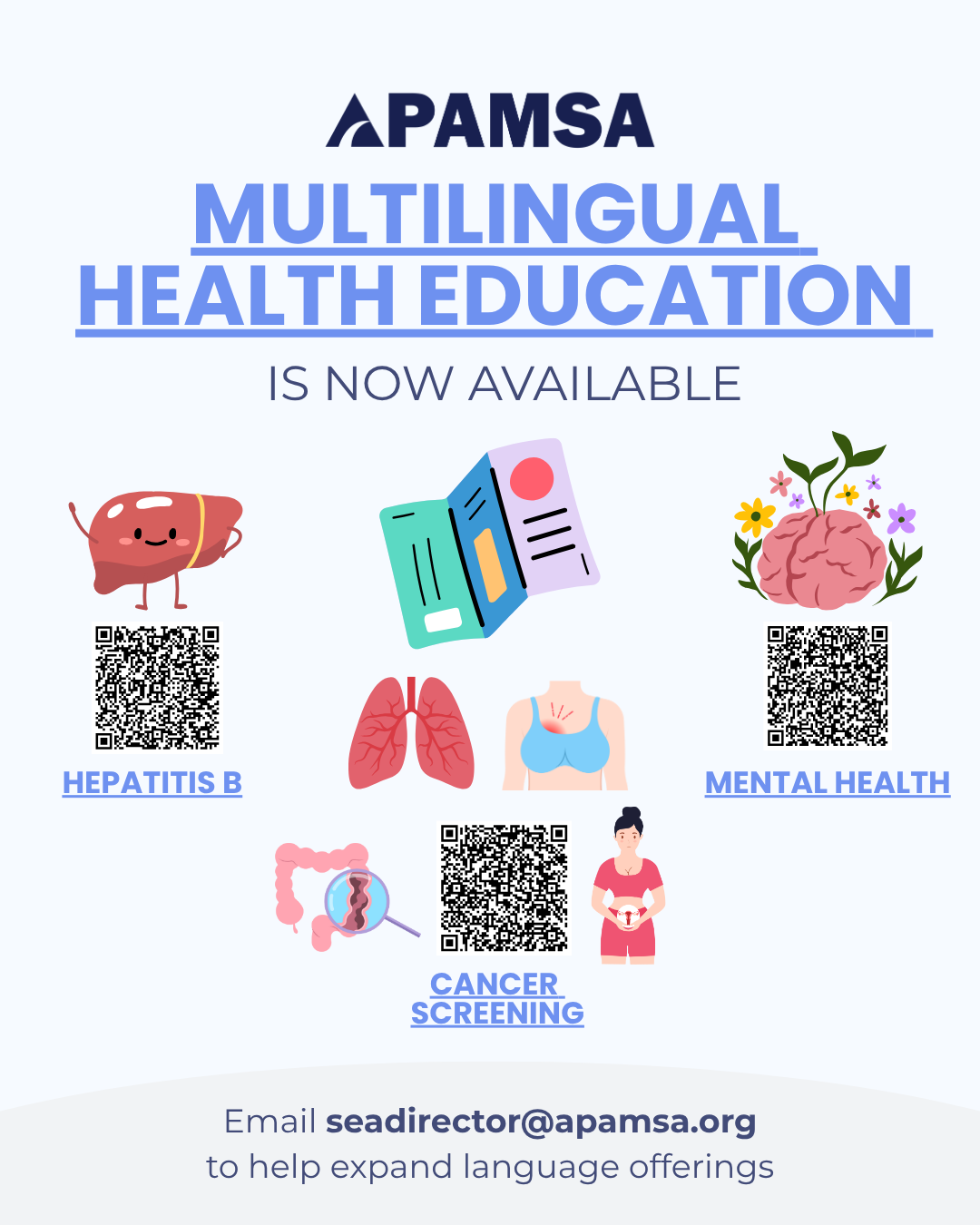
From Hepatitis B and cancer screening to mental health support — AANHPI communities face unique health challenges, yet too often, vital information is only available in English.
That’s why we’re offering culturally tailored health education pamphlets in:
- Thai • Lao • Vietnamese • Tagalog • Cebuano • Burmese • Khmer • Korean • Chinese
Whether you’re sharing resources with family, patients, or your community — language should never be a barrier to care.
Questions, suggestions, or want to help with language expansion? Please reach out to our Southeast Asian Director, Fern Vichaikul, at seadirector@apamsa.org.

Diversity Engagement Program (DEP)
✨ BIG NEWS: The APAMSA Diversity Engagement Program (DEP) is officially LIVE! ✨
Your chapter can earn points all year long by hosting events, creating educational content, attending and promoting national initiatives related to APAMSA’s diversity goals (Southeast Asian, Native Hawaiian & Pacific Islander, South Asian, LGBTQIA+, Women in Medicine) — and win $250 for your chapter! 🏆🔥
Questions? Please reach out to our Southeast Asian Director, Fern Vichaikul, at seadirector@apamsa.org.

Call For Resolutions
The APAMSA policy cycle has launched! What healthcare or AANHPI-related issues are you passionate about? Now is your chance to turn that passion into action and help establish APAMSA’s official stance. Drafting policy is a powerful, low-commitment way to make a tangible impact and strengthen our organization. As a bonus, every ratified policy counts as a published work for your ERAS application. Ready to get started? Reach out to our Director of Organized Medicine at organizedmed@apamsa.org! First drafts are due 10/31 at 11:59 PM PST.
Questions? Please reach out to our Director of Organized Medicine, Jen Deng, at organizedmed@apamsa.org.

Filipino American History Month
Questions? Please reach out to our Southeast Director, Fern Vichaikul, at seadirector@apamsa.org.

September Ask Me Anything (AMA) with Dr. Adela Wu
Questions? Please reach out to our Professional Development Director, Annie Nguyen, at professionaldev@apamsa.org.

It's National Voter Registration Day - Check your registration status!
Dear APAMSA family,
In recognition of the vital connection between civic participation and community health, APAMSA is proud to join the nationwide celebration of National Voter Registration Day – a nonpartisan effort that’s helped over 5 million voters get election ready since 2012.
Take just 2 minutes today to check your voter registration and make sure your information is up to date:
Double check your Voter Registration
For our members in critical election states like New Jersey, California, Pennsylvania and Virginia, voter registration deadlines are on the horizon – take action today!:

Want to do even more to help your colleagues and community get vote-ready?
This National Voter Registration Day, take 2 minutes to order a free Vot-ER badge. Vot-ER is a nonpartisan, health professional-led organization helping integrate civic engagement into healthcare. One of their easiest and most impactful tools is the Vot-ER Badge – a HIPAA-compliant badge backer with a QR code that makes it simple for patients to check their registration and find up-to-date election info.
Here’s how you can take action:
- Order your free badge here and start helping your community get ready to vote this fall
Together, we can help more voters show up and be heard this election season. Let’s build a healthier democracy, together!
APAMSA National Board
For questions about this announcement, please reach out to Brian Leung at rapidresponse@apamsa.org.

Residency Interviewing 101 Panel
Questions? Please reach out to our Professional Development Director, Annie Nguyen, at professionaldev@apamsa.org.