

Statement on the Maui Wildfires
The past week has been marked by heart-wrenching devastation as wildfires tore through Lahaina, Maui. Beginning on August 8th, 2023, the Hawaiian island has been ablaze with what has now become the deadliest US wildfire in over 100 years—claiming over 100 lives, consuming over 2,000 acres of land, and costing almost $6 billion in damages. Although much of the fire has been contained, it has not been entirely extinguished, and it is unclear how many victims have yet to be accounted for.
National APAMSA grieves with and stands in support of our Maui community, especially the Native Hawaiian community. Along with all that has been lost, we recognize that the Native Hawaiian community has lost a sacred place with tremendous cultural significance and ties to their ancestors. The Native Hawaiian community has always drawn from their culture and history to do meaningful work in health, medical education, and diversity, so the losses are felt deeply from the APAMSA community. Our thoughts and prayers are with the Maui and Native Hawaiian community and our local APAMSA chapter in Hawai’i.
We urge you to join us in supporting the people of Maui and the Native Hawaiian community. The need is both for the short-term and long-term future, as the Maui community begins to recover and rebuild. The best ways to support their endeavors are through monetary donations, of which community organizations and families are able to use funds as it best fits their needs.
The Hawaii Community Foundation Maui Strong Fund
A nonprofit community organization that has established a fund to support Maui communities affected by recent fires, including response and recovery efforts.
You can donate here. (The website may be busy, in which case you can check their Instagram account for updates.)
Hui No Ke Ola Pono
A nonprofit community-based health care center, which is one of five Native Hawaiian Health Care Systems. They are currently serving the community and providing supplies directly to those affected. They are requesting monetary donations as well as supplies to help families who are affected.
Other
A complete list of individual family funds can be found here.
UH Maui College
This fund is specific to students and their families directly impacted by the fires, whether they have lost homes, businesses, or jobs. As the new school year starts, you can help keep students, faculty, staff, and their families resilient during this unprecedented emergency.
Mahalo for your support!
For questions or concerns about this statement, please reach out to Eric Kim at rapidresponse@apamsa.org, Akila Ally at diversity@apamsa.org, Piueti Maka at nhpidirector@apams.org, or the Region 7 Directors at region7@apamsa.org

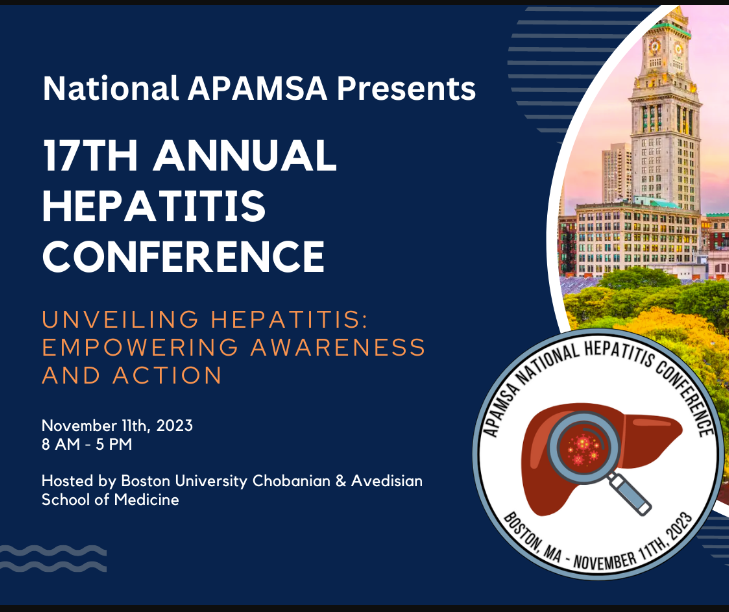
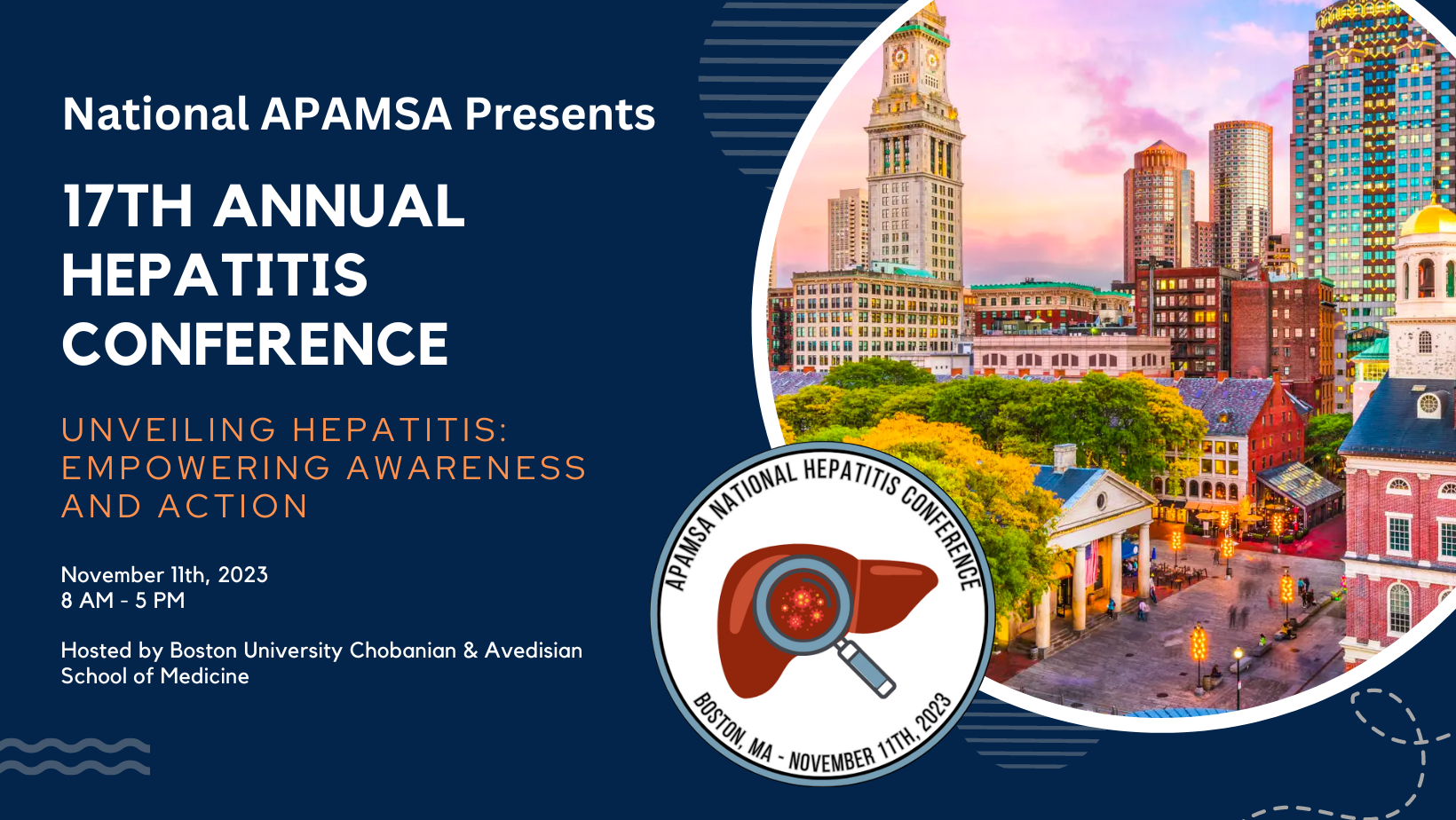
Save The Date For Our 17th Annual National APAMSA Hepatitis Conference!
🚨 SAVE THE DATE! 🚨 We are pleased to announce and invite you to the 17th Annual National APAMSA Hepatitis Conference taking place on November 11th, 2023 in Boston, MA! Stay tuned for additional announcements on speakers, poster presentations, funding, collaborations with the American Association for the Study of Liver Diseases, and other logistics.
Response to the SCOTUS Ruling Against Race-Conscious Admissions
The morning of Thursday, June 29th, 2023 was marked by a groundbreaking turn of legal events as the Supreme Court of the United States (SCOTUS) ruled on two historic cases: Students for Fair Admissions v. President and Fellows of Harvard College and Students for Fair Admissions v. University of North Carolina. With their ruling, SCOTUS banned the consideration of race in college admissions, thereby overturning decades of precedent supporting affirmative action policies. Indeed, the 1978 case Regents of University of California v. Bakke, the 2003 case Grutter v. Bollinger, and most recently, the 2016 case Fisher v. University of Texas at Austin all concluded that the consideration of race in college admissions is constitutional under the Equal Protection Clause, especially in light of the need to create a diverse educational environment. Regardless, SCOTUS has now ruled to the contrary: Race-conscious admissions in fact violate the Equal Protection Clause and must be prohibited. While students will still be able to identify themselves in their applications to speak about experiences of discrimination and hardship, the spirit of the ruling is nevertheless deeply problematic.
APAMSA has long promoted diversity in higher education. Our policy compendium includes Resolution 40.002 (Improving Campus Diversity Initiatives) and Resolution 40.003 (Defending Race-Conscious Admissions in Undergraduate Medical Education). More directly to the point, we joined the amicus brief written by the Association of American Medical Colleges (AAMC) to support the protection of affirmative action policies in these very trials on which SCOTUS has now ruled.
We unambiguously and unequivocally oppose this SCOTUS ruling. It is a misguided attempt at promoting meritocracy in the midst of immense and complex historical and social inequities, such that to pursue meritocracy while ignoring those inequities is to aim horribly astray. Furthermore, we believe that our patients are best served by a diverse community of talented medical professionals, such that to limit that diversity from entering higher education is to endanger our patients.
The AANHPI community specifically should also strongly oppose this ruling. As Supreme Court Justice Sonia Sotomayer eloquently articulates in her dissent, the AANHPI community needs race-conscious admissions to be fully respected. Asian Americans are victims of historical and current discrimination and stereotyping that require a diverse society, as promoted by affirmative action policies, to be overcome. Moreover, the AANHPI community is not a monolith, and it needs to be seen in its disaggregated and distinct diversity if its members are to be fully seen.
Ultimately, we call for SCOTUS to reconsider its decision and restore affirmative action to this nation’s higher education system. We also urge all other educational, pre-professional, and professional organizations to join us in fighting against this attack on racial equity and diversity.
For questions or concerns about this statement, please reach out to Eric Kim at rapidresponse@apamsa.org
Statement on the Shooting in Allen, Texas
Saturday, May 6th, 2023 was marked by yet another horrific tragedy, as nine people lost their lives and seven more were injured in a shopping mall in Allen, Texas. Among those killed are four members of the AANHPI community—a Korean family of three, leaving a son orphaned, and an Indian woman. The police are currently investigating the extent to which the attack was motivated by far-right extremist ideologies. Regardless, we at APAMSA lament all of the lives that were devastated by this past weekend’s events—not merely those within the AANHPI community.
In every instance, we staunchly oppose gun violence (Resolution 40.006) and demand stricter gun control. Indeed, we believe strong gun regulations are essential to ensuring all people’s safety, as shown by the string of shootings that have preceded this latest one over the past year, from Laguna Woods and Buffalo to Monterey Park and Half Moon Bay. We call for legislators to fight with unprecedented urgency to protect those innocent lives who might be saved through gun reform. We cannot allow any more injustices to terrorize those whom we hold dear.
We continue to offer our support to all of our local chapters and members, especially in Texas, and we encourage you to reach out with any specific ways we can be of service. Please also consult our list of mental health resources if you are interested in learning more.
If you are interested in exploring additional ways APAMSA can lend our support during these trying times, please reach out to Karen Qi at mentalhealth@apamsa.org, and the Region 9 Directors at region9@apamsa.org.
For questions or concerns about this statement, please reach out to Eric Kim at rapidresponse@apamsa.org

Statement on the Legal Status of Mifepristone
In early April, Texas federal judge Matthew Kacsmaryk ruled in favor of Alliance for Hippocratic Medicine’s lawsuit against the FDA approval of mifepristone, a prescription medication used for abortion. Mifepristone is currently the first of a two-step process, alongside misoprostol, for performing a first-trimester medical abortion. This ruling has several potentially significant ramifications. First, it comes as the next legal attack against patient access to abortion services following the overturning of Roe v. Wade, to which APAMSA has previously responded. Second, the current standard of practice for medical abortions in the United States requires both mifepristone and misoprostol because misoprostol alone, while relatively safe and effective, is still less effective than combination therapy. Third, some worry that these legal challenges warn of future dangers to the legal status and accessibility of misoprostol as well.
On Friday, April 21st, the Supreme Court announced that it would delay the restrictions against mifepristone, which will remain accessible until additional legal debate runs its course. The lawsuit is expected to make its way through the Fifth Circuit Court of Appeals and eventually back to the Supreme Court.
APAMSA supports the Supreme Court’s decision to protect mifepristone access. As stated in multiple official statements and, most recently, in our official policy compendium as Resolution 10.010, we uphold the importance of protecting access to abortion services. We therefore urge the Supreme Court to maintain its commitment to keeping safe, effective abortion services widely available. We stand with all other healthcare organizations that are also committed to speaking against these threats to the health and welfare of our AANHPI communities and beyond.
For questions or concerns about this statement, please reach out to Eric Kim at rapidresponse@apamsa.org
Statement on the Monterey Park and Half Moon Bay Shootings
It is with heavy hearts and great mourning that we at National APAMSA now take a step back from the festivities of the Lunar New Year to respond to the tragedy that occurred the same weekend. On Saturday, January 21st, 2023, a mass shooting took place in Monterey Park, CA that killed 11 victims and injured 9 others. Just two days afterward, Half Moon Bay, CA likewise suffered a mass shooting that took the lives of at least 7 more people. Many of those who passed away were members of the AANHPI community.
We lament the horrors that unfolded at a time meant for celebrations and rejoicing with loved ones; we cannot know how unspeakably painful it must be for those who lost their loved ones that same evening. Our hearts and deepest sympathies go out to all those in our AANHPI communities who must now endure such unbearable sorrows.
We respond to the Monterey Park and Half Moon Bay shootings with the recognition that they are tragically not the only ones that have disproportionately affected racial minorities generally and the AANHPI community specifically. The past year has seen far too many violent crimes, from New York City and Brooklyn to Laguna Woods and Buffalo. And earlier this month, an Indiana University student was stabbed for “being Chinese”. It is with great frustration and heartbreak that we must reiterate our condemnation of the senseless violence that endangers our communities. We continue to offer our support to all of our local chapters and members, especially in California and Indiana, and we encourage you to reach out with any specific ways we can be of service. Please also consult our list of mental health resources if you are interested in learning more.
For questions or concerns about this statement, please reach out to Eric rapidresponse@apamsa.org
If you are interested in exploring additional ways APAMSA can lend our support during these trying times, please reach out to Nathan at mentalhealth@apamsa.org, the Region 5 Directors at region5@apamsa.org, the Region 7 Directors at region7@apamsa.org, and the Region 8 Directors at region8@apamsa.org.
Statement on the Inflation Reduction Act
The Inflation Reduction Act (IRA) of 2022, a broad piece of legislation with significant ramifications for inflation, climate change, and healthcare pricing, was officially passed through Congress on August 12th and signed into law on August 16th.
Regarding healthcare, this progressive bill allows Medicare to negotiate drug prices. Additionally, Medicare now caps drug costs for seniors to $2,000 per year and insulin to $35 per month. The IRA also extends ACA subsidies beyond 2022 and through 2025, thus precluding premium increases for over 10 million people and the loss of insurance coverage for an additional 3 million people. Of course, these changes are not without downsides. Drug price caps are bound to reduce pharmaceutical companies’ revenue, disrupting the health economy. Extending ACA subsidies will increase government spending. Nevertheless, we believe the benefits of these changes outweigh the financial costs they bring.
Many of the IRA’s political dimensions are outside of National APAMSA’s scope. However, insofar as this bill relates to healthcare, we applaud its passage as a step forward in promoting healthcare access and affordability (see our Policy Compendium Resolution 10.001). As valuable for healthcare professionals to be committed to caring for underserved communities, we recognize there are limitations when patients cannot afford the care they need. We are thus excited to see new legislation continue to advance the health of our communities and the ability of our healthcare professionals to care for those in need.
National APAMSA also looks future-ward to what work remains for us to accomplish. Although the IRA capped insulin prices to $35 for Medicare enrollees, it failed to extend that limit to all private insurance companies. Moreover, there are still 12 states that have not expanded Medicaid up to the 138% of the federal poverty level, thereby denying 3.7 million people healthcare coverage. The AANHPI community would see a roughly 25% reduction in uninsurance if these states were to expand their Medicaid coverage. We urge our policymakers to rectify these shortcomings and further protect the health of our communities through legislation.
For questions or concerns about this statement, please reach out to Eric rapidresponse@apamsa.org
APAMSA Joins AAMC’s Amicus Brief in Consideration of Race in Higher Education Admissions
The Association of American Medical Colleges (AAMC) published an amicus brief on July 29, 2022, for the trials Students for Fair Admission v. Harvard and Students for Fair Admission v. University of North Carolina. These trials, which have examined the constitutionality of the consideration of racial and ethnic identities in the higher education admissions process, are due to appear before the Supreme Court this upcoming cycle.
National APAMSA has joined the AAMC in submitting its amicus brief, upholding the importance of affirmative action in these admissions processes. As affirmed in our policy compendium (Resolution 40.003) and in a 2019 joint statement with several other medical student organizations, APAMSA believes it is integral to the health of our communities and the welfare of the medical profession that there is racial and ethnic diversity within the physician workforce.
Health disparities are rampant along racial and ethnic lines, and a diverse healthcare workforce helps our communities receive the care they need. As the amicus brief notes, the overruling of Supreme Court precedent defending affirmative action will likely dramatically decrease the number of racial and ethnic minorities in medical schools across the country. In light of the broader nuances surrounding each applicant and their experiences, a failure to consider these factors would undoubtedly hinder efforts to recruit capable and meritorious applicants of diverse backgrounds to medical schools.
National APAMSA urges the Supreme Court to uphold its longstanding precedent of defending affirmative action. We believe that it is vital toward the well-being of our diverse communities and equity of our admissions processes.
For questions or concerns, please reach out Sang Min (Kevin) Lee, AANHPI Advocacy Director at to AANHPI@apamsa.org
Response to the Overturning of Roe v. Wade
Following their leaked draft opinion on May 2nd indicating that they would be voting to overturn Roe v. Wade, the Supreme Court officially overruled the landmark decision to protect the right to abortion on June 24th, 2022. Individual states will now have the authority to determine whether to permit or to ban abortions within their borders. We at National APAMSA stand firm in our previous statement that we published in response to the leaked draft opinion: Whether patients have access to abortion services should not depend on where they happen to live, but rather must be protected and upheld at the national level. Reproductive rights are impacted by racial and economic injustices, such that minority women, including those in the AANHPI community, are particularly burdened by impediments to reproductive health services. We lament with those who fear for their loss of healthcare access, and we call all other healthcare organizations to join us in denouncing this decision. We urge the policymakers in each individual state to fight for continued abortion services, just as we urge the Supreme Court Justices to reconsider their decision. APAMSA will continue to fight for our AANHPI communities and advocate for equality and social justice for all women.
For questions or concerns, please reach out to Eric Kim at rapidresponse@apamsa.org
Response to Supreme Court’s “Leaked Draft” Indicating Intent to Overturn Roe v. Wade
A Supreme Court draft opinion leaked on May 2nd, 2022 indicated at least five Justices have voted to repeal the 1973 Roe v. Wade decision and its subsequent 1992 Planned Parenthood v. Casey decision. The official vote will not be finalized until the end of June or early July, but it is crucial to recognize that overturning Roe would remove its 49-year-old protection of the right to receive an abortion. If this document is reflective of the Court’s coming decision and Roe is indeed overturned, maternal mortality rates will increase. Additionally, this may threaten the decisions made for other landmark cases and ultimately jeopardize access to birth control and other medical services.
National APAMSA unequivocally denounces this egregious obstruction to safe and effective healthcare. Whether an individual has access to abortion and birth control should not depend upon where they happen to live. We believe that such services must be made universally available and defended as an unambiguous right at the federal level.
APAMSA recognizes, especially in regards to abortion, that we do not speak for the views of all of our members, let alone the views of all AANHPI medical students, healthcare professionals, or community members. However, as a healthcare organization committed to core values of patients’ autonomy and their rights to healthcare access and quality, especially within the AANHPI communities, we are obligated to speak out in defense of those values.
Joining other healthcare organizations, we urge the Supreme Court Justices to reconsider their votes to prevent the immeasurable harm such a momentous decision would cause.
For questions or concerns, please reach out to:
National Rapid Response Director, Eric Kim at rapidresponse@apamsa.org
National Vice-President of Advocacy, Daniel Pham at advocacy@apamsa.org