

GHHS and AOA AANHPI Representation
By Jessie Chen and Preston Dang
Medical students are trained to chase excellence: high board scores, strong clinical evaluations, and prestigious honors. These metrics are presented as objective markers of merit and gateways to competitive residency programs and leadership pathways. However, for Asian American, Native American, Pacific Islander (AANHPI) medical students, they often reveal a notable disparity: a discordant system where excellence is recorded, but leadership is withheld.
Two of the most influential distinctions in residency applications, Gold Humanism Honor Society (GHHS) induction and Alpha Omega Alpha (AOA) membership, are strongly associated with career advancement. However, recognition through these honors is not distributed equitably. Although AANHPI students comprise approximately 22–24% of U.S. medical students, while representing only 7% of the U.S. population, prior research has shown that AANHPI students are less likely to be selected for honor societies.1 The label of being “overrepresented” obscures these disparities, narrowing a diverse group into a single narrative and masking inequities in recognition and advancement.
One recently published journal article found that, compared with White students, graduates self-identifying as AANHPI were less likely to be AOA members, and Chinese, Korean, and Taiwanese graduates were less likely to be GHHS members.1 Furthermore, there was relatively low representation of Cambodian, Indonesian, Laotian, Native Hawaiian or Pacific Islander, and American Indian or Alaskan Native students in the study, highlighting their significant underrepresentation in medicine.1 When the system denies us these honors, the subtext is loud: “We value your labor, but we do not see your leadership.”
This bias is reflected in the language of clinical evaluations. AANHPI students are less likely to be described with standout terms such as “brilliant” or “natural leader,” and more often characterized as “diligent” or “dependable.” These descriptors are not inherently neutral; they shape how residency programs interpret an applicant’s potential. These are the traits of a good employee, not a department chair. As a first-generation Taiwanese American and an eldest daughter, I have spent my life being “a pleasure to have in class.” As a first-generation Chinese American and only child, remarks along the lines of “he’s quiet but is a great student” are the apparent ideal. In medical school, I realized that this praise is a double-edged sword. It rewards the “quiet consistency” that brings prestige to medical schools and keeps hospitals running, but simultaneously builds a professional ceiling that rewards self-advocacy and visibility, emphasized in Western cultural norms.
The consequences extend far beyond medical school. Clerkship evaluations influence honor society selection, honor societies shape residency opportunities, and residency training sets the trajectory for leadership roles. In this way, the “bamboo ceiling” in healthcare is not simply a mid-career phenomenon; it is constructed early, reinforced through implicitly biased evaluations, and solidified through inequitable recognition. Although AANHPI students make up nearly a quarter of medical students, their representation diminishes sharply in positions of authority. Only 9% of female and 11% of male department chairs at U.S. medical schools are AANHPI. While AANHPI individuals are present in administrative roles in these departments, they remain underrepresented in dean’s office leadership.
True diversity is not just about a total percentage; it is about reflecting the full mosaic of the American population at every level of authority. We cannot achieve health equity for AANHPI patients until we recognize and support students of their respective communities and empower them to lead. Medical schools must move beyond coarse amalgamations of diversity metrics; instead, we must strive to disaggregate AANHPI data, audit honor society selection processes, and address the implicit bias that prevents a “diligent” student from being seen as a “brilliant” leader by reinvigorating medical educator training.
References
- Yang DH, Nguyen M, Zhang L, et al. Disparities for Asian American Medical Students in Alpha Omega Alpha and Gold Humanism Honor Societies. JAMA Netw Open. 2026;9(4):e265168. doi:10.1001/jamanetworkopen.2026.5168
- Asian Americans, Native Hawaiians, and Pacific Islander populations’ contributions to healthcare: Learn about the career journey of Stanford medicine AANHPI leaders. Asian Americans, Native Hawaiians, and Pacific Islander Populations’ Contributions to Healthcare: Learn about the Career Journey of Stanford Medicine AANHPI Leaders – Stanford Environmental Health & Safety. Accessed May 26, 2026. https://ehs.stanford.edu/event/asian-americans-native-hawaiians-and-pacific-islander-populations-contributions-to-healthcare-learn-about-the-career-journey-of-stanford-medicine-aanhpi-leaders.
Author Bios
Jessie Chen is a dual-degree MD/MPH student at the University of Miami Miller School of Medicine. She serves nationally as the National Director of Organized Medicine for the Asian Pacific American Medical Students Association (APAMSA) and locally as the Chapter Mentorship Chair. Passionate about healthcare policy and community empowerment, Jessie works to amplify AANHPI voices in organized medicine while fostering the next generation of culturally competent physicians.
Preston Dang is a third-year osteopathic medical student at Western University-College of Osteopathic Medicine of the Pacific in Pomona, California. He is originally from Orange County, California, completed his B.S. in Microbiology, Immunology, and Molecular Genetics at UCLA, and M.P.H. at Tufts University School of Medicine in Boston, Massachusetts. He is currently serving his second term on APAMSA National Advocacy Committee, and is an active member within the American Medical Association and California Medical Association.
Interested in submitting an Op-Ed? See the FAQ section on our main Op-Eds page for more information.

We Ask About Alcohol. Why Not Gambling?
By Hayoung Ahn
During a routine visit, clinicians ask about alcohol, drugs, depression, and personal safety. A question about gambling rarely follows, even as wagering moves into the sports and financial apps people carry in their pockets.
Until recently, I assumed World Cup pools and fantasy football in my own social circles were friendly competitions with a few dollars at stake. Then I learned that some people had hundreds or thousands riding on a game. I originally thought that behaviors like frequently checking apps, tracking injuries, or recalculating matchups reflected my friends’ enthusiasm, but I was surprised to learn that they hinged on real financial stakes. Although placing bets is not evidence of a gambling disorder, I began to sense that gambling had become embedded in familiar social activities so seamlessly that I had barely recognized it as gambling at all.
Medicine already understands this distinction with alcohol. We do not diagnose alcohol use disorder from a drink; we ask about the amount, frequency, and effects. A similarly open question about gambling gives patients room to say whether betting remained entertainment or began to affect sleep, finances, or relationships. We already ask about many of gambling’s consequences. We rarely ask about gambling itself.
The DSM-5 places gambling disorder among addictive disorders [1]. A meta-analysis of 107 studies found that people with gambling problems had 2.17 times the odds of lifetime suicidal ideation and 2.81 times the odds of a suicide attempt [2]. Another analysis estimated that only about one in five people with problem gambling had sought help [3]. A patient who comes in for depression or insomnia may say nothing about betting unless someone asks.
For Asian American, Native Hawaiian, and Pacific Islander (AANHPI) communities, the research remains sparse. In a study of 813 college students, Asian American and White students reported similar rates of gambling initiation. Among those who had gambled, 28.9% of Asian American students and 16.8% of White students met the study’s threshold for problem-gambling symptoms [4]. Conducted at one university before today’s mobile betting market, the study raises concern but cannot establish current prevalence in AANHPI communities.
The national figure often used to fill that gap hides the differences we need to understand. A 2001-2002 survey reported disordered gambling in 2.3% of a combined Native American and Asian American group, compared with 1.2% of White adults [5]. A 2025 American Psychiatric Association resource presents 2.3% as an AAPI gambling-disorder rate [6]. The matching study used a broader measure and pooled those two populations. It provides no separate rate for Asian Americans and no data on Native Hawaiian or Pacific Islander people. With numbers this blunt, how can we tell whom prevention reaches?
Researchers in Greater Boston interviewed 40 Khmer, Chinese, Korean, and Vietnamese immigrants in their preferred languages. Participants described poverty, stressful work, isolation after immigration, limited culturally accessible recreation, and casino marketing [7]. Their accounts show why ‘Asian gambling culture’ is a poor substitute for understanding how circumstances and neighborhoods shape risk.
Care must also be reachable. Among 431 Asian American adults, self-stigma about seeking help was associated with less willingness to pursue mental-health care [8]. A gambling-treatment program run by the NICOS Chinese Health Coalition received 140 inquiries; 19 people expressed interest in language-concordant telephone counseling and eight enrolled [9]. These findings leave clinics with a practical question: how easily can someone who asks for help actually receive it?
Meanwhile, access to betting keeps expanding. State-regulated sportsbooks handled $166.94 billion in wagers in 2025, according to the industry’s trade group [10]. Kalshi offers sports-event contracts using the language of trading. Dr. Timothy Fong, co-director of UCLA’s Gambling Studies Program, told the Associated Press that clinicians are seeing prediction-market use among patients more often [11]. The clinical literature is still thin, but a patient can lose money on a game through an app that never uses the word ‘bet.’
Clinicians can begin by asking about gambling when warning signs appear: depression, sleep loss, unexplained debt, family conflict, or suicidal thoughts. The three-question NODS-CLiP asks about loss of control, lying, and preoccupation [12]. A systematic review found screening feasible in several health settings, while acknowledging limited evidence on outcomes [13]. Screening must also lead to a plan. One pilot identified the referral pathway as a major barrier [14]. A positive answer should prompt attention to immediate safety and a connection to care the patient can use.
APAMSA’s policy compendium already recognizes online gambling as a public-health concern and calls for research on AANHPI health [15]. Medical schools should teach trainees when and how to ask about betting. Health systems should map gambling-specific referrals in the languages their patients speak before adding a screen. Researchers should publish subgroup-specific findings so communities can help design and evaluate outreach. A translated brochure alone will not help a patient who cannot get through intake.
Medicine does not wait for alcohol use to become liver failure before asking about drinking. We should not wait for a betting app to surface as debt, depression, or a suicide attempt before we ask about gambling.
References
- Jeremiah Weinstock and Carla J. Rash, ‘Clinical and Research Implications of Gambling Disorder in DSM-5,’ Current Addiction Reports 1, no. 3 (2014): 159-165. DOI: 10.1007/s40429-014-0026-7
- Joakim H. Kristensen et al., ‘Suicidality among individuals with gambling problems: A meta-analytic literature review,’ Psychological Bulletin 150, no. 1 (2024): 82-106. DOI: 10.1037/bul0000411
- Rimke Bijker et al., ‘Global prevalence of help-seeking for problem gambling: A systematic review and meta-analysis,’ Addiction 117, no. 12 (2022): 2972-2985. DOI: 10.1111/add.15952
- Alan Ka Ki Chan et al., ‘Personal Gambling Expectancies among Asian American and White American College Students,’ Journal of Gambling Studies 31, no. 1 (2015): 33-57. DOI: 10.1007/s10899-013-9397-2
- Analucía A. Alegría et al., ‘Disordered gambling among racial and ethnic groups in the US: Results from the National Epidemiologic Survey on Alcohol and Related Conditions,’ CNS Spectrums 14, no. 3 (2009): 132-142. DOI: 10.1017/S1092852900020113
- American Psychiatric Association, Healthcare Professional’s Resource Guide: Addressing Gambling Disorder in Asian American and Pacific Islander (AAPI) Communities, June 2025. Read source
- Mia Han Colby et al., ‘Unpacking the root causes of gambling in the Asian community: Contesting the myth of the Asian gambling culture,’ Frontiers in Public Health 10 (2022): 956956. DOI: 10.3389/fpubh.2022.956956
- Qian Li and James P. Whelan, ‘Behavioral Addiction from the Asian Americans Perspective: Exploration of Public and Help-Seeking Stigma,’ Journal of Gambling Studies 40, no. 1 (2024): 367-385. DOI: 10.1007/s10899-023-10210-5
- Iman Parhami et al., ‘The Implementation of a Telephone-Delivered Intervention for Asian American Disordered Gamblers: A Pilot Study,’ Asian American Journal of Psychology 3, no. 3 (2012). DOI: 10.1037/a0029799
- American Gaming Association, ‘Commercial Gaming Revenue Hits $78.7 Billion in 2025,’ February 26, 2026. Read source
- Associated Press, ‘Prediction markets say they’re different from sportsbooks. Gambling addicts say it’s all the same,’ April 2026. Read source
- Marianna Toce-Gerstein, Dean R. Gerstein, and Rachel A. Volberg, ‘The NODS-CLiP: A Rapid Screen for Adult Pathological and Problem Gambling,’ Journal of Gambling Studies 25, no. 4 (2009): 541-555. DOI: 10.1007/s10899-009-9135-y
- Lindsay Blank et al., ‘Should screening for risk of gambling-related harm be undertaken in health, care and support settings? A systematic review of the international evidence,’ Addiction Science & Clinical Practice 16 (2021): 35. DOI: 10.1186/s13722-021-00243-9
- Andrew Reid et al., ‘Exploring the feasibility of a gambling harm screening model in general practice and community service settings in Fairfield: a pilot study,’ Australian Journal of Primary Health 30 (2024): PY23208. DOI: 10.1071/PY23208
- Asian Pacific American Medical Student Association, ‘40.014 Recognizing Harmful Impacts of Gambling and Supporting Investigation of Gambling Impacts on AANHPI Health,’ APAMSA Policy Compendium, updated March 2026. Read source
Author Bio
Hayoung Ahn is a medical student at the David Geffen School of Medicine at UCLA and serves as the APAMSA Neurology Student Representative. She earned her A.B. in Neuroscience from Harvard College and an M.A. in Education from UCLA. She is interested in neurology, medical education, and AANHPI health equity. She is passionate about storytelling at the intersection of medicine and media and enjoys creative writing, photography, hiking, and exploring new cities.
Interested in submitting an Op-Ed? See the FAQ section on our main Op-Eds page for more information.
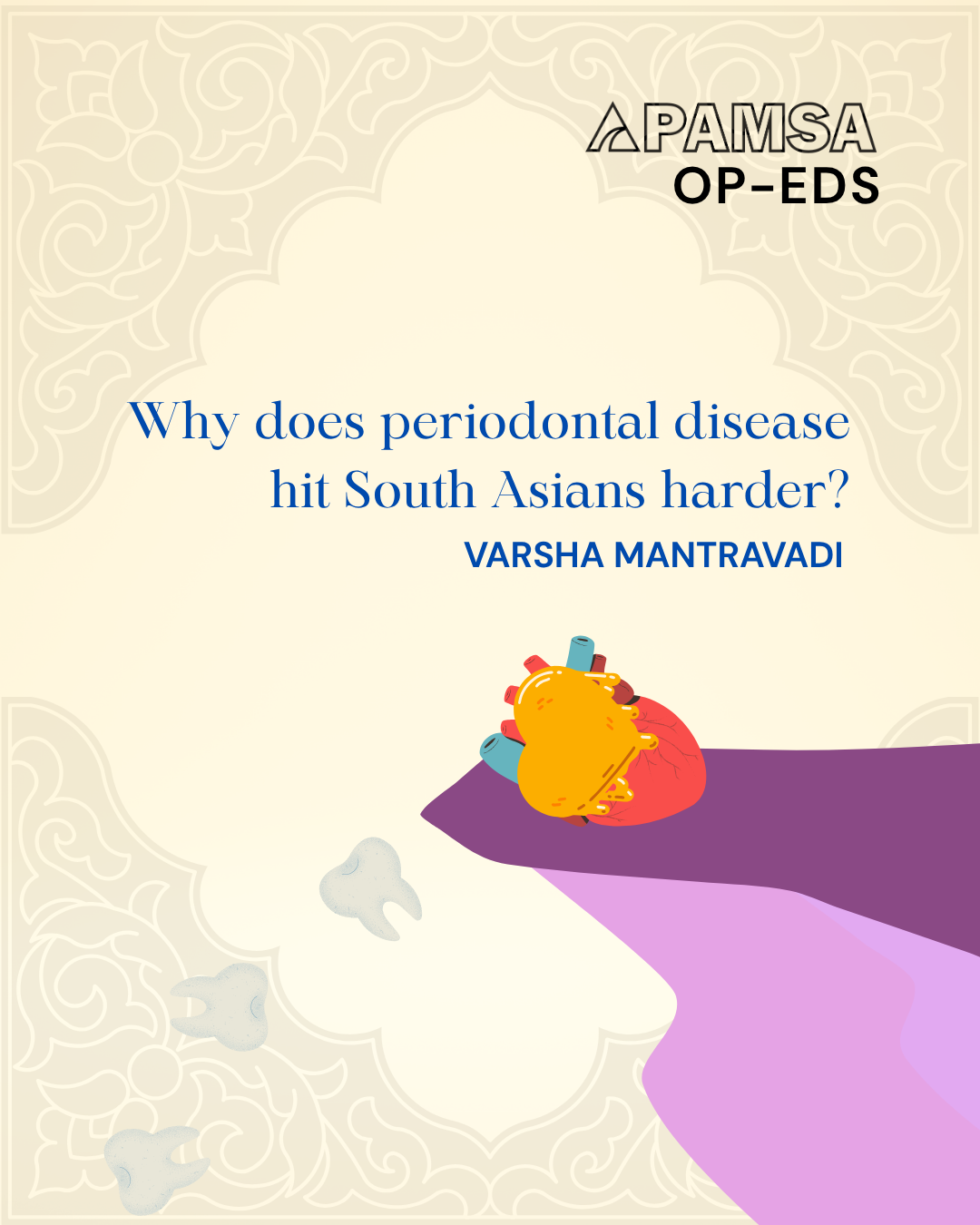
Why does periodontal disease hit South Asians harder?
By Varsha Mantravadi
“Flossing widens the gaps between my teeth. Besides, these teeth aren’t even my own.”
Absolutely no one can convince my grandmother that flossing is important. Notorious in our family because all of her teeth are now implant crowns, she feels an increased disconnect with these “fake” teeth and doesn’t feel the need to take care of them. Many of her relatives in India confirm her beliefs by misguidedly advising against visiting the dentist and flossing regularly. For them, why should she waste time and money now that her teeth aren’t even “hers” anymore?
What is periodontal disease?
Periodontal disease, or gum disease, is a chronic infection of the tissues supporting the teeth, including periodontal ligaments and bone surrounding the teeth. A range of studies show that adults with South Asian origin have disproportionately high rates of diabetes and prediabetes, which are both powerful accelerators of periodontal disease. A similar relationship exists with periodontal disease and cardiovascular disease – bacteria from infected gums can enter the bloodstream, causing inflammation that promotes plaque buildup in blood vessels and increasing stroke and heart attack risk. With the right oral health practices and clinical monitoring, gum disease can be detected and maintained in its early stages. However, among South Asian immigrant populations, periodontal disease often goes undetected until it becomes severe.
This isn’t a coincidence. Beliefs like my grandmother’s are far from unique among South Asian immigrants; many arrive in the United States with deep cultural traditions but limited exposure to preventative dental practices. It can be hard to understand that your gums can suffer even if your teeth are fake, and that flossing may cause bleeding initially but is ultimately a prevention strategy. A psychology study performed at La Trobe University found that South Asians tend to underutilize dental services, choosing only to seek care when symptoms become severe, despite alarming statistics indicating that South Asians represent 64% of global periodontal disease cases.
As a dental assistant in Seattle, I see patients of South Asian descent almost every day who rarely report flossing at all, let alone regularly. I’ve also noticed that many South Asian patients react to diagnoses of periodontal disease with a reluctance to pursue treatment, often facing multiple barriers to care. One patient I worked with left the clinic without treatment despite a detailed explanation of his x-rays and periodontal disease diagnosis from the dentist. His concerns centered around the cost of the scaling and root planing treatment, questioning whether it was necessary if he was not experiencing pain. Since periodontal disease lacks obvious daily symptoms, it is easy for many patients to dismiss it as “fake” and forgo treatment.
Cultural understandings of oral hygiene in South Asia clash with Western preventative practices, leading to hesitation and confusion surrounding routine care. Language barriers also exacerbate the oral health literacy gap within this community. Despite being one of the fastest-growing immigrant groups in the US, South Asians routinely lack access to linguistically appropriate services. Although 92% of healthcare facilities include Hindi/Urdu as a language option on Video Remote Interpretation, as much as 45-50% of South Asians in the US speak a language other than Hindi/Urdu and would need specialized interpretation services. Understanding periodontal disease is already a confusing concept for many patients; compounded with limited English, it becomes particularly challenging to understand the disease’s implications and how to prevent it from getting worse.
How can we help?
Data from community-based oral health interventions have demonstrated significant improvements in periodontal health when education and screening programs are culturally tailored and linguistically accessible. In 2017, the National Institutes of Health conducted the Sikh American Families Oral Health Promotion Program in gurdwaras (Sikh places of worship) across New York and New Jersey. Sikh educators explained the risk factors associated with oral health problems such as periodontal disease, higher cavity risk, and other factors like diabetes and predisposition to heart disease. They spoke in Punjabi, a language that many Sikh families speak at home, and used examples that related directly to what the families were experiencing – unfamiliarity with their new home, nostalgia for their childhood and where they grew up, and how to navigate something unknown.
Preventative dental programs like Sikh American Families Program offer a successful template for future interventions for immigrant communities. Meeting communities where they are could include expanding public health programs that offer free or low-cost periodontal screenings in cultural centers or places of worship. Since diabetes, cardiovascular health, and periodontal disease are intricately linked, medical departments focusing on diabetes and cardiovascular care should also refer at-risk patients to dental clinics for periodontal screenings. Expanding insurance coverage for preventative dental care, especially in states with large South Asian immigrant populations like New Jersey and California, would bring these communities much closer to accessing the fundamental healthcare they need.
What can you do?
Systemic change requires community action. Talking to relatives, neighbors, and friends about oral health can get them thinking about their own oral hygiene habits, and how cavities are not the only oral issue you can have. Proposing dental education events to local clinics and cultural organizations and supporting policies can help expand preventative dental coverage. By challenging the misconception that dental care is optional, we can educate about the connection between teeth, natural or implanted, and overall health. The ultimate goal is to bridge the gap in oral health literacy and attack the root of the periodontal disease problem in South Asians and other immigrant populations, especially given the US’ current political climate. Expanded programs and frequent conversations will make it harder for people like my grandmother to avoid their dentists and chip away at the cultural beliefs that keep too many South Asians from seeking proper care. With time and better outreach, families like mine won’t need to debate whether flossing widens gaps – they’ll simply see it as a part of being healthy. But for now, I’ll keep nagging my grandmother.
Co-posted on KevinMD
Author Bio
Varsha Mantravadi is an undergraduate Public Health Honors student at the University of Washington who plans to pursue a career in dentistry. She is also an avid writer with a strong interest in oral health research. Her research focuses on the public health implications of periodontal disease and its connections to systemic health, with additional interests in health equity, education, and the integration of oral health into broader public health policy.
Interested in submitting an Op-Ed? See the FAQ section on our main Op-Eds page for more information.
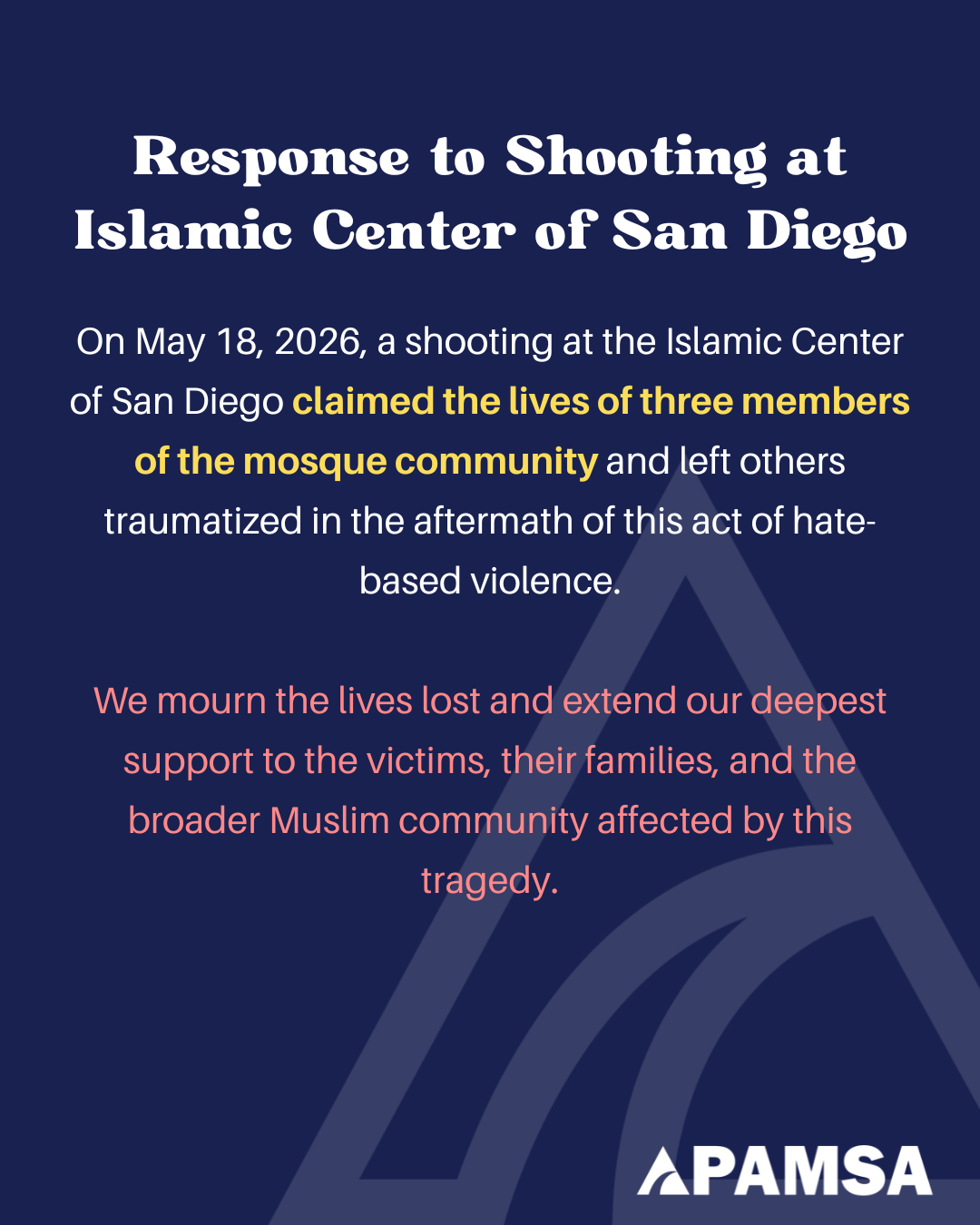
Response to ICSD Shooting
On May 18, 2026, a shooting at the Islamic Center of San Diego claimed the lives of three members of the mosque community and left others traumatized in the aftermath of this act of hate-based violence. We mourn the lives lost and extend our deepest support to the victims, their families, and the broader Muslim community affected by this tragedy.
National APAMSA strongly condemns Islamophobia, hate-driven extremism, and all forms of violence targeting religious and marginalized communities. Consistent with our previous statements and APAMSA policy compendium, National APAMSA recognizes gun violence as a preventable public health crisis and urges legislators to implement stronger gun safety measures. Places of worship should remain spaces of safety, healing, and community, not fear. We also recognize the courage and heroism displayed by those who acted to protect others during the attack.
As an organization committed to health equity and advocacy, APAMSA stands in solidarity with Muslim communities in San Diego and across the nation. We remain committed to supporting communities impacted by hate, violence, and discrimination, and to advocating for a safer and more compassionate future for all.
Resources
- Islamic Center of San Diego Community Support Fund
-
- Donations will support victims, families, and community recovery efforts following the shooting
- bit.ly/supportICSD
-
- National Suicide & Crisis Lifeline
-
- Call or text 988 for immediate confidential support
-
- Disaster Distress Helpline
-
- 1-800-985-5990 or text “TalkWithUs” to 66746
- Immediate emotional support after traumatic events
-
- Council on American-Islamic Relations (CAIR)
-
- https://ca.cair.com/community-resources/
- Community advocacy, reporting resources, and support for those affected by anti-Muslim discrimination and violence
-
- Asian Mental Health Collective
-
- https://www.asianmhc.org/
- Therapist directory and mental health resources for AANHPI communities
-
- APAMSA Mental Health Initiative
-
- https://www.apamsa.org/mental-health-initiative/
- APAMSA Resource list
-
For questions regarding this statement, please contact the Rapid Response Director, Pehr Williamson at rapidresponse@apamsa.org
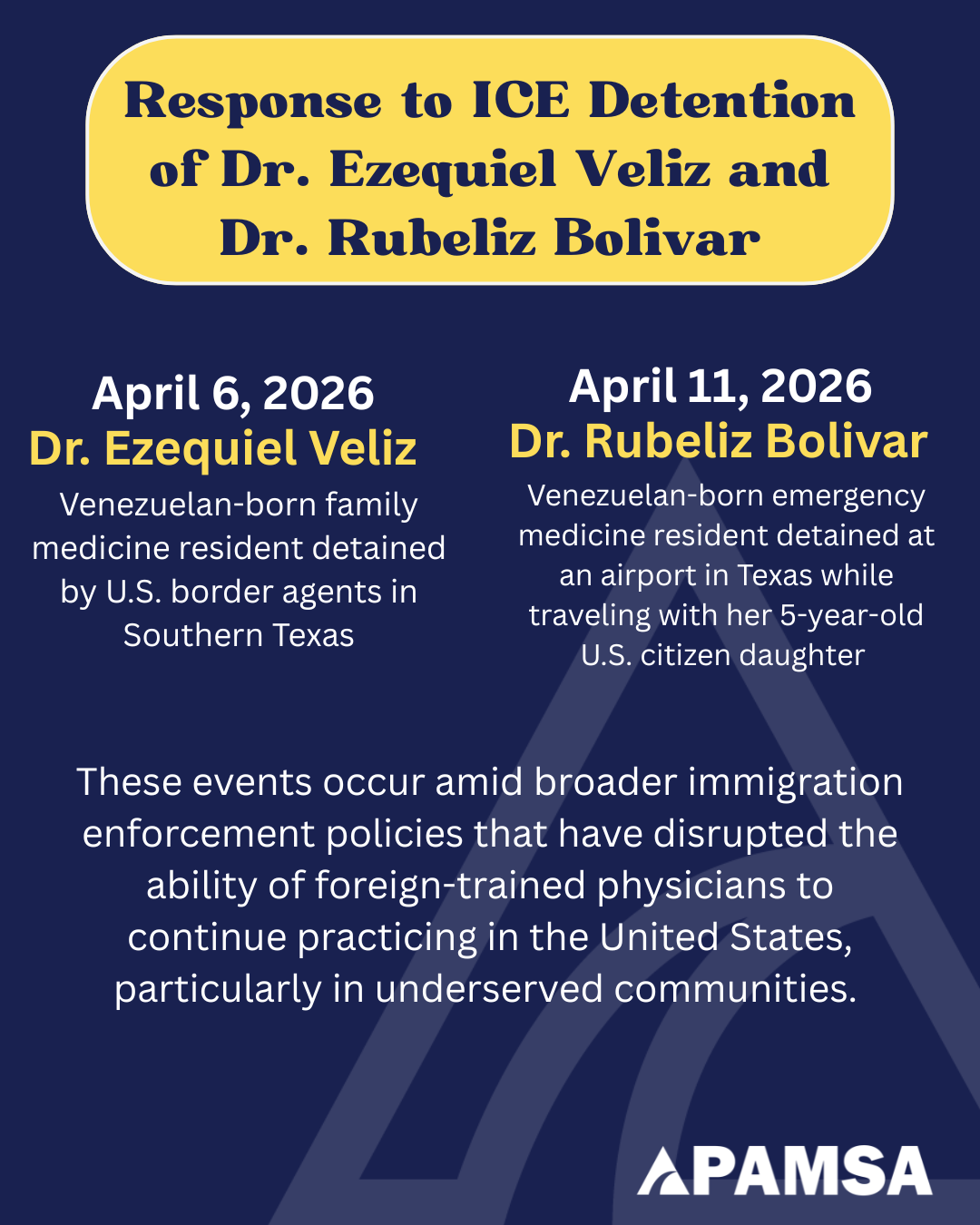
Response to ICE Detention of Dr. Rubilez Bolivar and Dr. Ezequiel Veliz
On April 6, 2026, Dr. Ezequiel Veliz, a family medicine physician serving in the Rio Grande Valley, was detained by U.S. Border Patrol agents at a checkpoint in South Texas. Days later, on April 11, 2026, Dr. Rubeliz Bolivar, an emergency medicine resident in a federally designated medically underserved area, was detained at an airport in McAllen, Texas while traveling with her 5-year-old U.S.-citizen daughter to attend a scheduled asylum interview. These events occur amid broader immigration enforcement policies that have disrupted the ability of foreign-trained physicians to continue practicing in the United States, particularly in underserved communities.
Immigration enforcement actions have increasingly targeted immigrants and pose a significant threat to healthcare access at both local and national levels. International medical graduates represent one in four physicians in the U.S. medical workforce and disproportionately serve medically underserved communities. In medically underserved regions, the removal of even a single physician can disrupt care delivery and strain already-limited resources. More broadly, such actions risk creating a chilling effect across the medical workforce by discouraging physicians from training or practicing in high-need areas. Recent increases in H-1B visa filing fees and stricter immigration policies have already contributed to this effect, with some residency programs no longer accepting H-1B applicants due to new fees that increase sponsorship costs for foreign-trained physicians by up to 4900%. Despite recent exemptions for some applications submitted by immigrant physicians, ongoing enforcement practices continue to contribute to fear and instability among immigrant healthcare workers. These barriers threaten the ability of immigrant physicians to continue filling critical shortages seen in underserved communities.
Immigration enforcement actions also contribute to a growing climate of fear among immigrant communities, discouraging individuals from seeking medical attention even in urgent situations. A recent survey found that nearly half of likely undocumented immigrant adults and 14% of immigrant adults overall reported avoiding medical care due to immigration-related concerns. When patients fear detention, healthcare settings cease to function as safe spaces, creating significant barriers to essential care.
National APAMSA strongly condemns the detention of Dr. Rubeliz Bolivar and Dr. Ezequiel Veliz in addition to broad, indiscriminate immigration enforcement practices that have resulted in the detention of law-abiding individuals. These actions directly conflict with established APAMSA policies, which oppose the presence of immigration enforcement in healthcare settings and recognize fear of detention as a major barrier to care. APAMSA further supports expanding healthcare access regardless of immigration status and advocates for the health and safety of migrant populations. We express deep concern over enforcement practices that disrupt patient care and threaten public health, and call for increased transparency, accountability, and policy reform to protect both patients and healthcare professionals.
For questions regarding this statement, please contact the Rapid Response Director, Pehr Williamson at rapidresponse@apamsa.org
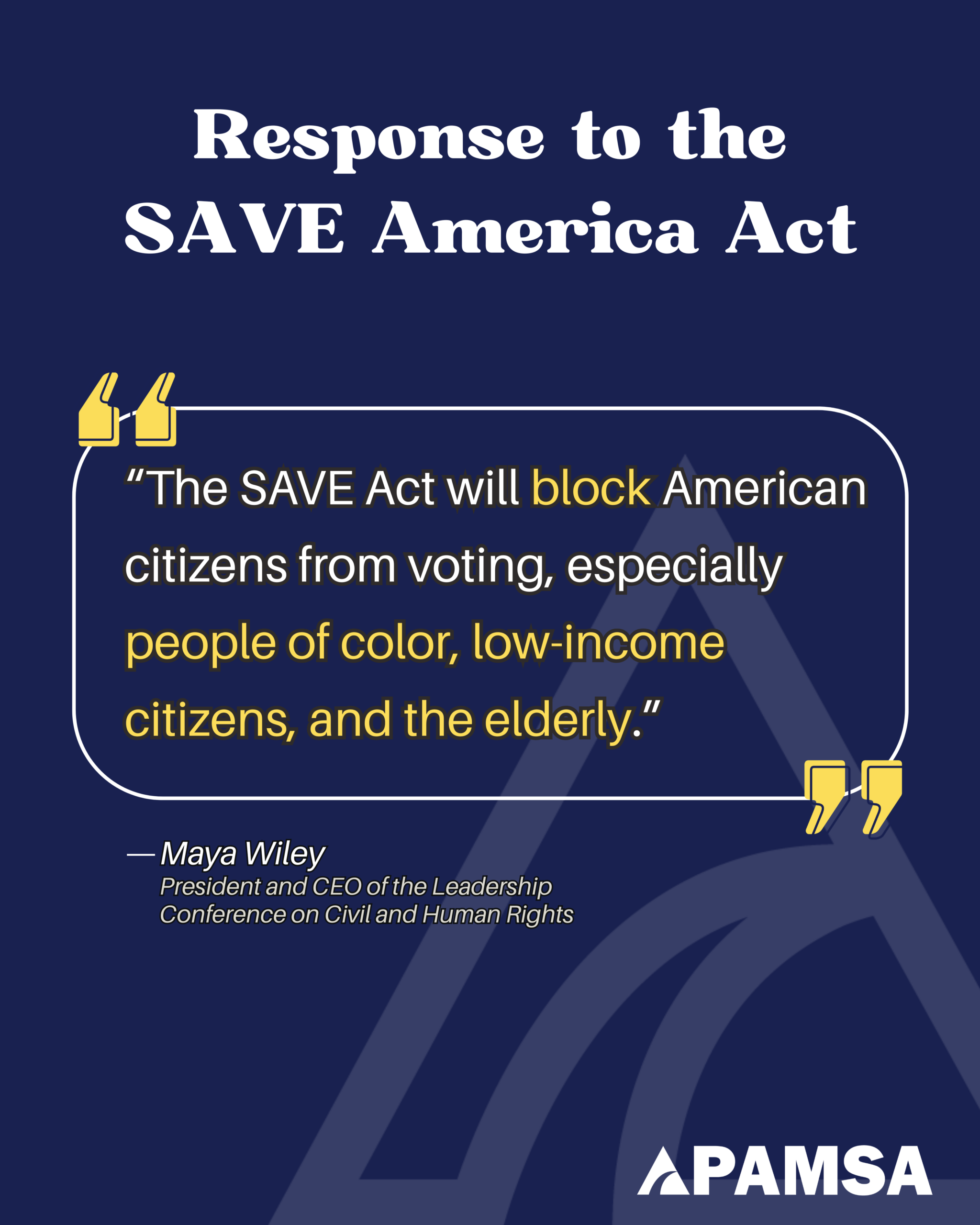
Statement on the Safeguard American Voter Eligibility (SAVE) Act
On March 17, 2026, the U.S. Senate began discussions on the Safeguard American Voter Eligibility (SAVE) Act, which aims to address allegations of widespread voter fraud and election integrity by introducing more stringent requirements for personal identification and proof of citizenship. However, this may impose additional barriers by shifting the burden of proving eligibility to the individual voter, potentially reducing civic participation.
What changes are proposed?
The SAVE Act requires:
- Proof of U.S. citizenship using a birth certificate, passport, or naturalization certificate for voter registration
- A government-issued photo identification for requesting and submitting mail-in ballots
- States to verify voter eligibility through federal databases in coordination with the Department of Homeland Security
How could this affect you?
- Roughly half of U.S. citizens do not have a passport, meaning they may need to rely on a birth certificate for voter registration
- REAL IDs in many states do not indicate citizenship, making them insufficient for verification without additional proof of citizenship
- About 80% of women in heterosexual marriages take their partner’s last name, complicating their ability to register without proof of legal name change
- Stricter registration requirements could reduce the accessibility of voter registration through online and in-person voter registration drives
- Potential changes in status (e.g., name changes, naturalization, moving to other states) could lead to ballots being flagged during federal verification, and in some cases, not counted
- The financial burden to acquire the documents necessary to register to vote may create barriers for those facing financial strain
- To vote by mail, voters may need to send a copy of their ID to request a ballot, and another copy when they submit their ballot
Why does this matter?
National APAMSA strongly condemns this bill due to its potential to create barriers to civic participation and equitable access to voting. These changes may disproportionately impact communities with limited access to documentation, including naturalized citizens and historically marginalized populations. In alignment with our policy compendium and as mentioned in previous statements, National APAMSA recognizes that access to voting is a critical social determinant of health, with direct implications for both individual and community well-being.
What can you do?
We urge you to contact your local senator to express your opposition to the SAVE Act. Resources such as 5 Calls and When We All Vote can help you find and reach your elected officials.
For questions regarding this statement, please contact the Rapid Response Director, Pehr Williamson at rapidresponse@apamsa.org
Response to the Fatal Shootings of Renee Good and Alex Pretti
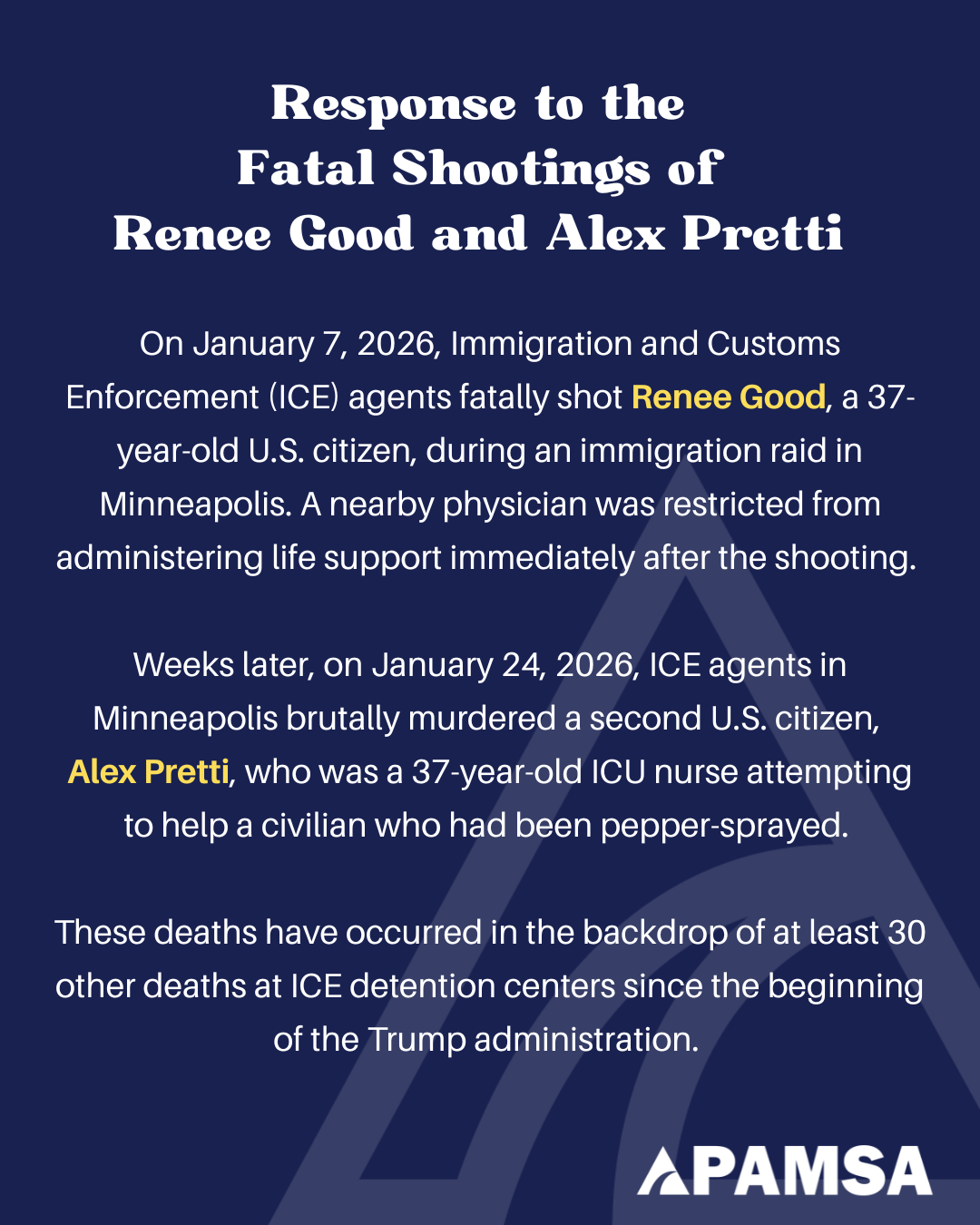
On January 7, 2026, Immigration and Customs Enforcement (ICE) agents fatally shot Renee Good, a 37-year-old U.S. citizen, during an immigration raid in Minneapolis. A nearby physician was restricted from administering life support immediately after the shooting. Weeks later, on January 24, 2026, ICE agents in Minneapolis brutally murdered a second U.S. citizen, Alex Pretti, who was a 37-year-old ICU nurse attempting to help a civilian who had been pepper-sprayed. These deaths have occurred in the backdrop of at least 30 other deaths at ICE detention centers since the beginning of the Trump administration.
As students in the healthcare profession, we are frustrated by the blatant disregard for life in these encounters, as medical professionals are barred from providing emergency care for the communities they serve. Unrelenting immigration raids have prompted a public health emergency, as many immigrants have become too fearful to step outside their homes to seek medical care at hospitals that were once protected spaces.
Immigration enforcement raids have rattled the nation with indiscriminate investigations, deportations, and detention, often relying on racial profiling to target communities of color. A recent Supreme Court order (Noem v. Vasquez Perdomo) will condone investigations based on subjective assessments, such as skin tone or accented speech, allowing the U.S. Government to continue race-based searches if they meet “reasonable suspicion.”
National APAMSA strongly condemns the tragic killing of both Renee Good and Alex Pretti by ICE and is deeply concerned about federal officials’ lethal weaponization of immigration enforcement. APAMSA stands firmly against any form of violence and reaffirms its commitment to protect human lives, regardless of immigration status or background. We mourn the loss of Renee Good and Alex Pretti and extend our condolences to their family, friends, and community members affected by these tragedies.
We call for increased scrutiny of federal immigrant official deployment and practices and a full, unbiased investigation into these shootings. Furthermore, we urge comprehensive training for all law enforcement agents to de-escalate encounters and prevent the loss of innocent lives.
For questions regarding this statement, please contact the Rapid Response Director, Brian Leung at rapidresponse@apamsa.org

APAMSA x NCAPIP: Joint Statement on New Childhood Immunization Schedule
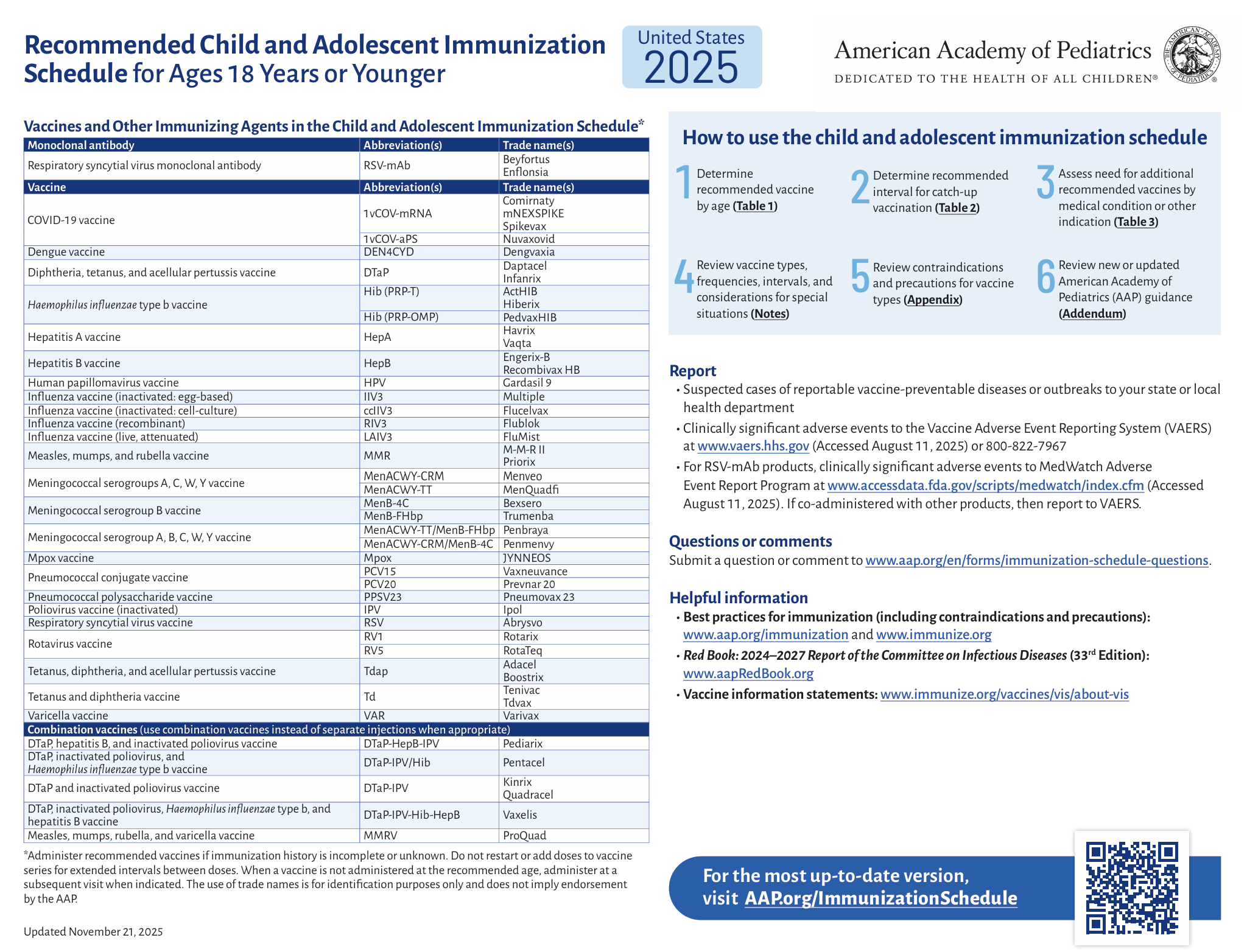
On January 5, 2026, the Centers for Disease Control and Prevention (CDC) unveiled a new childhood immunization schedule that has now curtailed the number of recommended vaccinations for children from 17 diseases to 11 diseases. Exactly one month after a presidential memorandum was issued to reexamine childhood immunization schedules, the CDC no longer recommends routine immunization with Hepatitis A, Hepatitis B, Influenza, Respiratory Syncytial Virus (RSV), Rotavirus, Meningococcal, and COVID-19. Instead, these vaccinations will be based on “Shared Clinical Decision-making” between parents and physicians, despite long-standing evidence of their benefits in protecting children’s lives. Hepatitis B, which affects a disproportionate portion of the AANHPI population, will no longer be universally recommended at birth according to new CDC guidelines.
APAMSA and NCAPIP are deeply concerned about the abrupt changes in the CDC’s childhood immunization schedule, made without public input or a rigorous scientific examination of the risks and benefits. These decisions may further erode trust in public health agencies and increase vaccination hesitancy. Recent research has already shown a decline in childhood vaccinations such as Mumps-Measles-Rubella, leading to outbreaks of measles across the nation.
As mentioned in a previous statement and in our policy compendium, we remain committed to advocating for universal Hepatitis B vaccinations and other necessary childhood immunizations. We urge policymakers at public health institutions to reconsider these changes and focus on evidence-based guidelines that match the United States population and its risks, rather than mirroring other countries’ individualized vaccination schedules.
Resources:
The American Academy of Pediatrics now maintains its own immunization schedule following the replacement of all members on the Advisory Committee on Immunization Practice (ACIP) by the US Secretary of Health and Human Services, Robert F. Kennedy Jr., last year.
For questions regarding this statement, please contact the Rapid Response Director, Brian Leung at rapidresponse@apamsa.org
Response to Mass Shooting at Brown University
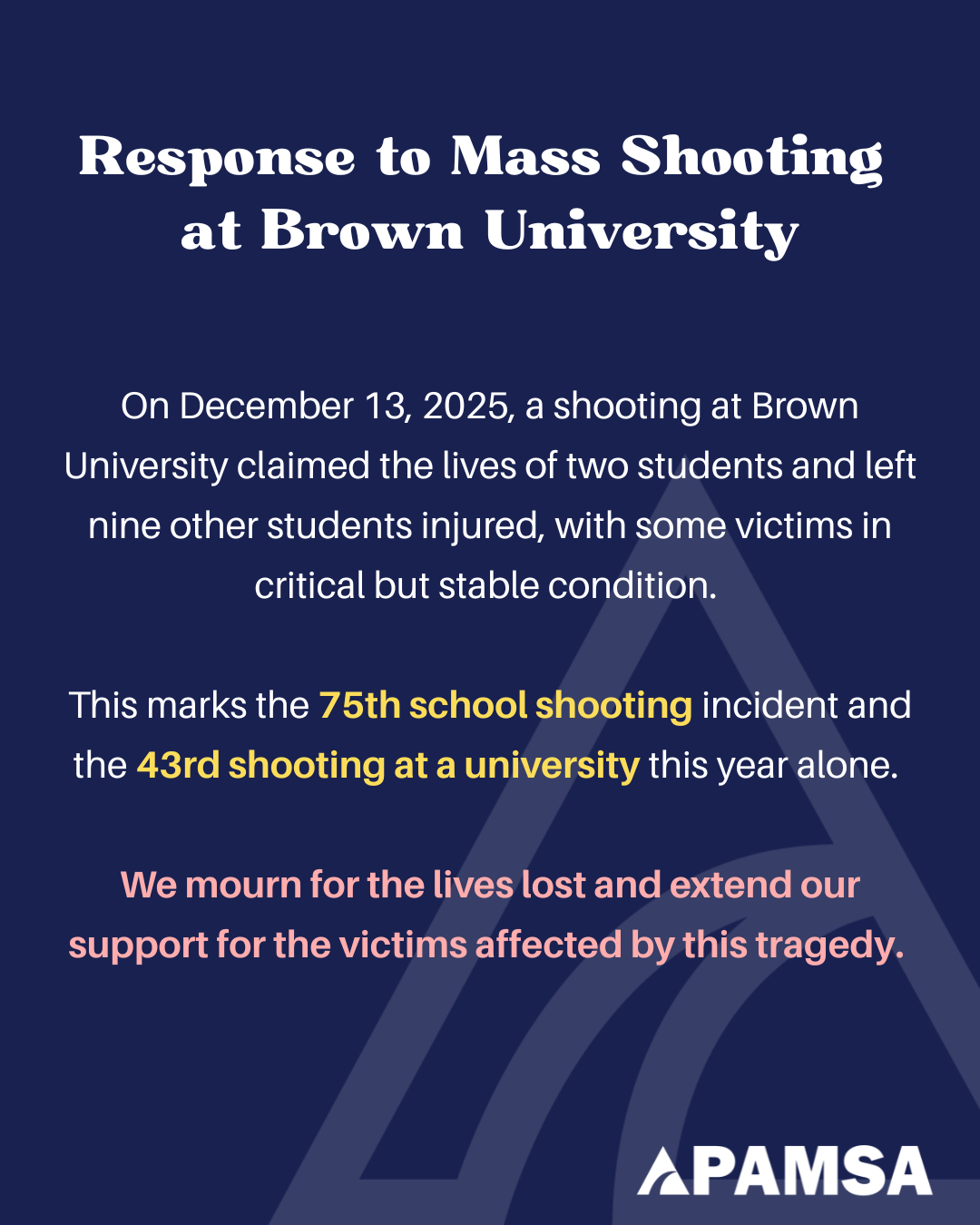
On December 13, 2025, a shooting at Brown University claimed the lives of two students and left nine other students injured, with some victims in critical but stable condition. This marks the 75th school shooting incident and the 43rd shooting at a university this year alone. We mourn for the lives lost and extend our support to the victims affected by this tragedy.
National APAMSA strongly denounces all gun violence and remains steadfast in our commitment and desire for comprehensive federal, state, and municipal gun control policies as mentioned in our previous statements and in our policy compendium. We, at APAMSA, recognize gun violence as a preventable health crisis and urge legislators to institute stricter gun control measures.
Measures such as standardizing and closing loopholes in background checks for firearms and increasing funding for mental health programs can be implemented to address root causes of gun violence. Although the 2023 Bipartisan Safer Communities Act has stipulated over $1 billion for improving student mental health, recent administration changes have greatly reduced how that money gets dispersed, denying much-needed mental health professional development grants for colleges and universities. Like disease management, we urge policymakers to focus on evidence-based approaches that have been shown to reduce deaths from gun violence.
In the wake of this recent act of violence, many students may be experiencing fear, grief, numbness, or distress. These reactions are normal, and you do not have to navigate them alone. Support is available both on campus and through culturally affirming, confidential resources listed below.
For Brown University Students:
Brown University Emergency Services
- Mental Health Crisis Stabilization Services: 401-863-3476
- Public Safety Management: 401-863-4111
- Administrator On Call (AOC): 401-863-3322
Brown University Student Services
- Counseling And Psychological Services (CAPS): 401-863-3476
- Free virtual care services for all currently enrolled students
- BWell (Brown Wellness): Online appointment here
- A confidential campus resource for students offering wellness check-ins, trauma-informed support, and help navigating care options after distressing events.
- TimelyCare: More information here
- Brown has partnered with TimelyCare to provide free therapy services to actively enrolled students
- Free access up to 12 teletherapy sessions per year & unlimited access to a library of wellness videos
- Chaplain & Spiritual Support: More information here
- Office of the Chaplains and Religious Life (OCRL) aims to make available pastoral care and advice for students, staff, faculty, and alumni
- Bereavement Group
- When: Mondays @ 7:30PM
- Where: Room 411 of Page-Robinson
- Student Support Services (SSS): More information here
- Contact for either oneself or one’s peers to access collaborative assistance between University staff and the community to provide thoughtful individualized support during complex factors contributing to a student’s distress.
- Contact for either oneself or one’s peers to access collaborative assistance between University staff and the community to provide thoughtful individualized support during complex factors contributing to a student’s distress.
City of Providence Resources
- The Providence Center’s Center for Child and Adolescent Services:
- Open from 8:00AM – 4:30PM (Monday-Friday)
- Family Service RI Crisis Line: 401-854-6678
- Offers counseling and support services for anyone in the community.
- Available for home visits or virtual counseling
- United Way of Rhode Island 2-1-1: Call 2-1-1
- Free and confidential information on mental and physical healthcare, housing, food, and emergency services available in the area
- Open 24/7/365
24/7 Emergency Hotlines
Key reminder: If someone is in immediate danger or talking about harming themselves or others, call 911 or go to the nearest emergency room.
- National Suicide & Crisis Lifeline (U.S.): Call or text 988 for trained crisis counselors
- Disaster Distress Helpline: 1-800-985-5990 or text “TalkWithUs” to 66746
- Immediate emotional support after trauma/violent events
- Asian LifeNet Hotline: 1-877-990-8585
- A free, 24/7 hotline for those in distress. Cantonese, Mandarin, Korean, Japanese, Fujianese offered
- Trevor LifeLine: 1-866-488-7386
- Confidential crisis intervention and suicide prevention aimed for LGBTQ+
Counseling & Support Services
General AANHPI Mental Health Counseling Resources
- Physician Support Line: 1-888-409-0141 (7 days/week, 8am-1am EST)
- Free confidential support for medical students and physicians from 600+ volunteer psychiatrists. No appointment necessary
- Asian Mental Health Collective
- Region-based therapist directory focused on AAPI mental health
- Asians for Mental Health Directory
- Mental health provider directory for AANHPI community (for all 50 states and Washington D.C.)
- National Asian American Pacific Islander Mental Health Association
- Resource list, mental health and behavioral services directory, and blog for AANHPI folks
- South Asian Public Health Association – Mental Health Resources
- Resources for South Asian mental health (organizations, peer support, and provider directories)
AANHPI X LGBTQ+ Mental Health Resources
- The Trevor Project
- Support and crisis services for LGBTQ+ folks in need of mental health support
- Desi LGBTQ+ Helpline for South Asians
- Free and confidential support for South Asian LGBTQ+ individuals
- National Queer Asian Pacific Islander Alliance (NQAPIA) – Healer Network and Therapy Resources List
- API therapists and healers for LGBTQ+ individuals
- National Queer and Trans Therapists of Color Network (NQTTCN)
- Healing justice resources for QTPOC
Self-Care Resources
- SAMHSA – Coping After Traumatic Events
- Evidence-based strategies for emotional regulation after trauma
- NIMH – Taking Care of Your Mental Health After a Traumatic Event
- Self-Care Assessment Worksheet and Plan
For a more extensive list, please visit https://www.apamsa.org/mental-health-initiative/ and look under Mental Health Resources.
Please feel free to reach out to mentalhealth@apamsa.org if you would like to talk and we will work together on how APAMSA can best support you and your chapter.
Authors: David Kim, Mia Park, Brian Leung
Signed: Region I Director, Brian Vu and Warren Alpert Medical School of Brown University APAMSA Chapter Co-Presidents, Jerome Dovan and Sophia Dutton
For questions regarding this statement, please reach out to Brian Leung at rapidresponse@apamsa.org.
For local support, please contact the Region I Directors, Brian Vu and Stephanie Lam, at region1@apamsa.org.
Response to Mass Shooting at Brown University
On December 13, 2025, a shooting at Brown University claimed the lives of two students and left nine other students injured, with some victims in critical but stable condition. This marks the 75th school shooting incident and the 43rd shooting at a university this year alone. We mourn for the lives lost and extend our support to the victims affected by this tragedy.
National APAMSA strongly denounces all gun violence and remains steadfast in our commitment and desire for comprehensive federal, state, and municipal gun control policies as mentioned in our previous statements and in our policy compendium. We, at APAMSA, recognize gun violence as a preventable health crisis and urge legislators to institute stricter gun control measures.
Measures such as standardizing and closing loopholes in background checks for firearms and increasing funding for mental health programs can be implemented to address root causes of gun violence. Although the 2023 Bipartisan Safer Communities Act has stipulated over $1 billion for improving student mental health, recent administration changes have greatly reduced how that money gets dispersed, denying much-needed mental health professional development grants for colleges and universities. Like disease management, we urge policymakers to focus on evidence-based approaches that have been shown to reduce deaths from gun violence.
In the wake of this recent act of violence, many students may be experiencing fear, grief, numbness, or distress. These reactions are normal, and you do not have to navigate them alone. Support is available both on campus and through culturally affirming, confidential resources listed below.
For Brown University Students:
Brown University Emergency Services
- Mental Health Crisis Stabilization Services: 401-863-3476
- Public Safety Management: 401-863-4111
- Administrator On Call (AOC): 401-863-3322
Brown University Student Services
- Counseling And Psychological Services (CAPS): 401-863-3476
- Free virtual care services for all currently enrolled students
- BWell (Brown Wellness): Online appointment here
- A confidential campus resource for students offering wellness check-ins, trauma-informed support, and help navigating care options after distressing events.
- TimelyCare: More information here
- Brown has partnered with TimelyCare to provide free therapy services to actively enrolled students
- Free access up to 12 teletherapy sessions per year & unlimited access to a library of wellness videos
- Chaplain & Spiritual Support: More information here
- Office of the Chaplains and Religious Life (OCRL) aims to make available pastoral care and advice for students, staff, faculty, and alumni
- Bereavement Group
- When: Mondays @ 7:30PM
- Where: Room 411 of Page-Robinson
- Student Support Services (SSS): More information here
- Contact for either oneself or one’s peers to access collaborative assistance between University staff and the community to provide thoughtful individualized support during complex factors contributing to a student’s distress.
- Contact for either oneself or one’s peers to access collaborative assistance between University staff and the community to provide thoughtful individualized support during complex factors contributing to a student’s distress.
City of Providence Resources
- The Providence Center’s Center for Child and Adolescent Services:
- Open from 8:00AM – 4:30PM (Monday-Friday)
- Family Service RI Crisis Line: 401-854-6678
- Offers counseling and support services for anyone in the community.
- Available for home visits or virtual counseling
- United Way of Rhode Island 2-1-1: Call 2-1-1
- Free and confidential information on mental and physical healthcare, housing, food, and emergency services available in the area
- Open 24/7/365
24/7 Emergency Hotlines
Key reminder: If someone is in immediate danger or talking about harming themselves or others, call 911 or go to the nearest emergency room.
- National Suicide & Crisis Lifeline (U.S.): Call or text 988 for trained crisis counselors
- Disaster Distress Helpline: 1-800-985-5990 or text “TalkWithUs” to 66746
- Immediate emotional support after trauma/violent events
- Asian LifeNet Hotline: 1-877-990-8585
- A free, 24/7 hotline for those in distress. Cantonese, Mandarin, Korean, Japanese, Fujianese offered
- Trevor LifeLine: 1-866-488-7386
- Confidential crisis intervention and suicide prevention aimed for LGBTQ+
Counseling & Support Services
General AANHPI Mental Health Counseling Resources
- Physician Support Line: 1-888-409-0141 (7 days/week, 8am-1am EST)
- Free confidential support for medical students and physicians from 600+ volunteer psychiatrists. No appointment necessary
- Asian Mental Health Collective
- Region-based therapist directory focused on AAPI mental health
- Asians for Mental Health Directory
- Mental health provider directory for AANHPI community (for all 50 states and Washington D.C.)
- National Asian American Pacific Islander Mental Health Association
- Resource list, mental health and behavioral services directory, and blog for AANHPI folks
- South Asian Public Health Association – Mental Health Resources
- Resources for South Asian mental health (organizations, peer support, and provider directories)
AANHPI X LGBTQ+ Mental Health Resources
- The Trevor Project
- Support and crisis services for LGBTQ+ folks in need of mental health support
- Desi LGBTQ+ Helpline for South Asians
- Free and confidential support for South Asian LGBTQ+ individuals
- National Queer Asian Pacific Islander Alliance (NQAPIA) – Healer Network and Therapy Resources List
- API therapists and healers for LGBTQ+ individuals
- National Queer and Trans Therapists of Color Network (NQTTCN)
- Healing justice resources for QTPOC
Self-Care Resources
- SAMHSA – Coping After Traumatic Events
- Evidence-based strategies for emotional regulation after trauma
- NIMH – Taking Care of Your Mental Health After a Traumatic Event
- Self-Care Assessment Worksheet and Plan
For a more extensive list, please visit https://www.apamsa.org/mental-health-initiative/ and look under Mental Health Resources.
Please feel free to reach out to mentalhealth@apamsa.org if you would like to talk and we will work together on how APAMSA can best support you and your chapter.
Authors: David Kim, Mia Park, Brian Leung
Signed: Region I Director, Brian Vu and Warren Alpert Medical School of Brown University APAMSA Chapter Co-Presidents, Jerome Dovan and Sophia Dutton
For questions regarding this statement, please reach out to Brian Leung at rapidresponse@apamsa.org.
For local support, please contact the Region I Directors, Brian Vu and Stephanie Lam, at region1@apamsa.org.
